
Main Courses
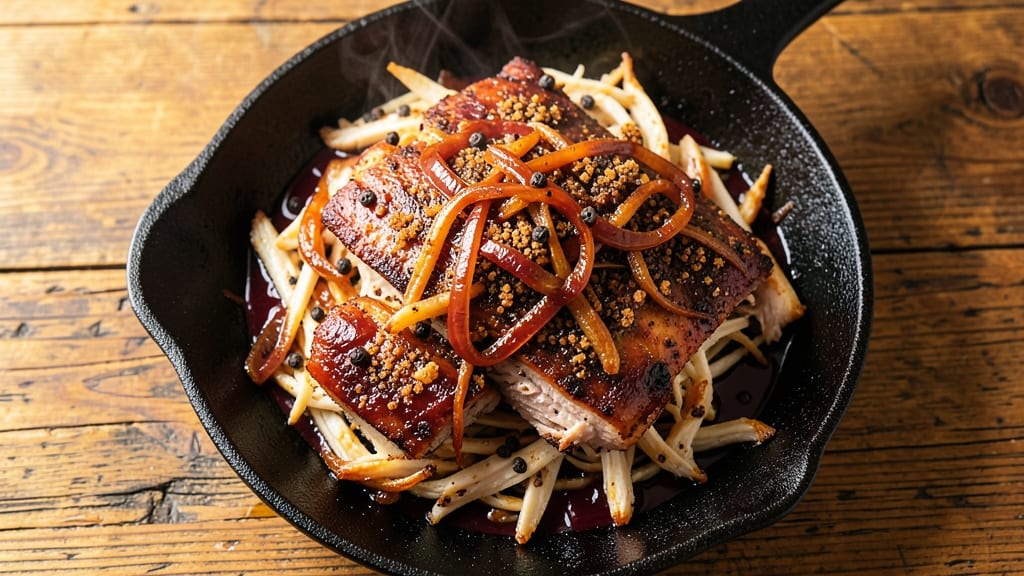
This 10-pound pulled pork recipe delivers the kind of smoky, tender perfection that turns any gathering into a celebration. After cooking thousands of pounds of pork in my Atlanta smokehouse, I've perfected the balance between bark and tenderness that makes this dish unforgettable. The secret lies in patience—letting that pork shoulder break down slowly while developing layers of flavor that transform tough meat into melt-in-your-mouth goodness.
What sets this recipe apart is the method: a combination of dry rub seasoning and low-and-slow cooking that ensures every bite is juicy and packed with flavor. We're talking 8-10 hours of cooking time, but trust me—this is where the magic happens.
The rub creates a flavorful crust while the slow cooking transforms the meat into something so tender it practically shreds at the touch. This isn't just pulled pork; it's a showstopper that will have your guests asking for seconds before they even sit down.
The result is a 10-pound batch that yields about 30-35 servings—perfect for large families, holiday feasts, or feeding a crowd at your next BBQ competition. The meat comes out with that perfect combination of smoky aroma, crispy bark on the outside, and fall-apart tenderness inside.
Serve it on soft buns with your favorite coleslaw and pickles, or let people build their own plates with all the fixings. This is the kind of pulled pork that makes people plan their schedule around your next cook.
Here's where it gets interesting—the versatility of this recipe. You can smoke it, oven-braise it, or even do a combination of both for perfect results every time.
I'll walk you through the exact techniques I use in my professional kitchen to ensure you get that restaurant-quality texture and flavor at home. Let's get started on creating the pulled pork that will become your new signature dish.
Ingredients for 10 lb pulled pork
Here's what transforms a simple pork shoulder into legendary crowd-pleasing pulled pork every time.
| Ingredient | Amount | Notes |
|---|---|---|
| Pork Shoulder (Bone-In) 🥩 | 10 lb | Bone-in for best flavor |
| Yellow Onion 🧅 | 2 whole | Large, yellow variety |
| Garlic Cloves 🧄 | 8 cloves | Fresh, peeled |
| Brown Sugar 🍚 | ½ cup | Light or dark |
| Smoked Paprika 🌶️ | 2 tbsp | High quality for smokiness |
| Ground Black Pepper 🌶️ | 1 tbsp | Freshly cracked |
| Kosher Salt 🧂 | 1 ½ tbsp | Diamond Crystal preferred |
| Ground Cumin 🌿 | 1 tbsp | Toasted for depth |
| Dried Thyme 🌿 | 1 tbsp | Or 1 tbsp fresh |
| Apple Cider Vinegar 🍎 | ¼ cup | For tenderizing |
| Beef Broth 🍲 | 1 cup | Low sodium preferred |
| Wood Chips (Hickory or Oak) 🌳 | 2 lb | Unsoaked for smoking |
| Butter 🧈 | 2 tbsp | Unsalted, for finishing |
| Coleslaw Mix 🥬 | 1 lb | For serving suggestion |
| Pickles 🥒 | 1 cup | Sliced, for serving |
The pork shoulder is non-negotiable—bone-in gives you that incredible flavor and texture. Look for a well-marbled cut from local butchers or Costco—they often have the perfect 10-pound roasts. If you're buying a whole shoulder, trim any excess fat but leave about 1/4-inch for flavor. The wood chips? Hickory for strong smoke, oak for a more balanced flavor. I always buy mine from Traeger or Camp Chef—they sell pre-packaged bags that make seasoned wood chips easy to find. Freshness matters here too: if your wood chips smell musty or stale, toss them.
No smoked paprika? Substitute with a mix of regular paprika and liquid smoke—about half the amount. Running out of cumin? Corriander seeds toasted and ground work in a pinch. The apple cider vinegar is crucial for tenderizing—don't skip it. For the beef broth, low-sodium options like Swanson or Annie's keep the flavor balanced. Want extra bark? Add 1 tbsp of brown sugar to the rub for a deeper caramelization. The butter at the end? Full-fat unsalted melts beautifully and adds richness without overpowering the smoky flavors.
This pork keeps beautifully—3-4 days in the fridge wrapped tightly in butcher paper. For longer storage, freeze portions for up to 3 months. I always make extra because it reheats like a dream. The coleslaw and pickles? Store them separately until serving—Trader Joe's has great pre-shredded mixes that save time. The rub? Make a double batch—it keeps for 6 months in an airtight container. Trust me, you'll want it for future cooks.
Why You'll Love This Recipe
- Smoky-Sweet Magic: That blend of smoked paprika and caramelized onions? It’s the kind of flavor that makes people ask, “What’s in this?” The brown sugar gives it just enough sweetness to balance the deep, smoky heat—like a hug in every bite.
- Party in a Pan: This feeds a crowd (or my family for a week) without needing fancy dishes. Serve it on buns for sandwiches, toss it into tacos, or pile it on nachos—everyone’s happy, and I’m not stuck with leftovers I’ll regret.
- Budget Boss Move: A 10-pound pork shoulder costs less than half the price of pre-made pulled pork, and it stretches across meals like nothing else. Freeze half for later, and you’ve got dinner covered for days—without breaking the bank.
Step-by-step instructions for smoky, slow-cooked pulled pork
Here's how to transform a simple pork shoulder into melt-in-your-mouth pulled pork that feeds crowds.
Prepare the Rub and Season the Pork
In a large bowl, combine the 0.5 cup brown sugar, 2 tbsp smoked paprika, 1.5 tbsp kosher salt, 1 tbsp ground black pepper, 1 tbsp ground cumin, and 1 tbsp dried thyme. Mix until the spices are evenly distributed and the sugar is fully incorporated—this creates a sticky, flavorful crust that clings to the pork.
Pat the 10 lb pork shoulder completely dry with paper towels (this is critical for crispy bark). Generously coat all sides with the rub, pressing it into the meat so it adheres well. Let the seasoned pork sit at room temperature for 1 hour before cooking—this ensures even cooking and maximum flavor penetration.
Smoke the Pork Low and Slow
Set up your smoker with the 2 lb wood chips (hickory or oak) and preheat to 225°F. Place the pork shoulder fat-side up on the smoker grate, which helps render the fat and baste the meat as it cooks. Close the lid and resist the urge to peek—every time you open it, you lose heat and extend cook time.
Smoke the pork for 6-8 hours until the internal temperature reaches 165°F and the bark is deep mahogany brown. You'll hit "the stall" around 160°F, where the temperature plateaus as moisture evaporates. This is normal—don't panic. Once the temperature starts rising again, it's ready for the next step.
Wrap and Finish the Cook
When the pork reaches 165°F, remove it from the smoker and wrap it tightly in aluminum foil. Add 0.25 cup apple cider vinegar and 1 cup beef broth to the foil before sealing—this helps tenderize and adds moisture. Return the wrapped pork to the smoker and cook until the internal temperature reaches 203°F (about 2-3 more hours).
The vinegar and broth create a steam bath that breaks down collagen and collagen, resulting in fork-tender meat. The pork should pull apart easily with two forks when ready—this is your signal to remove it from the heat.
Rest and Shred the Pork
Transfer the pork to a cutting board and let it rest for 15-20 minutes before shredding. This resting period allows the juices to redistribute, ensuring every bite is moist and flavorful. While it rests, preheat your serving dish in the oven at 200°F for 10 minutes—this keeps the pork warm while you shred it.
Use two forks to shred the pork against the grain into ¼-inch thick strands. Discard any large fat chunks or connective tissue. Stir in 2 tbsp butter to keep the shreds moist and add richness. The finished pork should be tender, juicy, and packed with smoky flavor.
Serve with Classic Sides
Serve the pulled pork immediately over 1 lb coleslaw mix or on soft buns with 1 cup sliced pickles for tangy contrast. The smoky, sweet, and savory flavors of the pork pair perfectly with the crisp freshness of the slaw and the briny crunch of pickles. For extra flavor, spoon some of the rendered juices from the smoker over the top before serving.
This recipe makes 35 servings, so you'll have plenty left for sandwiches the next day. Store leftovers in the refrigerator for up to 4 days or freeze for up to 3 months—just reheat with a splash of beef broth to restore moisture.
Pro Tips For Making 10 Lb Pulled Pork
- USE A MEAT THERMOMETER: Pork shoulder is forgiving, but not that forgiving—aim for 203°F internal temp (not 160°F). I learned this the hard way when my first attempt came out chewy because I pulled it too early. A cheap instant-read thermometer is your best friend here; stick it in the thickest part, avoid the bone.
- SWEAT ONIONS AND GARLIC FIRST: Skip the raw garlic cloves straight into the smoker. Instead, sauté 2 chopped onions and 6 minced garlic cloves in oil until soft and golden (about 5 minutes). This builds flavor depth before the pork even hits the heat. Yes, it takes 5 extra minutes, but it makes a real difference in the final pull.
- DON’T CROWD THE SMOKER: If you’re using a smoker, leave space between the pork and other items—even if it means cooking in batches. I used to jam everything in there, and the pork ended up steaming instead of smoking. A little airflow keeps the bark crisp and the meat tender.
- BRINE THE PORK OVERNIGHT: This isn’t just for turkey—soak the pork shoulder in a mix of water, ¼ cup salt, and ¼ cup brown sugar for 12–24 hours. It keeps the meat juicy and lets the seasoning penetrate deep. I was skeptical until I tried it; the texture is noticeably better, and the bark sticks on tighter. (Yes, even if you’re impatient like me.)
Creative variations of this recipe
Smoked BBQ Fusion
Take your pulled pork to the next level by infusing it with Asian-inspired flavors—think gochujang and hoisin instead of traditional BBQ sauce. After shredding, mix in 2 tbsp gochujang, 1 tbsp hoisin, and 1 tsp grated ginger for a sweet-spicy kick.
Serve it on steamed buns with quick-pickled cucumbers and sriracha mayo for a fusion that’ll wow your guests. I first tried this at a Charleston food festival and it became an instant crowd favorite. 🌶️
Carolina-Style Mustard
For a true Carolina BBQ twist, swap the vinegar-broth wrap for ½ cup yellow mustard and ½ cup apple cider vinegar before the final cook. The mustard adds tangy depth that pairs perfectly with the smoky pork.
After shredding, fold in 2 tbsp melted butter and 1 tbsp brown sugar for a caramelized finish. This version is a staple at my Atlanta smokehouse—it’s what won me my first BBQ championship. 💛
Breakfast Pulled Pork
Transform your pulled pork into a breakfast sensation by mixing shredded pork with 2 scrambled eggs, ¼ cup shredded cheddar, and 1 tbsp hot sauce. Serve on English muffins with crispy bacon and sautéed hash browns for a hearty brunch.
The smoky-savory flavors wake up your taste buds perfectly. I started serving this after a late-night cook and it became a regular at my farm breakfast gatherings. 🍳
Spicy Coffee Rub
Swap the classic rub for a bold coffee-infused version: mix ½ cup finely ground coffee (like Peet’s Major Dickason’s Blend) with the original rub ingredients. The coffee adds a deep, earthy complexity that complements the smokiness.
Use this rub for a dark, intense bark that’s perfect for those who love their pulled pork with a little edge. I developed this after experimenting with coffee-infused brisket at a BBQ competition. ☕
Slow-Cooker Adaptation
No smoker? No problem! Place the seasoned pork in a 6-quart slow cooker, add 1 cup beef broth and 2 tbsp apple cider vinegar, then cook on LOW for 8 hours. After cooking, shred and finish with 2 tbsp butter and 1 tbsp brown sugar.
The texture might be slightly different, but it’s still incredibly tender and flavorful. I’ve used this method on long road trips to keep the pork warm and delicious. ⏰
Sweet and Tangy Glaze
Brush the pork with a homemade glaze during the last 30 minutes of cooking: mix ½ cup ketchup, ¼ cup brown sugar, 2 tbsp apple cider vinegar, and 1 tbsp smoked paprika.
The glaze caramelizes beautifully, adding a sticky-sweet contrast to the smoky meat. This glaze is inspired by my time working in a Charleston soul food restaurant—it’s a game-changer for presentation. 🍯
Nutrition facts
Frequently asked questions
Can I use a different cut of pork instead of a pork shoulder?
A pork shoulder (bone-in or boneless) is ideal for pulled pork because of its collagen content, which breaks down beautifully during slow cooking. However, you can use a pork butt (which is actually the upper shoulder) or a pork picnic roast as substitutes—they'll yield similar results. Avoid leaner cuts like tenderloin or loin chops, as they lack the connective tissue needed for that signature tender texture.
How do I know when the pork is fully cooked and ready to shred?
The pork is done when it reaches an internal temperature of 203°F and pulls apart easily with two forks. Use a meat thermometer to check the thickest part of the meat—this ensures it's safe to eat and tender enough to shred. If it's still tough at 203°F, let it rest longer or cook it a bit more. The stall around 160°F is normal, but don't rush it—patience is key for perfect pulled pork.
What's the best way to reheat leftover pulled pork?
Reheat leftovers in a skillet over medium-low heat with a splash of beef broth or apple cider vinegar to restore moisture. Alternatively, place the pork in a 350°F oven for 15-20 minutes until warmed through. Avoid microwaving—it can make the pork dry. For extra flavor, add a pat of butter or a drizzle of BBQ sauce while reheating. This method keeps the meat juicy and full of flavor.
Can I make this recipe in an oven instead of a smoker?
Preheat your oven to 275°F and place the seasoned pork on a rack in a roasting pan. Add 1 cup beef broth to the pan to create steam. Cook for 6-8 hours until the internal temperature reaches 203°F, basting occasionally. For extra smokiness, add a few drops of liquid smoke to the broth or use a wood chip pan underneath. The texture will be slightly different but still delicious.
How do I prevent the pulled pork from drying out?
Keep the pork moist by wrapping it in foil with liquid (like broth or vinegar) during the final cooking stage. Avoid overcooking—remove it at 203°F to prevent dryness. Let it rest for 15-20 minutes before shredding to redistribute juices. If the meat feels dry after shredding, mix in 1-2 tbsp butter or broth to restore moisture. The key is patience and proper timing.