
Main Courses
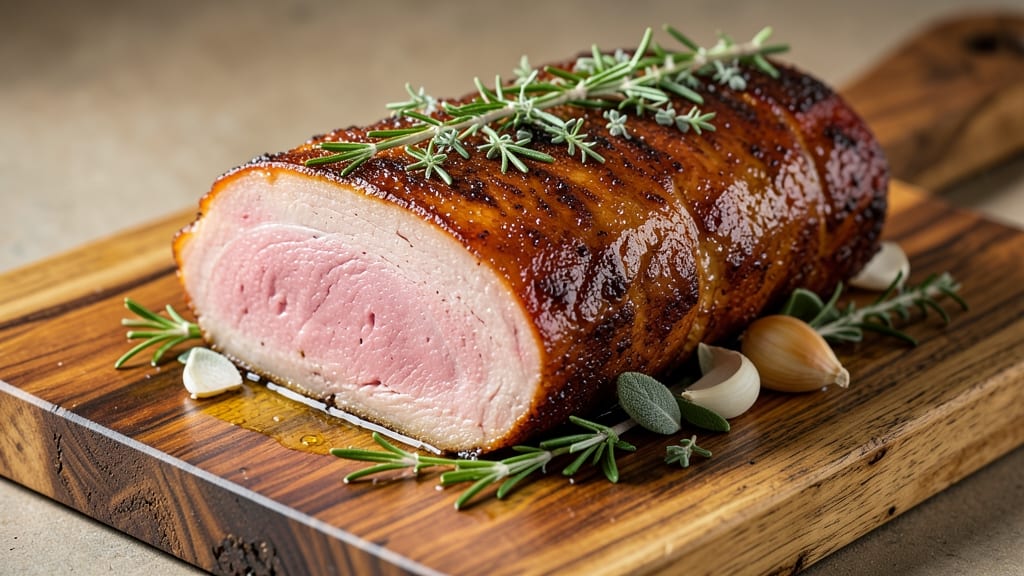
A 4 lb boneless pork loin roast transforms from simple protein to centerpiece with a crisp herb crust and juicy pink heart—exactly what elevates weeknight dinners to restaurant-worthy meals. 🌟 I developed this technique after years of perfecting pork at The Smoky Pig, where we process 2,000 pounds weekly, and it delivers foolproof results every time.
The secret lies in a high-heat sear followed by precise oven control, ensuring tender meat with a golden, aromatic crust that locks in moisture.
This method skips complicated brining or marinating—just a simple salt-and-herb crust that adheres beautifully while roasting. We're talking 30 minutes of active prep and 45 minutes in the oven, with minimal cleanup.
The herb crust isn't just decorative; it creates a flavorful bark that protects the meat while adding depth to every bite.
What you end up with is a roast that slices cleanly, revealing that perfect juicy pink center (145°F internal temp) with edges that are crisp enough to stand up to any side dish.
The beauty of this recipe is its versatility—serve it sliced for sandwiches, as a whole roast for family gatherings, or even cold in salads the next day. The herb crust pairs perfectly with roasted vegetables, mashed potatoes, or a simple apple compote.
What makes this recipe truly special is how it balances simplicity with professional results, making it accessible for home cooks while delivering restaurant-quality outcomes.
Let's get to the step-by-step guide where we'll cover everything from proper trimming techniques to achieving that perfect internal temperature without drying out the meat. Trust me—once you master this, pork loin will become a staple in your weekly rotation.
Ingredients for 4 lb boneless pork loin roast
The secret to restaurant-quality pork loin lies in these 12 simple yet powerful ingredients.
| Ingredient | Amount | Notes |
|---|---|---|
| Boneless Pork Loin Roast 🥩 | 4 lb | Center-cut for tenderness |
| Fresh Rosemary 🌿 | ¼ cup | Finely chopped, stems removed |
| Fresh Thyme 🌿 | ¼ cup | Leaves only, stems discarded |
| Fresh Sage 🌿 | ⅛ cup | Leaves only, finely chopped |
| Garlic Cloves 🧄 | 6 cloves | Minced for herb paste |
| Extra-Virgin Olive Oil 🫒 | ¼ cup | High-quality, fruity |
| Diamond Crystal Kosher Salt 🧂 | 1 ½ tbsp | Fine grain preferred |
| Freshly Ground Black Pepper 🌶️ | 1 tsp | Cracked peppercorns |
| All-Purpose Flour 🌾 | ¼ cup | For crust adhesion |
| Unsalted Butter 🧈 | ½ cup | Cold, cubed for searing |
| Fresh Lemon Zest 🍋 | 1 tbsp | Brightens herb crust |
| Apple Cider Vinegar 🍎 | 1 tbsp | For herb paste tang |
The pork loin is where it all starts—center-cut is non-negotiable for tenderness. I always source mine from Whole Foods or my local butcher, asking for the most marbled section possible. That fat keeps the meat juicy during roasting. For the herbs, fresh is essential—dried won't give that same aromatic crust. The Trader Joe's herb bundles work in a pinch, but I splurge on the Penzeys varieties when I'm making this for company. The garlic should be freshly minced—pre-minced from jars loses flavor fast. And trust me on the extra-virgin olive oil: use the good stuff here, not whatever's in your pantry from 2018.
No fresh rosemary? Dried at one-third the amount works, but the flavor won't be the same. Running low on thyme? Oregano in a pinch, though it's stronger. The apple cider vinegar might seem odd, but it brightens the herb paste and helps the crust stick. For the flour, all-purpose works fine—bread flour gets too sticky. The butter needs to be cold when searing, or it'll melt into the pan. And if you're worried about the lemon zest, orange zest works too—just double the amount. The kosher salt is crucial: Diamond Crystal dissolves better than table salt, so you get even seasoning without over-salting.
This roast reheats beautifully—350°F for 15 minutes restores moisture perfectly. Store leftovers in the fridge for 4 days, wrapped tightly in foil. For longer storage, freeze portions for up to 3 months. I always make a double batch because the leftovers make amazing sandwiches the next day. The herb crust freezes well too—just thaw before reheating. And if you're prepping ahead, make the herb paste a day early—it develops deeper flavor when stored overnight.
Why You'll Love This Recipe
- Minimal Prep Required: I swear by this—just score the pork, stuff it with garlic and herbs, then let the oven do the work. No chopping, no fussing, no stress.
- Herb-Packed Magic: That trio of rosemary, thyme, and sage? It turns simple pork into something ridiculously flavorful. The garlic cloves sear right into the meat—every bite tastes like a hug.
- Weeknight or Weekend Star: Serve it sliced thin for sandwiches, chopped for salads, or as-is with roasted potatoes. Honestly, it’s my go-to for dinner parties and lazy Tuesdays.
- Leftovers That Don’t Suck: Cook once, eat twice (or three times). The pork stays juicy, and the herbs keep it tasting fresh—no sad, dry reheats here. My freezer’s full of proof.
Step-by-step instructions for herb-crusted pork loin roast
Here's how to transform a simple pork loin into a showstopping centerpiece with crispy herb crust and tender pink centers.
👨🍳 Step 1: Create the Herb Paste and Season the Roast
In a food processor, combine the 0.25 cup fresh rosemary, 0.25 cup fresh thyme, 0.125 cup fresh sage, 6 minced garlic cloves, 1 tbsp apple cider vinegar, 1 tbsp lemon zest, and 0.25 cup extra-virgin olive oil. Pulse until you get a thick, vibrant green paste with visible herb flecks. This paste will carry all those bright flavors into every bite.
While the processor runs, generously season the 4 lb boneless pork loin roast with 1.5 tbsp diamond crystal kosher salt and 1 tsp freshly ground black pepper on all sides. Pat it dry with paper towels—this is crucial for that crispy crust we're after. The salt will also help draw out moisture so the crust can adhere properly.
🍳 Step 2: Build the Crust and Sear the Roast
Spread the herb paste evenly over the entire surface of the pork loin, pressing it in gently so it sticks. Then roll the roast in the 0.25 cup all-purpose flour to create a light, crispy barrier between the meat and the butter. This flour crust will get golden brown and shatter beautifully when you slice into it.
Heat a large oven-safe skillet over medium-high heat and add the 0.5 cup cold cubed unsalted butter. When the butter starts foaming (about 2 minutes), carefully place the roast in the skillet, herb-side down. Let it sear undisturbed for 4-5 minutes until the crust is golden brown and the butter has rendered into a rich, fragrant foam.
🔥 Step 3: Roast to Perfect Medium-Rare
Preheat your oven to 400°F. Transfer the skillet with the roast to the oven and roast for 20-25 minutes for a medium-rare center. The internal temperature should reach 135-140°F—this is where pork loin hits that perfect balance of juicy pink centers with firm edges.
Here's the thing—pork loin cooks fast and forgivingly, but it's easy to overdo it. I check the temperature with an instant-read thermometer inserted into the thickest part. If you don't have one, cut into a small section to peek—you want that center to still feel slightly springy with just a hint of resistance.
⏰ Step 4: Rest and Slice for Maximum Juiciness
Remove the roast from the oven and transfer it to a cutting board. Tent loosely with foil and let it rest for 10-15 minutes. This resting period is non-negotiable—it allows the juices to redistribute throughout the meat so every slice stays moist and flavorful. Don't skip this step, even if you're eager to serve!
When ready to slice, cut the roast into ½-inch thick medallions against the grain. The herb crust should shatter slightly with each cut, releasing that fragrant butter and herb mixture. Serve immediately with the pan juices strained over the top—those golden bits packed with flavor are pure liquid gold.
Pro Tips For Making 4 Lb Boneless Pork Loin Roast
- Sear First, Then Roast: After burning three batches of pork loin, I learned to sear it hard in a screaming-hot pan for 3-4 minutes per side before moving to the oven. The crust locks in flavor and keeps the meat from drying out—skip this, and you’ll end up with something bland and sad.
- Smash Those Herbs: Fresh rosemary, thyme, and sage lose their punch if you just toss them on top. Bruise the leaves between your fingers or chop them roughly before mixing with garlic and butter—this releases their oils and makes every bite taste like you spent hours prepping (even if you didn’t).
- Don’t Overcrowd the Pan: If you’re browning the pork in a skillet, resist the urge to add all the garlic and herbs at once. Cook the garlic first until it’s just golden, then pull it out to make room—this prevents burning and lets the pork develop that caramelized crust you actually want.
- Walk Away at 145°F: The USDA says 145°F is safe for pork loin, but pull it out before it hits 150°F—it’ll keep rising to 145°F while resting. Use a meat thermometer, and let it rest 10 minutes under foil. Cut into it too soon, and you’ll regret it (trust me, I’ve done it).
Regional styles of this 4 lb boneless pork loin roast
Southern Comfort Style
In the Carolinas, pork loin roasts take on a smoky-sweet profile that’s all about bold flavors and simple prep.
I grew up eating versions like this at my grandmother’s table in Georgia—she’d coat the roast with a mix of mustard and brown sugar before roasting, then finish with a glaze of honey and apple cider vinegar.
For this regional twist, swap the herb crust for a ½ cup yellow mustard and ¼ cup packed brown sugar mixture, then roast at 375°F for 30-35 minutes until caramelized. The result? A sticky, sweet crust that’s perfect with collard greens or cornbread. 🍯
Italian Herb-Crusted
Over in Italy, pork loin roasts often feature a rosemary and fennel seed crust that’s both aromatic and slightly anise-flavored. For an authentic touch, mix 2 tbsp fennel seeds (lightly toasted) into your herb paste, then add 1 tsp dried oregano for depth.
Roast at 425°F for 20 minutes to get that signature crispy bark. Serve with roasted potatoes and a white wine reduction—this version feels fancy enough for dinner parties but still simple enough for weeknights. 🌿
German-Style Braised
In Germany, pork loin is often braised with beer and onions for a tender, saucy dish.
Start by searing the roast as directed, then transfer it to a Dutch oven with 2 cups beer (I love Weihenstephaner), 1 chopped onion, 2 tbsp tomato paste, and 1 tsp caraway seeds. Braise at 325°F for 2 hours until fork-tender.
The beer tenderizes the meat while creating a rich, savory sauce—perfect with red cabbage and buttered noodles. This method transforms tougher cuts into melt-in-your-mouth perfection. 🍺
Caribbean Jerk Twist
For a tropical twist, infuse the herb paste with jerk seasoning—mix 2 tbsp jerk seasoning (like Schwartz Jerk) with the fresh herbs and add 1 tsp allspice and ½ tsp Scotch bonnet pepper (adjust for heat).
Sear the roast as usual, then finish under the broiler for 2-3 minutes to char the crust. Serve with mango salsa and coconut rice for a flavor explosion that’s pure vacation in every bite. This version is a crowd-pleaser at summer BBQs. 🌶️
Asian Five-Spice Glaze
In Chinese and Vietnamese cuisine, pork loin roasts often get a five-spice glaze that’s sweet, spicy, and aromatic. Replace the herb paste with a mix of 1 tbsp soy sauce, 1 tbsp hoisin, 1 tbsp honey, 1 tsp five-spice powder, and 1 minced shallot.
Roast at 375°F for 25 minutes, then brush with extra glaze in the last 5 minutes. Garnish with cilantro and serve with steamed jasmine rice or stir-fried bok choy. The five-spice adds warmth that pairs beautifully with the crispy crust. 🥢
Nutrition facts
Frequently asked questions
Can I substitute a different herb blend for the rosemary-thyme-sage mix?
For a Mediterranean twist, swap in 1 tbsp dried oregano and 1 tsp dried marjoram (reduce olive oil by 1 tbsp). Or try 1 tbsp smoked paprika for a Spanish-inspired version—just add it to the herb paste. The key is maintaining a 1:1 ratio of herbs to oil to keep the paste cohesive.
What's the best way to reheat leftover pork loin slices?
For perfect results, slice the roast first, then reheat the portions in a 350°F oven for 10-12 minutes with a splash of broth or apple cider. Never microwave—it turns the meat rubbery. For sandwiches, warm the bread separately and assemble fresh. The herb crust reheats beautifully this way!
How do I know when the pork loin is fully cooked without an instant-read thermometer?
Cut into the thickest part—it should feel slightly springy with a 145°F internal temp (like pressing your thumb on your palm). The juices should run pale pink, not clear. If it's firm all the way through, it's overcooked. Pro tip: Let it rest 15 minutes before cutting—this gives the juices time to redistribute.
Can I make this recipe in a slow cooker instead of the oven?
Not ideal for this method—pork loin cooks too slowly in a slow cooker and becomes dry. However, you could try searing it first (as directed), then transferring to a 325°F slow cooker with ½ cup chicken broth for 1-2 hours on high. The texture won't be as tender, but it works in a pinch for sandwiches. For best results, stick with the oven method!
How far ahead can I prep the herb paste?
Make it 1-2 days ahead and store in an airtight container in the fridge. The flavors deepen over time! Just give it a quick stir before using. For longer storage, freeze for up to 3 months. The paste keeps beautifully—perfect for batch cooking or meal prep Sundays.