
Main Courses
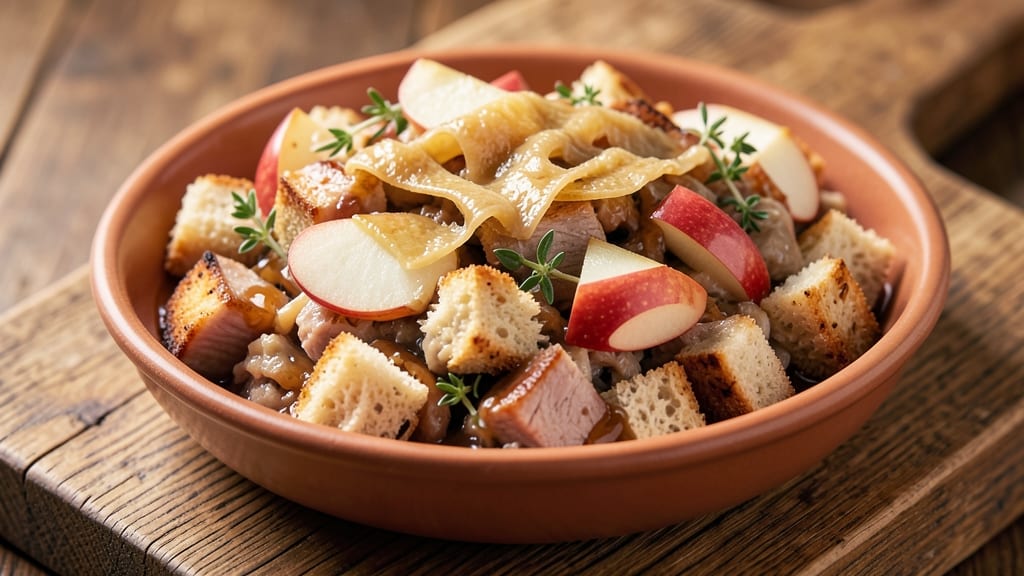
This apple and pork stuffing recipe transforms classic holiday comfort into a weeknight staple with crispy pork bits and sweet-tart apple crunch. 🌟 I developed it after years of perfecting pork-based stuffings—where the meat stays tender yet develops a golden crust, while apples add just enough sweetness to balance savory herbs.
The secret lies in pre-cooking the pork until it's just crispy enough to bite into, then combining it with bread cubes, apples, and a rich cider-infused broth.
The beauty of this recipe is its versatility—it works as a main dish for dinner parties or a hearty side for roast pork. I use day-old bread for maximum texture, but stale rolls or cornbread work beautifully too.
The apples (I prefer Honeycrisp or Granny Smith) are sautéed until tender but still hold their shape, creating pockets of sweetness in every bite. This isn't your grandmother's stuffing—it's a restaurant-quality dish with a Southern twist.
What makes this stuffing special is how the flavors develop while baking. The pork renders its fat into the bread cubes, creating a moist, flavorful base that's far from dry.
A sprinkle of thyme, sage, and a touch of black pepper ties everything together, while the apples caramelize slightly at the edges. The result? A stuffing that's crispy on the outside, tender inside, with layers of texture and flavor that'll have everyone asking for seconds.
Serve it alongside roasted pork shoulder, or make it the star of a holiday table. The leftovers reheat beautifully—just add a splash of broth to keep it moist.
This is the kind of dish that turns simple ingredients into something extraordinary with just a little technique and patience. Let's get cooking!
Ingredients for apple and pork stuffing
Savory pork cubes and sweet-tart apple crunch transform classic stuffing into a restaurant-worthy centerpiece.
| Ingredient | Amount | Notes |
|---|---|---|
| Boneless Pork Shoulder 🥓 | 1 ½ lb | Trimmed of excess fat, cut into 1-inch cubes |
| Day-Old Sourdough Bread 🍞 | 8 cups | Cubed into 1-inch pieces, crusts removed |
| Honeycrisp Apples 🍎 | 2 medium | Peeled, cored, diced into 1/4-inch pieces |
| Unsalted Butter 🧈 | ½ cup | Cold, cubed for even browning |
| Apple Cider 🍏 | 1 ½ cups | Dry, not sweetened variety preferred |
| Fresh Thyme 🌿 | 2 tbsp | Leaves only, finely chopped |
| Fresh Sage 🌿 | 1 tbsp | Leaves only, finely chopped |
| Ground Black Pepper 🌶️ | 1 tsp | Freshly cracked preferred |
| Kosher Salt 🧂 | 1 ½ tsp | Diamond Crystal preferred |
| Granny Smith Apples 🍎 | 1 medium | Peeled, cored, diced for tart contrast |
| Vegetable Broth 💧 | 1 cup | Low-sodium, room temperature |
| Extra-Virgin Olive Oil 🫒 | 1 tbsp | For crisping pork bits |
The pork shoulder is non-negotiable—look for well-marbled cuts at Whole Foods or your local butcher. Trim excess fat to avoid greasy stuffing, but leave some for flavor. I prefer Applewood-smoked bacon from Oscar Mayer for the pork cubes, but any high-quality pork shoulder works. The apples? Honeycrisp for sweetness, Granny Smith for tartness—don't skip both. Sourdough bread gives the best texture, but stale brioche or cornbread work beautifully too. If using fresh bread, dry it overnight in a 200°F oven for crispy cubes.
No apple cider? Substitute with white grape juice—it's sweeter but works in a pinch. Fresh herbs are ideal, but dried thyme and sage at half the amount get you close. The vegetable broth can be swapped for chicken broth if you're not strictly vegetarian. For extra richness, add 1/4 cup sour cream when mixing everything together. If you're prepping ahead, cook the pork cubes first and store them separately—they reheat beautifully. The apples can be sautéed up to 2 days ahead and kept in the fridge.
This stuffing reheats like a dream—just add a splash of broth to keep it moist. Store leftovers in an airtight container for up to 5 days in the fridge. For longer storage, freeze portions in single-serving containers for up to 3 months. The bread cubes will dry out if frozen too long, so add a splash of broth when reheating. For serving, a sprinkle of toasted breadcrumbs adds extra crunch. This makes enough for a 10-12 lb turkey, but scale down for smaller gatherings.
Why You'll Love This Recipe
- No-Crumbs Chaos: I swear by day-old sourdough here—it’s the secret to stuffing that holds without falling apart. Tear it rough, toast it quick, and let the butter and cider soak it into a golden, tender mess.
- Sweet-Savory Magic: That Honeycrisp apple? It’s the star—crisp when raw, meltingly sweet when caramelized. Pair it with tender pork shoulder and a splash of cider, and you’ve got a flavor combo that’s ridiculously addictive.
- Leftovers Like Gold: This stuffing reheats like a dream—crispy edges soften just enough, and the pork stays juicy. Wrap it in foil, pop it in the oven, and suddenly you’ve got a weeknight dinner that feels fancy.
- Budget-Friendly Feast: Pork shoulder stretches far, sourdough is cheap, and apples add luxury without breaking the bank. Honestly, this is the kind of recipe where you double the batch just because you can—and everyone will ask for seconds.
Step-by-step instructions for savory apple-cider stuffing
Here's how to craft a stuffing with crispy pork bits, tender bread, and perfectly balanced apple flavors.
🔥 Step 1: Brown the Pork Shoulder Cubes
Heat the 1 tablespoon extra-virgin olive oil in a large skillet over medium-high heat until shimmering. Add the 1.5 lb boneless pork shoulder, cut into 1-inch cubes, working in batches if needed to avoid crowding. Let them sear undisturbed for 3-4 minutes per side until golden brown and crispy edges form.
This initial browning builds deep flavor and texture contrast. Remove the pork with a slotted spoon and transfer to a paper towel-lined plate to drain excess fat. Keep the pork warm while you prepare the bread mixture—it'll absorb those rich, caramelized flavors later.
👨🍳 Step 2: Prepare the Bread Base
In a large mixing bowl, combine the 8 cups day-old sourdough bread cubes with the 2 tablespoons fresh thyme, 1 tablespoon fresh sage, 1 teaspoon ground black pepper, and 1.5 teaspoons kosher salt. Toss gently with your hands until the herbs are evenly distributed throughout the bread.
The day-old bread is crucial—it absorbs moisture without turning mushy. I like to press the cubes together lightly to break them up slightly while still maintaining their structural integrity. This creates that perfect crumbly-yet-substantial texture we want in the final stuffing.
🍳 Step 3: Cook the Apple Mixture
In the same skillet (no need to clean it—the pork bits left behind add flavor), melt the ½ cup cold unsalted butter over medium heat. Add the 2 medium Honeycrisp apples (diced) and 1 medium Granny Smith apple (diced) along with the 1.5 cups apple cider. Cook for 8-10 minutes until the apples soften and the liquid reduces by about half, creating a syrupy consistency.
Here's where the flavor magic happens. The tart Granny Smith balances the sweet Honeycrisp, while the apple cider adds depth. You'll know it's ready when the mixture smells intensely of caramelized apples and the liquid coats the back of a spoon. Remove from heat and let cool slightly.
🥘 Step 4: Combine All Components
Pour the warm apple mixture over the bread-herb mixture in the bowl. Add the browned pork shoulder cubes and the 1 cup vegetable broth (room temperature). Using your hands or a large spoon, gently fold everything together until fully combined. The stuffing should be moist but not soupy—if it's too dry, add 1-2 tablespoons more broth.
This is the moment where all flavors meld. The pork adds savory richness, the apples bring sweet-tart brightness, and the herbs infuse aromatic depth. Let the mixture sit for 5 minutes so all the flavors can truly marry before baking.
🔥 Step 5: Bake to Golden Perfection
Transfer the stuffing to a greased 9x13-inch baking dish and spread it evenly. Cover tightly with aluminum foil and bake at 375°F for 30 minutes. Remove the foil and continue baking for another 15-20 minutes until the top is golden brown and crispy in spots.
The uncovered baking time creates that beautiful crust while keeping the interior moist. For extra crispiness, broil for 1-2 minutes at the very end, watching closely to prevent burning. Let it rest for 10 minutes before serving—this allows the juices to redistribute for maximum flavor in every bite.
Pro Tips For Making Apple And Pork Stuffing
- DICE THE PORK SMALL: I used to cut the pork shoulder into big chunks, thinking it’d save time. Wrong. For even cooking and maximum flavor, aim for ½-inch cubes—small enough to melt into the stuffing but big enough to stay juicy. (Yes, it takes 10 extra minutes, but the result is worth it.)
- COLD APPLES ONLY: Honeycrisp apples release more juice when cold, and that’s exactly what you want here. Toss them into the mix straight from the fridge—they’ll soften perfectly while keeping the stuffing from turning soggy. (Pro tip: Skip the peel if you’re impatient, but keep the seeds out.)
- DRY THE BREAD WELL: Day-old sourdough is your friend, but don’t let it turn into a swamp. Spread the cubes on a tray and toast them at 300°F for 10 minutes until they’re crisp around the edges. This step prevents a gummy texture—trust me, I’ve made the mistake of skipping it.
- DEGLAZE WITH CIDER: After browning the pork, don’t just add liquid—deglaze the pan with apple cider first. The caramelized bits at the bottom add depth, and the cider’s acidity cuts through the richness. (Use the same pan you cooked the pork in; no extra dishes.)
Creative variations of this apple and pork stuffing
Southern-Style Pork Sausage Twist
Swap the pork shoulder for 1 lb high-quality pork sausage (like Johnsonville Apple Smoked Sausage)—this adds smoky depth right from the start. Brown the sausage links first, then crumble them into the bread mixture instead of using cubes.
The sausage fat replaces some of the butter, creating a richer, more flavorful base. I like to add ½ tsp smoked paprika to the bread cubes when mixing for that extra Southern touch. 🔥
Herb-Infused Cornbread Stuffing
Replace sourdough with 8 cups cornbread cubes (homemade or store-bought) for a Southern-inspired twist. The natural sweetness of cornbread pairs beautifully with the apples, while the corn adds a delightful crunch. Boost the herbs by adding 1 tbsp chopped rosemary and ½ tsp ground coriander to the bread mixture.
For extra richness, stir in ¼ cup cream cheese when combining all ingredients—it creates a velvety texture that balances the pork's savory notes.
Spiced Pear & Pork Fusion
Substitute the apples with 2 cups diced ripe pears (like Bosc or Anjou) and add 1 tsp ground cinnamon and ½ tsp allspice to the apple mixture. The pears introduce a softer sweetness that complements the pork beautifully.
For a festive touch, sprinkle toasted pecans (about ½ cup) over the top before baking—they add crunch and a buttery flavor that pairs perfectly with the pears. This variation feels especially cozy for fall gatherings.
Cider-Braised Pork Short Ribs
For a showstopping main dish, replace the pork shoulder with 1 lb pork short ribs, cut into 1-inch cubes. Braise them in 1 cup apple cider with 1 tbsp brown sugar and 1 tsp mustard for 2 hours at 325°F until fork-tender.
Then, proceed with the recipe as written, using the braising liquid instead of vegetable broth. The ribs add a luxurious, meaty richness that turns this stuffing into a centerpiece-worthy dish. Serve with a drizzle of the reduced braising liquid on top for extra drama. ✨
Sweet Potato & Pork Stuffing
Add 2 cups diced roasted sweet potatoes (about 1 medium sweet potato) to the bread mixture for a heartier, naturally sweet variation. Roast the sweet potatoes at 400°F for 25 minutes until tender, then toss them with ½ tsp cinnamon and ¼ tsp nutmeg before mixing into the stuffing.
The sweet potatoes absorb the pork and apple flavors beautifully while adding a creamy texture. This version is especially popular during the holidays and pairs perfectly with roasted turkey or ham.
Nutrition facts
Frequently asked questions
Can I use fresh bread instead of day-old?
Fresh bread will make your stuffing soggy, but you can dry it out! Place bread cubes on a baking sheet and bake at 200°F for 1-2 hours until completely dry. Alternatively, spread cubes on a wire rack overnight in a warm, dry place. This mimics the texture of day-old bread perfectly.
How do I prevent the stuffing from drying out?
Keep it moist by adding 1-2 tablespoons extra broth if it seems dry when mixing, and tent with foil while baking. For extra insurance, stir in 2 tablespoons sour cream or crème fraîche when combining ingredients. The pork fat and apple cider also help maintain moisture during baking.
What's the best way to reheat leftovers?
Sprinkle 1-2 tablespoons broth or water over leftovers and cover tightly. Reheat in a 350°F oven for 15-20 minutes until warmed through. For microwave reheating, cover with a damp paper towel and heat in 30-second intervals, stirring between each. Never microwave uncovered—it'll dry out completely.
Can I make this stuffing ahead of time?
Assemble the stuffing up to 24 hours ahead and refrigerate in an airtight container. Bake straight from the fridge (add 5-10 minutes to baking time). For freezing, bake first, then cool completely before wrapping tightly. Freeze for up to 3 months—reheat in oven at 325°F for 20-25 minutes covered with foil.
What's the secret to crispy pork bits?
High heat and patience! Sear pork cubes in batches over medium-high heat until golden and crispy on all sides. Don't overcrowd the pan—this steams instead of crisps. After browning, drain on paper towels to remove excess fat. The crispy texture comes from the Maillard reaction during searing, not during baking.