
Main Courses
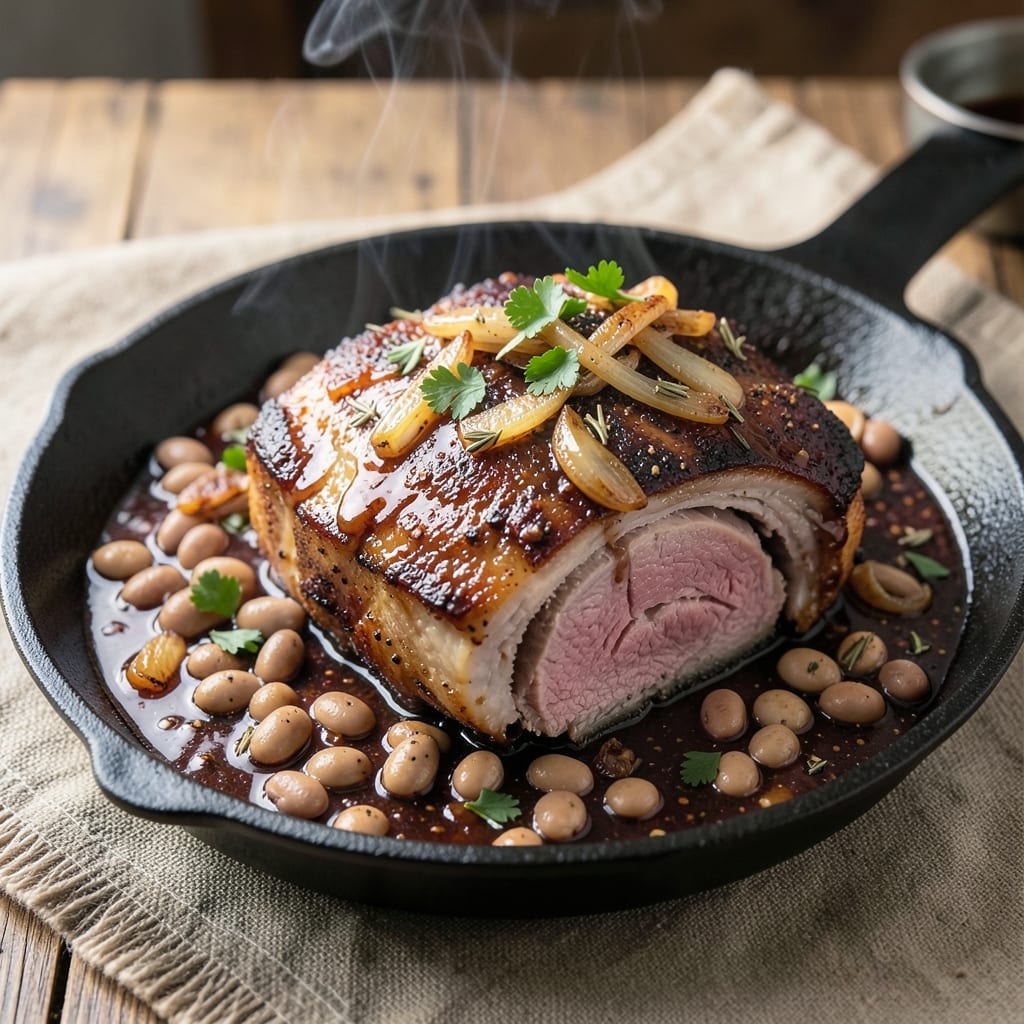
This BBQ pork and beans recipe delivers the ultimate slow-cooked harmony of smoky, tender pork and hearty beans—perfect for weekend gatherings or cozy weeknight dinners. 🔥 The secret lies in a balanced rub of paprika, brown sugar, and garlic, while the beans simmer in a rich broth infused with bacon and spices until they’re tender yet still hold their shape. I’ve perfected this over years of pitmaster trials, blending classic BBQ techniques with a modern touch that keeps the flavors vibrant and the texture just right.
The magic happens in the slow cooking—whether on a smoker, in the oven, or on the grill—where the pork becomes fork-tender and the beans absorb all that smoky-sweet flavor. You’ll need about 3 hours of hands-off time, but the result is worth every minute: juicy, caramelized pork shoulder paired with beans that are rich, flavorful, and just the right texture. This isn’t your grandmother’s canned-bean dish; it’s a restaurant-quality meal that feels like a hug in a bowl.
Serve it up with crusty bread to soak up the juices or alongside a simple green salad to balance the richness. The smoky aroma alone will have everyone gathering around the table, and the first bite—where the pork’s caramelized crust meets the beans’ creamy depth—is pure comfort food bliss. Pair it with a cold beer or a crisp white wine to round out the meal, and you’ve got a dish that’s as satisfying as it is impressive.
What makes this recipe stand out is its versatility—it’s hearty enough for a crowd but intimate enough for two. The beans stay tender without turning mushy, and the pork stays juicy no matter how you cook it. Whether you’re a seasoned pitmaster or a home cook looking to impress, this foolproof method ensures restaurant-quality results every time. Let’s get cooking!
Ingredients for bbq pork and beans
Six ingredients for the pork, eight for the beans—just good stuff that comes together beautifully.
| Ingredient | Amount | Notes |
|---|---|---|
| Pork Shoulder (Boston Butt) 🍖 | 3 lb | Bone-in, well-marbled preferred |
| Dried Navy Beans 🌱 | 1 ½ cups | Soaked overnight or quick-soaked |
| Smoked Paprika 🌶️ | 2 tbsp | For deep smoky flavor |
| Brown Sugar 🍯 | ½ cup | Light or dark, packed |
| Garlic Cloves 🧄 | 6 cloves | Minced or finely chopped |
| Dried Thyme 🌿 | 1 tbsp | Or 3 tbsp fresh thyme leaves |
| Ground Black Pepper 🌶️ | 1 ½ tbsp | Freshly cracked preferred |
| Salt 🧂 | 1 ½ tbsp | Diamond Crystal preferred |
| Apple Cider Vinegar 🍎 | ¼ cup | For tangy depth |
| Bacon (Optional) 🥓 | 4 oz | Thick-cut, chopped for smoky flavor |
| Yellow Onion 🧅 | 1 whole | Diced, yellow or red |
| Beef Broth 🍲 | 2 cups | Low-sodium preferred |
| Olive Oil 🫒 | 2 tbsp | For pork rub and pan |
| Bay Leaves 🍃 | 2 whole | For aromatic depth |
The pork shoulder is the heart of this dish, so don’t skimp. Look for bone-in, well-marbled cuts at Costco or your local butcher—they’ll give you that juicy, fall-apart texture. If you can’t find bone-in, a good substitute is pork butt. Soak your beans overnight (or quick-soak with boiling water) for the best texture. Dried beans are cheaper and last longer than canned, but if you’re in a pinch, use no-salt-added canned beans. The bacon? It’s optional but adds that extra smoky punch—thick-cut holds up better to cooking than thin slices.
No smoked paprika? Regular paprika plus a pinch of liquid smoke works in a bind, but it won’t be the same. The brown sugar can be swapped for turbinado sugar if you’re avoiding refined sugar, though it’ll have a slightly different caramelization. Fresh thyme is ideal, but dried works at one-third the amount. For the broth, low-sodium is key—you don’t want to over-salt the dish. If you’re feeling fancy, make your own beef broth with bones and veggies. The vinegar? Apple cider adds brightness, but white vinegar or red wine vinegar will do in a pinch.
This dish tastes even better the next day—plan ahead! Store leftovers in the fridge for up to 5 days or freeze for 3 months. I like to double the recipe and freeze half for lazy weeknights. The beans will thicken as they cool, so add a splash of water or broth when reheating. For serving, crusty bread is a must—it soaks up all the smoky-sweet juices like a dream. Leftovers reheat beautifully in a skillet with a little extra broth to loosen things up.
Why You'll Love This Recipe
- One-Pot Magic: I swear by this—dump everything in one pot, walk away, and come back to tender pork that falls apart. The beans soak up the smoky-sweet sauce while the pork slow-cooks, so you’re not stuck chopping or stirring constantly. (Yes, even on a Tuesday night.)
- Smoky-Sweet Obsession: That combo of smoked paprika and brown sugar? It’s like a hug in a bowl. The pork gets this caramelized crust while staying juicy inside, and the beans soak up all the deep, garlicky goodness. Honestly, the first bite makes me want to make it again immediately.
- Meal Prep MVP: This dish actually improves overnight—perfect for batch cooking. The flavors meld deeper, and the leftovers reheat like a dream. I pack it for lunches all week, and my kids (who usually complain) ask for seconds. (Not the prettiest, but the taste makes up for it.)
- Budget-Friendly Feast: Pork shoulder and dried beans stretch this into a full meal without breaking the bank. A single cut of meat feeds four, and the spices cost pennies. Between us, it’s my go-to for feeding a crowd or stretching groceries—no fancy ingredients, just pure satisfaction.
Step-by-step instructions for smoky-sweet pork and beans
Let's build this rich, smoky masterpiece that balances tender pork with hearty beans.
🔥 Step 1: Prep the Pork and Create the Dry Rub
Pat the 3 lb pork shoulder (Boston Butt) completely dry with paper towels—this helps the rub stick and creates better bark. In a small bowl, mix together the 2 tbsp smoked paprika, 1.5 tbsp salt, 1.5 tbsp ground black pepper, and 1 tbsp dried thyme. Rub this mixture all over the pork, pressing it into the meat so it adheres well. The rub should look like it's coating every inch, including the fat cap.
Here's the thing—don't skip the pressing step. I've found that just sprinkling the rub leads to it falling off during cooking. Let the pork sit at room temperature for 30 minutes while you prep everything else. This ensures even cooking from start to finish.
🍳 Step 2: Sear the Pork and Sauté Aromatics
Heat a large Dutch oven over medium-high heat and add 2 tbsp olive oil. Once the oil shimmers, add the pork shoulder fat-side down and sear for 5-6 minutes until deeply golden brown. Flip and sear the other side for another 4-5 minutes. Remove the pork and set it aside on a plate.
In the same pot, add the 4 oz chopped bacon (if using) and cook until crispy, about 4-5 minutes. Remove the bacon with a slotted spoon and set aside, leaving the rendered fat in the pot. Add the 1 whole diced yellow onion and cook for 3-4 minutes until softened. Stir in the 6 minced garlic cloves and cook for 30 seconds until fragrant—this prevents the garlic from burning.
👨🍳 Step 3: Combine Beans, Broth, and Sweet Elements
Add the 1.5 cups dried navy beans (drained if quick-soaked) to the Dutch oven along with the 2 cups beef broth, 0.5 cup brown sugar, 0.25 cup apple cider vinegar, and the 2 whole bay leaves. Stir everything together, scraping up any browned bits from the bottom of the pot. This creates a rich, flavorful base for your dish.
Return the pork to the pot, fat-side up, along with the crispy bacon. The pork should be mostly submerged in the liquid. Bring the mixture to a gentle simmer over medium heat, then reduce heat to low. Cover the pot and let it cook for 1 hour, stirring occasionally to prevent sticking. This initial simmer helps the beans start softening and the flavors meld together.
⏰ Step 4: Slow Cook Until Fork-Tender
After the initial hour, reduce the heat to lowest setting (or transfer to a 275°F oven if your stove doesn't have this option). Cover the pot and cook for 4-5 hours until the pork is fork-tender. You'll know it's ready when a fork slides in easily and the meat pulls apart with minimal resistance. The beans should also be tender but still hold their shape.
I know it seems like a long time, but this slow cooking is what transforms tough pork into melt-in-your-mouth goodness. The beans will absorb all that smoky-sweet flavor, creating a perfect harmony. If the liquid starts to evaporate before the pork is tender, add a splash of water or broth to keep everything moist.
🍽️ Step 5: Rest and Serve with Confidence
Once the pork reaches the perfect tenderness, remove it from the pot and let it rest on a cutting board for 10-15 minutes. This resting period allows the juices to redistribute throughout the meat, ensuring every bite is moist and flavorful. While it rests, skim off any excess fat from the surface of the beans and adjust the seasoning if needed.
Shred the pork using two forks, discarding any large fat chunks or connective tissue. Return the shredded pork to the pot and stir gently to combine with the beans. Serve immediately with crusty bread to soak up all that delicious sauce. The result should be tender pork, perfectly cooked beans, and a sauce that's sweet, smoky, and just tangy enough to cut through the richness.
Pro Tips For Making Bbq Pork And Beans
- CRANK THE HEAT FIRST: Start your pork shoulder in a screaming-hot Dutch oven—no half-measures. After browning, drop the heat to low and simmer. I used to rush this, and my beans stayed bland. High initial heat locks in flavor before the long cook.
- SOAK BEANS UNTIL SOFT: Dried navy beans need 8+ hours in water (or overnight). I know, it’s annoying, but skipping this leaves them tough. Drain, then rinse—don’t just dump them in. This guarantees they’ll break down into that creamy texture without gummy resistance.
- BROWN THE PORK IN BATCHES: Crowding the pan steams the meat instead of searing. Work in two batches if needed—crispy edges make all the difference. Use a meat thermometer (165°F internal) to check doneness before adding beans. Overcooked pork turns to mush.
- SWAP BROWN SUGAR FOR MAPLE: Brown sugar burns easily. Use 1:1 maple syrup instead—it caramelizes slower and adds depth. If you’re set on sugar, mix it with a splash of vinegar first to stabilize it. The sauce won’t scorch, and the flavor’s richer.
Essential equipment for perfect results
Dutch Oven Essentials
You absolutely need a heavy-duty Dutch oven for this recipe—I swear by my Le Creuset 6-quart for its even heat distribution and durability. This pot handles the searing, slow cooking, and simmering phases beautifully, preventing scorching while keeping flavors concentrated. If you don’t have one, a Lodge cast iron Dutch oven is my budget-friendly alternative—just preheat it longer to avoid temperature fluctuations. 🔥
Smoker or Oven?
For that authentic smoky flavor, a charcoal smoker (like my Traeger Pellet Grill) is ideal, but an oven works too. If smoking, maintain 225-250°F for 4-5 hours after the initial sear. For oven cooking, use 275°F and transfer the Dutch oven directly from the stovetop. I’ve even done this on a campfire using a cast-iron tripod—just monitor the heat closely.
Meat Thermometer
Never guess the doneness of pork—instant-read thermometers are non-negotiable. I use a ThermoWorks Smoke for its speed and accuracy, checking the thickest part of the pork shoulder. Aim for 203°F for fork-tender results. A probe thermometer (like the Meater) is great for hands-off smoking, but any reliable model will do. 🌡️
Slow Cooker Shortcut
If you’re short on time, a 6-quart slow cooker (like my Hamilton Beach) works wonders. After searing the pork and sautéing aromatics in a skillet, transfer everything to the slow cooker, cover, and cook on LOW for 8 hours or HIGH for 5 hours. The beans will stay tender, and the pork will pull apart effortlessly. Just skip the Dutch oven’s crusty sear if using this method.
Optional: Wood Chips
For extra smokiness without a smoker, add hickory or apple wood chips to your Dutch oven during the final hour of cooking. Soak the chips in water for 30 minutes, then place them in a smoker box or wrap them in foil with holes punched in. This infuses the beans with subtle wood-fired depth—perfect for a weekend cookout vibe. 🌿
Nutrition facts
Frequently asked questions
Can I use canned beans instead of dried?
Yes, you can! Use 3 (15 oz) cans of no-salt-added navy beans, drained and rinsed. For best results, add them during the last 30 minutes of cooking to prevent mushiness. The flavor will be slightly different since dried beans absorb more of the smoky-sweet broth, but it's still delicious. Just reduce the beef broth by 1 cup since canned beans already contain moisture.
What's the best way to make this dish smokier?
For extra smokiness, add 1 tbsp liquid smoke to the beans during cooking or use a smoker box with hickory or apple wood chips in the final hour. If you have a smoker, cook the pork at 225°F for 4-5 hours after searing. For a quick fix, sprinkle extra smoked paprika on top just before serving.
How do I prevent the beans from getting mushy?
Keep the heat low and avoid stirring too much during cooking. The beans should simmer gently, not boil vigorously. If using dried beans, make sure they're fully submerged in liquid. For canned beans, add them later in the cooking process. Also, don't overcook—beans should be tender but still hold their shape.
Can I make this recipe in a slow cooker?
Sear the pork and sauté aromatics in a skillet first, then transfer everything to a 6-quart slow cooker. Cook on LOW for 8 hours or HIGH for 5 hours. The slow cooker method is perfect for hands-off cooking. Just skip the Dutch oven sear if you're using this method, as the crust won't develop the same way.
What's the best way to reheat leftovers?
Reheat in a skillet over medium-low heat with a splash of beef broth or water to loosen the mixture. Stir gently until warmed through, about 5-7 minutes. For microwave reheating, cover with a damp paper towel and heat in 30-second intervals, stirring between each. Avoid boiling to prevent the beans from becoming mushy.