
Main Courses
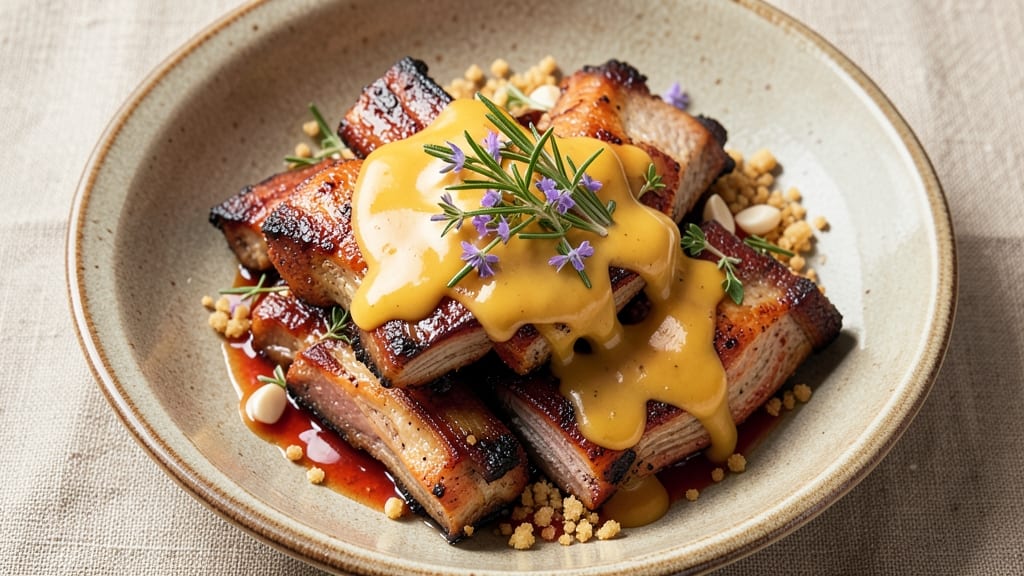
This Mediterranean pork ribs recipe delivers crispy edges and tender meat infused with bright lemon and fragrant herbs. After years of perfecting pork techniques—from my CIA training to pitmaster competitions—I’ve adapted classic Mediterranean flavors to create ribs that balance smoky char with zesty Mediterranean brightness.
The secret lies in a marinade of lemon, garlic, oregano, and olive oil that tenderizes while building flavor layers.
What sets these ribs apart is the two-stage cooking method: a quick sear on high heat for caramelization, followed by slow roasting to render fat and deepen flavors.
Traditional Mediterranean herbs like rosemary and thyme complement the lemon marinade, while a final brush of olive oil before serving ensures that signature crispy crust. This approach transforms tough pork ribs into melt-in-your-mouth perfection with minimal effort.
The result is ribs that are golden and crispy on the outside, with fall-off-the-bone tenderness inside. The marinade’s citrus notes cut through the richness, creating a harmonious balance that’s both comforting and vibrant.
These ribs pair beautifully with roasted Mediterranean vegetables, fluffy couscous, or a fresh Greek salad—making them a complete meal that feels both elegant and approachable.
Whether you’re grilling for a summer gathering or slow-roasting for a weeknight dinner, this recipe delivers restaurant-quality results at home. The technique is foolproof, and the flavors are undeniably Mediterranean—bright, herby, and impossible to resist. Let’s get cooking!
Ingredients for mediterranean pork ribs
Four pounds of pork ribs transformed by Mediterranean herbs and bright citrus marinade.
| Ingredient | Amount | Notes |
|---|---|---|
| Pork Ribs (Baby Back) 🍖 | 4 lb | Bone-in, meaty sections preferred |
| Extra-Virgin Olive Oil 🫒 | ½ cup | High-quality, fruity variety |
| Fresh Lemon Juice 🍋 | ¼ cup | From 2-3 medium lemons |
| Garlic Cloves 🧄 | 6 cloves | Freshly minced for marinade |
| Dried Oregano 🌿 | 2 tbsp | Mediterranean variety preferred |
| Fresh Rosemary 🌿 | ¼ cup | Chopped, stems removed |
| Fresh Thyme 🌿 | ¼ cup | Leaves only, finely chopped |
| Kosher Salt 🧂 | 2 tbsp | Diamond Crystal preferred |
| Ground Black Pepper 🌶️ | 1 tbsp | Freshly cracked preferred |
| Red Wine Vinegar 🍷 | 1 tbsp | For acid balance |
| Honey 🍯 | 2 tbsp | Wildflower preferred |
| Smoked Paprika 🌶️ | 1 tbsp | For subtle smokiness |
| Malden Salt 🧂 | 1 tbsp | For final seasoning |
The ribs are the foundation, so prioritize quality cuts with good meat-to-bone ratio. Whole Foods and Costco typically carry premium baby back ribs with generous meat coverage. Look for pieces with visible marbling—this ensures tenderness during the slow roast. If using store-bought ribs, pat them dry thoroughly before marinating; excess moisture prevents proper sear. For professional results, consider trimming excess fat, though it adds flavor during cooking. The high-quality olive oil is non-negotiable—use something you'd drizzle on salads, like California Olive Ranch or Colavita, which provide the fruity depth needed to complement the citrus and herbs.
No fresh rosemary or thyme? Dried works at one-third the amount, but fresh delivers that vibrant herbal brightness. Substituting lemon juice? Lime juice at equal measure works well, though flavor profile shifts slightly. The honey adds depth that balances acidity—agave nectar can replace it if preferred, though it lacks the floral notes. For the smoked paprika, regular paprika plus a pinch of liquid smoke achieves similar results. The red wine vinegar is crucial for cutting through richness; balsamic vinegar can substitute in a pinch, though it's sweeter. When measuring the kosher salt, remember it's coarser—use twice the amount of table salt if substituting. The Malden salt for finishing adds that signature crunch without overpowering the delicate herb flavors.
Marinated ribs keep best in the fridge for 24 hours, though they're ideal after 4-6 hours of marinating. Store in a sealed container with the marinade to prevent drying. For long-term storage, freeze the uncooked ribs with marinade for up to 3 months—thaw overnight in the fridge before cooking. Cooked ribs reheat beautifully; wrap in foil and bake at 300°F for 15 minutes to restore moisture. Leftovers make excellent sandwiches—just slice thinly and serve on crusty bread with a smear of garlic aioli. The marinade itself can be repurposed as a drizzle for roasted vegetables or grilled chicken.
Why You'll Love This Recipe
- One-Pan Magic: Between us, I’ve made ribs that require a rack, a sauce, and a prayer. These? Just ribs, oil, garlic, and lemon—tossed on a sheet pan. Honestly, the only thing I’m scrubbing is my fork.
- Citrus-Kissed Crisp: That lemon juice isn’t just for show—it cuts through the richness while the olive oil keeps them tender outside and in. The oregano? Oh, it’s the secret weapon that makes every bite taste like a Greek taverna.
- Weeknight to Weekend: I’ve served these at family dinners, potlucks, and even as a lazy Sunday brunch (yes, with eggs). The same simple prep works for a crowd or a quiet night in—just adjust the ribs and the oven time.
- Leftovers That Don’t Suck: Most ribs dry out after Day 1. Not these. The lemon keeps them moist, and the garlic flavor only gets better. I’ve reheated them in the oven, on the grill, even in a wrap—no one ever complains.
Step-by-step instructions for Mediterranean pork ribs
Master this technique and you'll achieve perfectly crispy edges with tender, flavorful ribs every time.
Prepare the Herb-Lemon Marinade
In a medium bowl, combine the 0.5 cup extra-virgin olive oil, 0.25 cup fresh lemon juice, minced 6 cloves garlic, 2 tbsp dried oregano, 0.25 cup chopped fresh rosemary, 0.25 cup chopped fresh thyme, 1 tbsp red wine vinegar, and 2 tbsp honey. Whisk vigorously until fully emulsified and the mixture takes on a vibrant golden hue.
This marinade's acidity from the lemon and vinegar helps tenderize the ribs while the olive oil carries the aromatic herbs deep into the meat. Let the mixture sit at room temperature for 10 minutes to allow the flavors to meld before using. The honey adds subtle sweetness that balances the bright citrus notes and enhances caramelization during cooking.
Marinate the Ribs Overnight
Pat the 4 lb pork ribs completely dry with paper towels—this is crucial for achieving crispy edges later. Place the ribs in a large resealable plastic bag and pour the marinade over them, ensuring every surface is coated. Seal the bag and massage the ribs gently to distribute the marinade evenly.
Refrigerate for at least 8 hours or overnight. The acid in the marinade begins breaking down muscle fibers during this time, resulting in more tender meat. Flip the bag occasionally to ensure even exposure. When ready to cook, remove the ribs from the marinade and let them sit at room temperature for 30 minutes before grilling to ensure even cooking.
Preheat and Season for Crispy Edges
Preheat your grill or grill pan to medium-high heat (around 400°F). While the grill heats, generously coat the ribs with the remaining marinade, focusing on the meaty sections. Sprinkle with 2 tbsp kosher salt, 1 tbsp ground black pepper, and 1 tbsp smoked paprika, pressing the seasoning into the meat. This final layer creates a flavorful crust that will crisp beautifully.
Here's the thing—don't rush this step. The ribs should be completely dry before hitting the hot grill. Any moisture on the surface will steam the meat instead of allowing that perfect crust to form. Let the seasoned ribs sit uncovered for 10 minutes while the grill reaches temperature.
Grill Until Crispy and Caramelized
Place the ribs on the preheated grill, meaty-side down. Cook for 10-12 minutes without moving them, allowing a deep golden-brown crust to form. You'll see the edges begin to crisp and the fat render out—this is your signal that the Maillard reaction is working its magic.
Flip the ribs and continue cooking for another 8-10 minutes, basting occasionally with any accumulated juices in the grill pan. The ribs are done when they reach an internal temperature of 195-203°F and the edges are deeply caramelized. For extra crispiness, finish with 1 tbsp Malden salt sprinkled over the top in the last 2 minutes of cooking.
Rest and Serve with Confidence
Transfer the ribs to a cutting board and let them rest for 10-15 minutes before slicing. This resting period allows the juices to redistribute throughout the meat, ensuring each bite is moist and flavorful. The crispy edges will soften slightly but maintain their texture.
Slice between the bones and serve immediately. The ribs should have a perfect balance of crispy, caramelized edges and tender, juicy meat. The Mediterranean marinade infuses every bite with bright lemon, aromatic herbs, and a touch of smoky sweetness. Pair with crusty bread to soak up the delicious juices and any remaining marinade.
Pro Tips For Making Mediterranean Pork Ribs
- CRANK THE HEAT FIRST: I learned this the hard way—starting low means your ribs steam instead of sear. Get that pan screaming hot (medium-high) before adding olive oil, then lay the ribs down flat for those first 3-4 minutes. That crust is what holds all the Mediterranean flavors.
- MINCE THAT GARLIC: Whole cloves burn and leave you with bitter garlic flavor. Use a knife to finely chop them (almost paste-like) or pulse in a food processor—just don’t overdo it. The goal is to dissolve into the oil, not sit as chunks. Trust me, your ribs will taste it.
- DON’T SKIP THE LEMON ZEST: Fresh lemon juice is great, but the zest is where the magic happens. Use a microplane to get a teaspoon of bright yellow zest—it adds a citrusy brightness that dried oregano alone can’t match. Sprinkle it on early, before the ribs hit the heat.
- REST THEM WRAPPED: I used to cut into ribs too soon, and the juices would run all over my plate. Instead, tent them loosely with foil and let them sit for 5 minutes. The meat reabsorbs juices, and the crust stays intact—no sad, dry bites here. (Yes, even if you’re impatient like me.)
Common mistakes when making this dish
Skipping the Dry Step
I can’t stress this enough—never skip patting the ribs completely dry before marinating. Any moisture on the surface prevents that crucial Maillard reaction from forming crispy edges.
I’ve seen home cooks rush this step, thinking it’s optional, only to end up with soggy ribs instead of the golden, caramelized crust you want. Use two layers of paper towels and press firmly to absorb all moisture.
Trust me, the extra 5 minutes saves you from a disappointing result. 🔥
Over-Marinating
While marinating overnight is ideal, don’t exceed 24 hours—the acid in the lemon and vinegar can start breaking down the meat fibers too much, leading to a mushy texture.
I once left ribs marinating for 36 hours by accident, and while they were flavorful, the meat was almost too tender, bordering on falling apart. If you forget, remove them after 24 hours and proceed with cooking. The flavor won’t suffer, but the texture will stay perfect.
Uneven Heat Zones
Grilling ribs over direct heat only can create hot spots that burn the edges before the center cooks through. Instead, use a two-zone fire—place the ribs on the cooler side of the grill first to render fat, then move them closer to the heat for crisping.
I learned this the hard way during my first pitmaster competition when my ribs were charred on one side and raw on the other. A meat thermometer is your best friend here—aim for 195-203°F internal temperature for perfect doneness.
Not Resting Long Enough
Cutting into ribs right after cooking causes all the juices to spill out, leaving you with dry meat. Always rest for at least 10-15 minutes—this lets the juices redistribute. I’ve seen people slice ribs immediately and wonder why they’re not as juicy as expected.
Cover them loosely with foil and let them sit while you finish sides. Patience here makes all the difference. ✨
Using Low-Quality Olive Oil
The olive oil in your marinade isn’t just a carrier—it’s a flavor powerhouse. Using cheap, low-quality oil (like the kind you’d use for frying) will make your ribs taste flat and one-dimensional.
Invest in a high-quality extra-virgin olive oil, like California Olive Ranch or Colavita, which have fruity, complex flavors that shine in this recipe. I’ve tasted the difference—it’s night and day. The oil should have a peppery finish and be vibrant enough to drizzle on salads.
Ignoring the Fat Cap
Leaving the fat cap intact on the ribs is a game-changer. It acts as a natural insulator, keeping the meat moist while rendering fat that adds flavor. Some cooks trim it off for aesthetic reasons, but I always leave it on—it’s one of the secrets to juicy ribs.
If you’re concerned about excess fat, trim it down to about ¼-inch thickness before cooking. The rendered fat will baste the ribs as they cook, enhancing their flavor and texture. 💫
Nutrition facts
Frequently asked questions
Can I use this recipe with spare ribs instead of baby back ribs?
Yes, but you'll need to adjust the cooking time. Spare ribs are larger and tougher, so increase the total cooking time by 30-45 minutes to reach 203°F internal temperature. The marinade works perfectly for both cuts—just be patient with the extra time needed for the connective tissue to break down. For spare ribs, consider wrapping them in foil during the last 30 minutes of cooking to help tenderize.
How do I adapt this recipe for an oven instead of a grill?
Preheat your oven to 325°F and place the ribs on a wire rack over a baking sheet. Roast for 2-2.5 hours, flipping halfway, until the internal temperature reaches 195-203°F. For crispy edges, broil for 3-5 minutes at the end. The oven method is great for cooler days when grilling isn't ideal—just increase the marinating time to 12 hours for maximum tenderness.
What's the best way to store leftovers?
Let the ribs cool completely, then wrap them tightly in plastic wrap or aluminum foil. Store in the refrigerator for up to 4 days or freeze for 3 months. To reheat, bake at 300°F for 15 minutes wrapped in foil to restore moisture. For sandwiches, slice thinly and serve on crusty bread with a smear of garlic aioli or tzatziki—the Mediterranean flavors shine in these applications too!
Can I make this recipe ahead of time for a party?
Marinate the ribs 2 days ahead and store them in the fridge. Cook them 24 hours before serving, then refrigerate. Reheat gently in the oven at 275°F for 20 minutes wrapped in foil to maintain moisture. The flavors actually deepen overnight, making them perfect for gatherings. Just slice before serving to keep the crispy edges intact.
What's the secret to getting extra crispy edges?
The key is high heat and dry surface. After searing, finish with 1 tbsp Malden salt sprinkled over the ribs in the last 2 minutes of cooking—this draws out moisture and creates that signature crunch. Also, use a cast iron skillet or grill pan for direct contact heat. For oven cooking, broil on high for 4-5 minutes at the end while watching closely to prevent burning.