
Main Courses
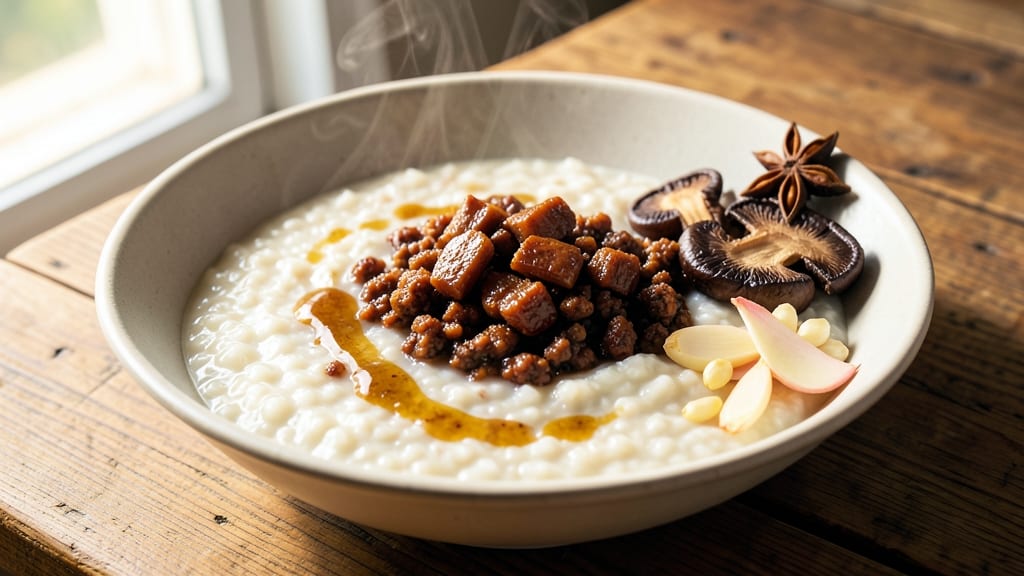
This minced pork congee recipe transforms humble ingredients into a velvety porridge with layers of savory star anise depth that lingers long after the last bite. 💛 My years perfecting this dish in Charleston kitchens taught me that slow simmering creates that signature silky texture while developing complex pork flavors—no shortcuts deliver the same result.
The foundation begins with perfectly cooked rice, simmered until it breaks down into a delicate, almost liquid consistency. Meanwhile, the minced pork develops rich, caramelized notes from star anise and ginger, creating a fragrant broth that coats every spoonful.
This isn't just comfort food—it's a technique that balances texture and flavor with precision.
What you'll achieve is a bowl of congee so tender it melts in your mouth, with each spoonful offering perfectly cooked pork infused with aromatic spices. The star anise adds that signature depth without overpowering, while the scallions and sesame oil at the end provide fresh contrast.
It's the kind of dish that feels both nourishing and celebratory.
Serve with pickled vegetables for tangy brightness or steamed buns for a complete meal. The leftovers reheat beautifully, making this an ideal recipe for both weeknight dinners and special occasions. Let's create this comforting classic together.
Ingredients for minced pork congee
Transform humble ingredients into velvety congee with star anise depth and tender minced pork.
| Ingredient | Amount | Notes |
|---|---|---|
| Jasmine Rice 🍚 | 1 cup | Uncooked, long-grain preferred |
| Ground Pork 🐷 | 1 lb | Finely minced, lean preferred |
| Star Anise Pods 🌿 | 2 whole | Whole pods for infusion |
| Fresh Ginger 🧄 | 1 ½ tbsp | Finely grated, organic preferred |
| Garlic Cloves 🧄 | 4 cloves | Minced, fresh preferred |
| Dried Shiitake Mushrooms 🍄 | 4 whole | Rehydrated, sliced thin |
| Chicken or Vegetable Broth 💧 | 6 cups | Low-sodium, homemade preferred |
| Sesame Oil 🫒 | 1 tbsp | Toasted, for finishing |
| Green Onions 🧅 | 4 whole | Thinly sliced, white and green parts |
| Soy Sauce 🍶 | 2 tbsp | Light or all-purpose |
| Hoisin Sauce 🍶 | 1 tbsp | For depth of flavor |
| Sesame Seeds 🌾 | 1 tsp | Toasted, for garnish |
| Salt 🧂 | 1 tsp | Diamond Crystal preferred |
| White Pepper 🌶️ | ½ tsp | Freshly ground preferred |
The ground pork is non-negotiable—finely minced for that signature texture. Whole Foods or your local butcher will have the best quality, but the pre-ground pork at Trader Joe's works perfectly for weeknight cooking. Look for lean pork to avoid greasiness, and if you're feeling ambitious, mince it yourself for even finer results. Star anise is the secret weapon here—Penzeys carries excellent whole pods, but the bulk section at Walmart or Target has a decent selection too. The pods should be plump and fragrant; avoid any that smell stale or dusty. For the rice, jasmine rice is ideal—its delicate aroma complements the savory flavors beautifully.
No star anise? Anise seeds or fennel seeds at half the amount will work in a pinch, though the flavor won't be identical. Running out of hoisin? Extra soy sauce plus a splash of vinegar gets you close, but the depth of hoisin is worth seeking out—Lee Kum Kee is a reliable brand. Fresh ginger is best, but if you're using dried, double the amount and toast it lightly in a dry pan first to deepen the flavor. The shiitake mushrooms should be rehydrated in hot water—discard the soaking liquid to avoid bitterness. For broth, homemade chicken broth** adds the most depth, but a quality low-sodium store-bought version works fine. Just avoid anything with added MSG.
This congee tastes even better the next day as flavors meld—reheat gently with a splash of water or broth to restore its silky texture. Store leftovers in the fridge for up to 5 days in an airtight container, or freeze for 3 months in portion-sized containers. The sesame oil and green onions should be added fresh just before serving to preserve their vibrant flavors. For a restaurant-quality finish, toast the sesame seeds in a dry pan for 30 seconds until fragrant—worth the extra minute for that nutty aroma. Serve immediately with steamed buns or pickled vegetables for a complete meal.
Why You'll Love This Recipe
- No-Chop Necessary: The ground pork means I skip chopping—just brown it in the pot while the rice simmers. Fresh ginger and garlic get a quick mincing (or even grating for extra speed), and the star anise infuses the broth effortlessly. Honestly, this is the kind of recipe that lets me cook while scrolling through my phone.
- Umami Bomb: That crispy edge on the pork? The star anise and ginger seeping into the broth? It’s the kind of flavor that makes you pause mid-bite. The jasmine rice soaks up the savory goodness, turning every spoonful into a little burst of warmth—no heavy sauces or fancy techniques needed.
- Leftover Goldmine: This congee actually improves the next day. The flavors meld even more, and reheating it is just stirring and warming—no fuss. I’ll be real: I’ve had it for breakfast, lunch, and dinner over three days, and it’s still my go-to when I’m too tired to cook.
- Budget-Friendly Comfort: Ground pork stretches far, jasmine rice is affordable, and spices like star anise add depth without costing a fortune. Between us, this is the kind of meal that feeds four for under $10 and still feels like a treat—not just a cheap fix. Plus, the leftovers stretch my grocery budget even further.
Step-by-step instructions for minced pork congee
Transform simple ingredients into velvety congee with complex aromatics and tender pork.
🍳 Step 1: Infuse the Broth with Aromatics
Combine the 6 cups chicken or vegetable broth, 2 whole star anise pods, 1.5 tbsp fresh ginger, and 4 cloves garlic cloves in a large pot. Bring to a gentle boil over medium-high heat, then immediately reduce to a simmer. Let it steep for 10 minutes—you'll notice the broth develops a warm, earthy aroma from the star anise and ginger.
This infusion creates the aromatic foundation. Don't skip the simmering time—it allows the star anise to release its deep, licorice-like notes that will permeate every spoonful of your congee. Strain the broth through a fine-mesh sieve into a clean pot, pressing gently on the aromatics to extract maximum flavor. Discard the solids.
👨🍳 Step 2: Prepare the Shiitake Mushrooms
Place the 4 whole dried shiitake mushrooms in a bowl and cover with hot water. Let them soak for 20 minutes until pliable. Drain, then slice them thinly. In a small pan, heat 1 tbsp sesame oil over medium heat and sauté the shiitake mushrooms for 3-4 minutes until their edges turn golden and they release their umami-rich moisture.
Here's where the texture magic begins. The mushrooms should be tender but still hold their shape slightly—they'll soften further during cooking. Set them aside for now; you'll add them back later. The sesame oil adds another layer of nutty depth that complements the star anise beautifully.
🍳 Step 3: Cook the Minced Pork
In the same pan with the sesame oil (no need to clean it—the mushroom aromas are still there), add the 1 lb ground pork over medium-high heat. Cook for 4-5 minutes, stirring constantly, until the pork loses its raw color and turns a rich brown. It should be fully cooked through but still slightly moist.
This is your flavor anchor. The pork should release its natural juices as it cooks—don't drain them. If the pork starts to stick, add 1-2 tablespoons of the infused broth to deglaze. Stir in the 2 tbsp soy sauce and 1 tbsp hoisin sauce, cooking for another 1 minute until the sauces meld with the pork's juices.
🥘 Step 4: Simmer the Congee to Perfection
Add the 1 cup jasmine rice to the pork mixture and stir to coat the grains evenly. Pour in the infused broth, then add the 1 tsp salt and 0.5 tsp white pepper. Bring to a gentle boil, then immediately reduce heat to the lowest setting possible—you're looking for a temperature where the congee maintains a barely perceptible simmer with just tiny bubbles breaking the surface.
Here's the critical part: partial cover the pot with a lid and let it cook undisturbed for 40-45 minutes. The rice should absorb all the liquid, creating a thick, creamy porridge. Stir occasionally with a wooden spoon, breaking up any rice clumps that form. The congee is ready when it reaches a pudding-like consistency that coats the back of a spoon.
🍽️ Step 5: Finish and Serve
Remove from heat and stir in the sautéed shiitake mushrooms. Let the congee sit for 2 minutes to thicken slightly. Ladle into bowls and garnish with the 4 whole green onions (thinly sliced) and 1 tsp sesame seeds. Drizzle with an extra drizzle of sesame oil if desired.
The final result should be silky, with each spoonful delivering layers of texture—creamy rice, tender pork, and chewy mushrooms—all balanced by the aromatic broth. The star anise's subtle sweetness should linger on your palate, while the sesame and soy add savory depth. Serve immediately while hot, as congee continues to thicken as it cools.
Pro Tips For Making Minced Pork Congee
- STIR THE PORK LOW AND SLOW: Minced pork turns rubbery fast—keep the heat at a simmer, not a boil, and stir every 30 seconds until it loses its raw color. I learned this the hard way after serving a batch that tasted like overcooked hamburger meat.
- CRUSH THE STAR ANISE: Lightly smash the star anise pod with the side of your knife before adding it to the broth—this releases more aroma without turning the congee bitter. My grandmother swore by this, and she was right: the scent is richer, but the pod stays easy to fish out.
- DON’T SKIP THE GINGER-GARLIC PASTE: Finely mince the ginger and garlic (or blend into a paste) instead of chopping—this dissolves smoothly into the broth, giving every bite consistent flavor. I used to dice them, and the texture always felt uneven.
- USE LESS RICE THAN YOU THINK: Congee thickens as it cooks, so start with 1 part rice to 8 parts broth (not 6). I used to eyeball it, and half the time it ended up gluey—now I measure and adjust with water if needed.
Troubleshooting this recipe
Texture Too Thick?
If your congee turns out thicker than you'd like, don't panic—this is easily fixed. Simply add 2-3 tablespoons of hot broth or water at a time, stirring gently over low heat until you reach your desired consistency.
I've found that 1 tablespoon increments give you better control. The key is to heat the liquid first so it blends seamlessly without shocking the congee's delicate texture. 💫
Texture Too Thin?
When your congee is too watery, it's usually because the rice didn't absorb enough liquid or the heat wasn't low enough. For immediate fixes, remove from heat and let it sit covered for 5-10 minutes—it will thicken naturally.
If you need to thicken it faster, mix 1 tablespoon cornstarch with 2 tablespoons cold water, then stir it into the congee while heating on low heat for 2-3 minutes. Stir constantly to avoid lumps.
Pork Too Greasy?
Excess grease is often from using fatty pork or not cooking it properly. Next time, choose lean ground pork (look for at least 85% lean at your butcher) and cook it until it's fully browned—this renders more fat.
After cooking the pork, carefully skim any excess fat from the surface before adding the broth. I like to use a fat separator funnel from restaurant supply stores for this step—it makes all the difference. 🐷
Star Anise Too Strong?
The star anise flavor can be overpowering if you use too many pods or let them steep too long. For milder results, reduce to 1 pod and steep for only 5-7 minutes.
If you've already infused the broth, balance the flavor by adding ½ teaspoon sugar or 1 extra tablespoon soy sauce—both help mellow the licorice notes. I also recommend removing the star anise pods after 5 minutes of simmering to prevent bitterness.
Congee Not Silky?
Silky texture comes from slow, gentle cooking at the lowest possible heat. If your congee turns out grainy, it likely didn't cook long enough. Return it to the lowest heat setting and cook for an additional 10-15 minutes, stirring frequently to break up any rice clumps.
For extra silkiness, I blend ½ cup of the cooked congee until smooth, then mix it back into the pot—this creates a velvety base that transforms the texture instantly. 💡
Mushrooms Too Bitter?
Bitter shiitake mushrooms usually mean they were overcooked or soaked in cold water. Always use hot water for soaking and cook them for just 3-4 minutes until tender. For extra umami without bitterness, try adding ½ teaspoon MSG (if you tolerate it) or 1 teaspoon fish sauce to the broth.
I also recommend using younger dried shiitake mushrooms—they're milder and more tender when rehydrated. 🍄
Nutrition facts
Frequently asked questions
Can I substitute ground pork with another protein?
For similar texture, try finely minced chicken thigh or duck breast. If using beef, opt for lean ground chuck (85% lean) but reduce cooking time to 3 minutes to avoid toughness. For vegetarian versions, mushroom stems or tofu (crumbled) work well with extra soy sauce for umami.
How do I make this congee less spicy?
This recipe isn't traditionally spicy, but if you added extra chili, reduce the heat by omitting the white pepper and adding 1 teaspoon sugar or ½ teaspoon baking soda (sounds odd, but it neutralizes capsaicin). For milder versions, skip the hoisin and use only 1 tablespoon light soy sauce instead.
Can I prepare this ahead of time?
Yes! Congee actually tastes better the next day as flavors meld. Cook completely, then refrigerate in an airtight container for up to 5 days. Reheat gently with 2 tablespoons hot water per serving, stirring constantly on low heat for 5 minutes. For freezer storage, portion into 1-cup containers and freeze for up to 3 months. Thaw overnight in the fridge.
What's the secret to getting that restaurant-quality silky texture?
The magic lies in three key techniques: 1) Using the lowest possible heat setting (tiny bubbles only), 2) Stirring frequently with a wooden spoon to break rice clumps, and 3) Simmering uncovered for the final 10 minutes to let excess moisture evaporate. For extra silkiness, blend ½ cup of finished congee until smooth, then mix back in.
Can I make this gluten-free?
Easily! Replace the hoisin with 1 tablespoon gluten-free tamari plus ½ teaspoon sugar, and use gluten-free soy sauce. For extra umami, add 1 teaspoon coconut aminos. All other ingredients are naturally gluten-free. Double-check your broth label for hidden gluten—homemade chicken broth is safest.