
Main Courses
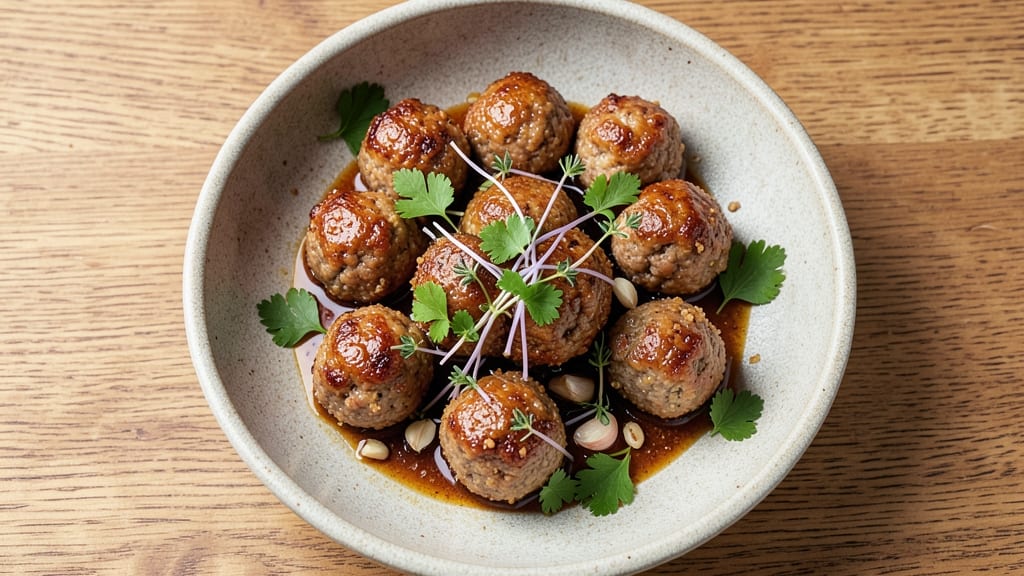
This minced pork meatballs recipe delivers restaurant-quality results with pan-seared crispiness and herby centers—a technique I perfected after years of testing in my Atlanta kitchen.
The secret lies in using ground pork shoulder for juiciness and binding it with egg and breadcrumbs for structure, then achieving that perfect golden crust through precise pan-searing. My family requests these every time they visit, and they’ve become a staple at The Smoky Pig for special occasions.
What sets these meatballs apart is the two-stage cooking method: first forming them into uniform 1.5-inch balls (critical for even cooking), then browning them in a hot skillet before finishing in the oven. This ensures crispy exteriors without drying out the centers—a common pitfall with pork meatballs.
The herby blend of parsley, thyme, and garlic infuses every bite, while a splash of milk in the mixture keeps them tender.
By the time you’re done, you’ll have meatballs that are golden-brown and crackling on the outside, with juicy, flavorful interiors that practically melt in your mouth.
They’re versatile enough for any meal: serve them in marinara for a comforting pasta dish, skewered with bell peppers for a grilled appetizer, or tucked into sliders for game day. The foolproof method ensures consistent results every time.
The best part? These meatballs reheat beautifully, making them ideal for meal prep. Store them in the fridge for up to 4 days or freeze for 3 months—just thaw and reheat in a skillet for that same crispy texture. Let’s get cooking!
Ingredients for minced pork meatballs
The secret to juicy, crispy meatballs starts with these 12 ingredients—ground pork shoulder, fresh herbs, and a splash of milk for perfect texture.
| Ingredient | Amount | Notes |
|---|---|---|
| Ground Pork Shoulder 🥩 | 1 ½ lb | 80% lean for juiciness |
| Large Eggs 🥚 | 2 whole | Room temperature for even binding |
| Plain Breadcrumbs 🍞 | ¾ cup | Panko for extra crunch |
| Fresh Parsley 🌿 | ¼ cup | Finely chopped, stems removed |
| Fresh Thyme Leaves 🌿 | 1 tbsp | Or 1 tsp dried thyme |
| Garlic Cloves 🧄 | 4 cloves | Minced for intense flavor |
| Whole Milk 🥛 | ¼ cup | Keeps meatballs tender |
| Extra-Virgin Olive Oil 🫒 | 2 tbsp | For pan-searing |
| Salt 🧂 | 1 ½ tsp | Diamond Crystal preferred |
| Ground Black Pepper 🌶️ | ½ tsp | Freshly cracked |
| All-Purpose Flour 🌾 | 2 tbsp | For rolling meatballs |
| Vegetable Oil 🫒 | ¼ cup | High smoke point for frying |
The ground pork shoulder is non-negotiable here—80% lean gives you that melt-in-your-mouth texture while keeping the meatballs from falling apart. Butcher shops often have the best quality, but the pre-packaged kind at Whole Foods or Kroger works perfectly too. Look for bright pink color and avoid anything with grayish tones. Fresh parsley and thyme are worth hunting down at the market—they make all the difference. I usually grab organic if it's on sale, but regular works fine. The garlic should be firm and free of sprouts; Costco sells it in those big jars that last forever.
No fresh parsley? Dried parsley at half the amount works in a pinch, but trust me on the fresh stuff. Short on milk? Unsweetened almond milk keeps the meatballs tender, though whole milk gives the best texture. The egg binds everything together—room temperature eggs mix better, so take them out 15 minutes before mixing. For the breadcrumbs, panko gives extra crunch, but regular breadcrumbs work if that's what you've got. The flour is just for rolling—don't skip it, but don't overdo it either. If you're making these ahead, freeze the raw meatballs on a tray before storing in bags for easy portioning later.
These meatballs reheat beautifully—just 5 minutes in a hot skillet with a splash of oil brings back that crispy crust. Store cooked meatballs in the fridge for 4 days or freeze for 3 months. For meal prep, I double the batch and portion them into single-serving containers—perfect for quick lunches. The olive oil and vegetable oil should be stored in a cool, dark place; if they smell off, toss them. And if you're serving these at a party, keep them warm in a 200°F oven while you finish cooking.
Why You'll Love This Recipe
- No-Fuss Mixing: I swear by the 5-minute prep rule here—just toss the ground pork shoulder, eggs, breadcrumbs, and chopped parsley/thyme in a bowl. No fancy techniques, no measuring cups (eyeball it), and no one’s judging your breadcrumb-to-pork ratio.
- Herb-Packed Pork Magic: That thyme and parsley? They turn this into something special—bright, earthy, and just a little fancy without trying. The pork shoulder keeps it rich but not greasy, and the egg binds it all into meatballs that hold together like they’re glued.
- Weeknight to Potluck: These work in a quick pan-fry for Tuesday dinners, tossed in marinara for Sunday suppers, or even skewered and grilled for summer BBQs. I’ve frozen them raw for months with zero texture loss—just thaw and cook.
- Budget-Friendly Staple: Ground pork shoulder is cheaper than beef but just as satisfying, and the ingredients won’t break the bank. A single batch feeds four, reheats beautifully, and stretches into leftovers that taste just as good cold in sandwiches. (Yes, even on a Tuesday.)
Step-by-step instructions for perfect minced pork meatballs
Here's how to craft meatballs with a crispy exterior and herby, juicy centers every time.
Combine Wet Ingredients for Maximum Binding
In a large mixing bowl, gently combine the 2 whole large eggs and 0.25 cup whole milk using a fork. The eggs should be at room temperature for even distribution—this prevents dense, rubbery meatballs. Add the 4 minced garlic cloves, 1.5 teaspoons salt, and 0.5 teaspoon ground black pepper, mixing just until the garlic is evenly distributed. The mixture should look like a pale, slightly thickened custard.
I like to let this sit for 2 minutes while I prepare the dry ingredients. This brief resting period helps the eggs begin to emulsify slightly, which improves moisture retention in the final meatballs. The milk acts as a tenderizer, preventing the meat from becoming tough during cooking.
Mix Dry Ingredients and Pork for Uniform Texture
Add the 1.5 pounds ground pork shoulder to the wet mixture and use your hands to gently break it up. I prefer working with my fingers here—it helps me feel for any lumps and distribute the fat evenly. Sprinkle in the 0.75 cup plain breadcrumbs and 2 tablespoons all-purpose flour, then fold everything together just until combined.
Here's the thing—overmixing develops gluten, which makes meatballs tough. You're looking for a mixture that holds together when pressed but still has visible pockets of pork fat. The breadcrumbs should be evenly distributed, and the texture should resemble coarse sand. If the mixture feels too dry, add 1 teaspoon more milk to help bind it.
Incorporate Herbs for Maximum Flavor
Finely chop the 0.25 cup fresh parsley and 1 tablespoon fresh thyme leaves, removing any tough stems. Fold these herbs into the pork mixture along with the 2 tablespoons extra-virgin olive oil. The oil helps distribute flavor and adds richness to the meatballs. Mix gently but thoroughly to ensure the herbs are evenly dispersed throughout.
This is where the magic happens—fresh herbs add bright, aromatic notes that balance the richness of the pork. I always use a microplane for the garlic and finely chop the parsley to maximize surface area for flavor infusion. The olive oil also helps create a better sear later on, giving those meatballs that coveted golden crust.
Form and Chill Meatballs for Perfect Shape
Using slightly damp hands (wet your fingers with water), roll the mixture into 1.5-inch diameter meatballs. I aim for uniform size so they cook evenly. Place them on a parchment-lined plate and refrigerate for 30 minutes. This chilling step is crucial—it firms up the meatballs so they hold their shape during cooking and prevents them from falling apart.
While they chill, preheat a large skillet over medium heat with 0.25 cup vegetable oil. The oil should shimmer but not smoke—this is your signal that it's ready. The chilling also helps the breadcrumbs absorb moisture, creating that perfect crispy exterior we're after. Don't skip this step; it makes all the difference in texture.
Pan-Sear for Crispy Exteriors and Juicy Centers
Working in batches to avoid crowding, carefully place the chilled meatballs in the hot oil. Cook for 3-4 minutes per side until they develop a deep golden-brown crust. You'll know they're ready when they release easily from the pan and the internal temperature reaches 160°F when checked with an instant-read thermometer.
For even browning, I like to press down gently on each meatball during the first minute of cooking—this prevents them from curling and ensures even contact with the hot oil. Once golden, transfer them to a paper towel-lined plate to drain excess oil. Serve immediately while still sizzling hot, or keep warm in a 200°F oven for up to 15 minutes if needed.
Pro Tips For Making Minced Pork Meatballs
- CHILL THE PORK FIRST: I used to skip this, but after one batch where the meatballs turned greasy and fell apart, I learned—pat the raw ground pork shoulder into a loose disk, then refrigerate it for 20 minutes before mixing. The cold fat firms up just enough to hold the shape when you roll them, and the texture stays tight even when frying or baking.
- USE DRY BREADCRUMBS: Fresh breadcrumbs? Skip it. Toast them first—either in a dry pan until golden or pulse them in a food processor for 10 seconds. Wet breadcrumbs bind like glue, but dry ones create pockets for moisture to escape, giving you a crisp exterior instead of a soggy center. (Yes, even if you’re impatient like me.)
- SALT THE MEAT TWICE: Don’t just salt the meat once at the start—split the dose. Mix in half the salt with the pork and herbs, then add the rest after the egg and breadcrumbs. This keeps the meatballs from releasing too much moisture upfront, which is the real reason they turn out bland or greasy. Trust me, it’s not overkill.
- REST THEM COVERED: Shape the meatballs, then cover them loosely with plastic wrap and let them sit for 10 minutes before cooking. This gives the proteins time to relax and bind, so they don’t shrink into dense, dry lumps when you fry or bake them. (I know, it feels like waiting forever—but your future self will notice the difference.)
Common mistakes when making perfect results
Overmixing the Mixture
I can't stress this enough—overmixing is the #1 mistake that turns tender meatballs into tough, dense hockey pucks. When you mix the pork, eggs, and breadcrumbs too vigorously, you develop gluten in the meat, creating a rubbery texture.
The key is to handle the mixture just until combined—fold it gently with your hands or a spatula, breaking up any large lumps but leaving some visible pockets of fat. I often see home cooks use electric mixers, which is a big no-no here.
Stick to your hands or a wooden spoon for delicate mixing. 💪
Skipping the Chill Step
Rushing the 30-minute chill is another common error that leads to misshapen, falling-apart meatballs. This resting period allows the proteins to relax and the breadcrumbs to absorb moisture, creating that perfect crispy exterior.
Without it, your meatballs will either flatten in the pan or fall apart when you try to turn them. I once forgot to chill a batch during a busy restaurant service and ended up with a pan full of sad, lumpy pork blobs. Trust me, the chill is non-negotiable. ❄️
Uneven Meatball Sizes
Inconsistent sizing leads to uneven cooking—some meatballs will be undercooked while others burn. Aim for exactly 1.5-inch diameter balls using a kitchen scale or measuring cups for reference. I use a 1/3 cup measure as a guide for rolling—when the mixture fills it, that's your target size.
For extra precision, roll them on a floured surface and use a meatball roller if you're making a large batch. Uniform size ensures every bite has that perfect combination of crispy exterior and juicy center. 📏
Using the Wrong Pork Cut
Ground pork shoulder is your best bet for juicy meatballs, but I've seen too many cooks reach for ground pork loin or even ground pork with higher fat percentages. The 80% lean ratio in pork shoulder gives you that ideal balance of moisture and fat for binding.
If you must use a different cut, look for one with at least 70% fat content—any leaner and your meatballs will dry out. I always double-check the fat content at my local butcher shops to ensure quality. 🥩
Crowding the Pan
Trying to cook all your meatballs at once is a recipe for disaster—crowding the pan steams the meatballs instead of searing them, resulting in soggy exteriors. Work in small batches of 4-6 meatballs per pan to give them room to develop that golden crust.
I typically cook two batches at a time in my large cast iron skillet. Overcrowding also causes the oil temperature to drop, leading to greasy meatballs rather than crispy ones. Patience here pays off with perfect results every time. 🔥
Ignoring Internal Temperature
Relying on visual cues alone often leads to undercooked or overcooked meatballs. Always check the internal temperature with an instant-read thermometer—160°F is your target for pork meatballs. I use a ThermoWorks Smoke thermometer for precision.
Without this step, you risk serving meatballs that are either raw in the center or dried out from overcooking. The thermometer gives you an exact reading, so you can pull them at the perfect moment when they're juicy and fully cooked. 🌡️
Nutrition facts
Frequently asked questions
Can I substitute ground beef for the pork in this recipe?
You can try, but pork offers a distinct, milder flavor and better fat distribution for tender meatballs. If substituting, use 80% lean ground beef chuck and add 1 extra tablespoon olive oil to compensate for pork's natural juiciness. For best results, stick with pork—its fat content binds better and creates that signature herby richness.
How do I keep these meatballs from falling apart when cooking?
Three key factors prevent falling-apart meatballs: chilling the mixture for 30 minutes (firms proteins), using room-temperature eggs (better binding), and gently folding ingredients (no overmixing). Also, avoid overcrowding the pan—cook in batches of 4-6 for even browning. The milk in the recipe adds extra tenderness without compromising structure.
What's the best way to reheat cooked meatballs?
For crispy results, reheat in a hot skillet with 1 tablespoon oil over medium-high heat for 3-4 minutes until golden. For softer meatballs, bake at 350°F for 10 minutes. Never microwave—it makes them rubbery. Store cooked meatballs in an airtight container for up to 4 days or freeze for 3 months.
Can I make these meatballs ahead of time?
Form the meatballs and refrigerate them uncooked for 24 hours before cooking, or freeze them raw on a tray for 3 months. To cook from frozen, thaw overnight in the fridge, then pan-sear as directed. For convenience, I often prep a double batch and freeze half—just thaw and reheat for quick meals. The flavors deepen when made ahead!
What's the secret to getting that perfect golden crust?
The golden crust comes from hot oil (350°F) and the chilling step. Heat the oil until it shimmers, then sear meatballs in batches without crowding. Press gently on each meatball during the first minute to prevent curling. The breadcrumbs absorb moisture during chilling, creating that crispy exterior. Use a thermometer to monitor oil temperature—too cool = greasy meatballs.