
Main Courses
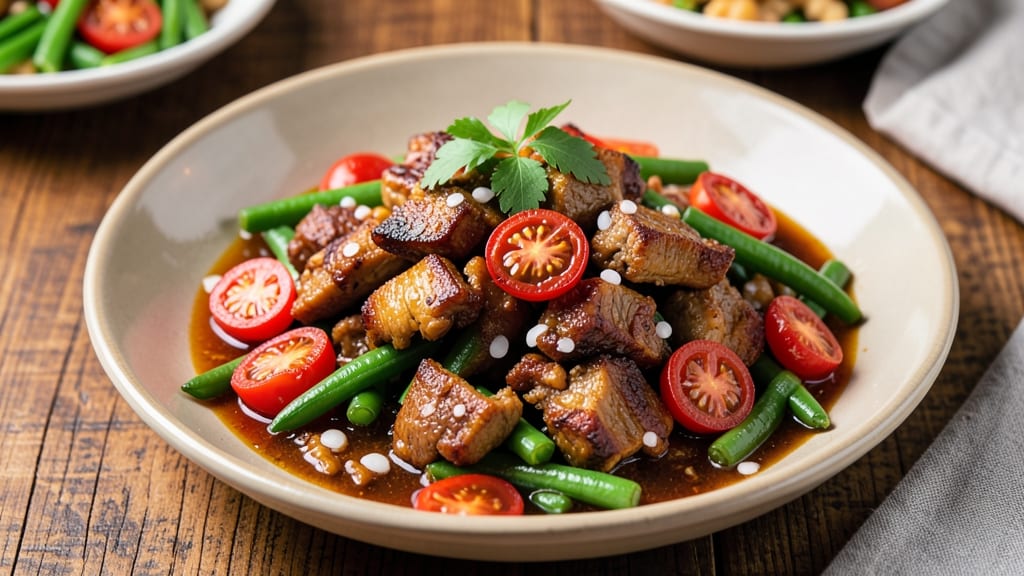
This adobong sitaw with ground pork delivers the perfect balance of crispy pork bites and tender string beans bathed in a rich, tangy tomato sauce.
The secret lies in proper browning of the pork—creating those caramelized edges that make every bite irresistible—while the vinegar and soy sauce work together to tenderize the meat and build deep flavor.
I've perfected this dish over years of cooking Filipino comfort food, ensuring the sauce clings to both the pork and vegetables without being overly saucy.
The beauty of this recipe is its simplicity—just a handful of pantry staples transform into a restaurant-quality meal. Ground pork cooks quickly, absorbing the adobo flavors as it browns, while the sitaw (string beans) add a satisfying crunch that softens just enough to soak up the sauce.
The key is letting the sauce simmer until it thickens slightly, creating that perfect balance of tangy, savory, and slightly sweet notes that define great adobo dishes.
What you'll end up with is a plate of crispy pork pieces surrounded by vibrant green beans, all swimming in a glossy sauce that's rich enough to coat every bite.
The aroma alone will have everyone gathering around the table, and the first taste delivers that perfect harmony of textures and flavors that makes this dish a family favorite. This is comfort food at its finest—simple yet impressive, familiar yet elevated.
Serve it with steamed rice to soak up every last drop of that flavorful sauce, or pair it with garlic fried rice for a heartier meal. The leftovers reheat beautifully, making this an excellent make-ahead option for busy weeknights.
Let's get cooking—this dish is about to become your new go-to for weeknight dinners that feel like a celebration.
Ingredients for adobong sitaw with ground pork
Ground pork and string beans transform into crispy, saucy perfection with just twelve pantry staples.
| Ingredient | Amount | Notes |
|---|---|---|
| Ground Pork 🐖 | 1 lb | 80% lean for best browning |
| Tomatoes 🍅 | 2 cups | Ripe, chopped (or 1 can crushed) |
| Canola Oil 🫒 | 2 tbsp | For crispy pork browning |
| String Beans 🌱 | 1 ½ lbs | Trimmed, cut into 2-inch pieces |
| White Vinegar 💧 | ½ cup | White or cane vinegar |
| Soy Sauce 🧂 | ⅓ cup | Regular or light soy |
| Yellow Onion 🧅 | 1 whole | Medium, finely chopped |
| Garlic Cloves 🧄 | 4 cloves | Minced for flavor depth |
| Sugar 🍚 | 1 tbsp | White or brown sugar |
| Bay Leaf 🌿 | 1 whole | For aromatic depth |
| Salt 🧂 | 1 tsp | Adjust to taste |
| Black Pepper 🌶️ | ½ tsp | Freshly ground |
The ground pork is non-negotiable here—80% lean gives you that crispy exterior without turning greasy. Trader Joe's or Filipino markets often carry the perfect cut, but any ground pork works in a pinch. Look for bright red color and avoid anything with grayish spots. The string beans should be vibrant green—no wilted ends. If you can't find sitaw, regular green beans work, but they won't be as tender. For the tomatoes, fresh is ideal, but canned crushed tomatoes save time and add consistent flavor. Just drain them well before using.
No white vinegar? Apple cider vinegar or rice vinegar works just as well. The sugar might seem odd, but it balances the tangy vinegar and soy sauce beautifully—no substitution needed. Fresh garlic and onion are ideal, but powdered versions at half the amount work in a bind. The bay leaf is crucial—it infuses that subtle aromatic depth that makes this dish sing. Want extra crispiness on the pork? Pat it dry with paper towels first. The sauce should coat the back of a spoon when done—if it's too thin, simmer uncovered for 5 more minutes.
This reheats like a dream—better the next day as flavors meld. Store in airtight containers for 4-5 days in the fridge or freeze for 3 months. I always make double batches because it disappears fast. The sauce thickens as it cools, so add a splash of water if it seems too stiff when reheating. Serve with steamed rice to soak up every last drop of that glorious sauce—trust me on this.
Why You'll Love This Recipe
- Pork Cooks in Minutes: I swear, the ground pork browns so fast—just 5 minutes in the pan with a pinch of salt, and you’re already halfway there. No waiting for chunks to tenderize; this is the kind of dish that rewards speed without sacrificing flavor.
- Tangy-Sweet Magic: That vinegar-tomato combo? It’s the secret weapon—bright, slightly sweet, and just sharp enough to make your taste buds dance. The string beans soak it up like a sponge, turning crisp-tender in seconds.
- Weeknight Workhorse: Between us, this is my go-to when I’m too tired to plan. Double the batch on Sunday, and you’ve got lunch for Tuesday and dinner for Thursday—no takeout, no stress. The leftovers actually improve overnight, honestly.
- Pantry Staple Power: Ground pork on sale? Tomatoes sitting soft in the fridge? This recipe turns them into something special. No fancy ingredients, no last-minute grocery runs—just pull what you’ve got and make it work. Budget-friendly doesn’t mean boring.
Step-by-step instructions for adobong sitaw with ground pork
Here's how to create that perfect balance of crispy pork and tangy tomato sauce.
Brown the Ground Pork for Maximum Flavor
Heat a large skillet over medium-high heat and add the 2 tablespoons canola oil. Once the oil shimmers, add the 1 pound ground pork and break it apart with a wooden spoon. Cook for 5-6 minutes until the pork loses its raw color and becomes golden brown in spots.
This browning step is crucial—it develops the deep, meaty flavor that will infuse your sauce. Don't rush it; you want those pork bits to develop a nice crust. If the pork starts to stick, gently break it up with your spoon rather than stirring continuously. Once properly browned, transfer the pork to a plate and set aside.
Sauté Aromatics Until Fragrant
In the same skillet (no need to wipe it clean—those browned bits are flavor gold), add the finely chopped yellow onion and cook over medium heat for 3-4 minutes until softened and translucent. Add the 4 minced garlic cloves and cook for another 30 seconds until fragrant.
Here's where the magic starts building. The onions should caramelize slightly at the edges, adding sweetness to balance the tangy tomato sauce. If they start to brown too quickly, reduce the heat slightly. The garlic should sizzle gently—if it burns, you'll taste bitterness in your final dish.
Build the Tangy Tomato Base
Add the 2 cups chopped tomatoes to the skillet and cook for 5 minutes until they break down and release their juices. Stir in the 0.5 cup white vinegar, 0.33 cup soy sauce, 1 tablespoon sugar, 1 teaspoon salt, and 0.5 teaspoon black pepper. Add the whole bay leaf and bring everything to a gentle simmer.
This is your flavor foundation. The vinegar will create that signature tangy adobo flavor, while the sugar balances the acidity. Let it simmer uncovered for 10 minutes until the sauce thickens slightly. You want it to coat the back of a spoon but still be pourable. If it reduces too quickly, add 1-2 tablespoons water to maintain the right consistency.
Cook the String Beans Until Tender-Crisp
Add the 1.5 pounds trimmed string beans (cut into 2-inch pieces) to the skillet and stir gently to coat them in the sauce. Return to a simmer and cook for 8-10 minutes until the beans are tender but still slightly crisp with a bite—this is key for the perfect texture.
Here's the thing—string beans should be tender enough to eat but still have that satisfying crunch. If they soften too much, they'll turn mushy. Taste the sauce occasionally and adjust seasoning if needed. The beans should absorb some of the sauce but still have their own distinct texture in each bite.
Finish and Serve with Crispy Pork Bites
Return the browned pork to the skillet and stir gently to combine. Let everything simmer together for 2-3 minutes until heated through. Remove the bay leaf before serving. The final dish should have a rich, slightly thick sauce with crispy pork bits and tender-crisp string beans.
Serve immediately while the pork is still crispy and the beans retain their bite. This dish tastes even better the next day as the flavors meld, but the texture will be slightly softer. Pair with steamed rice to soak up all that delicious sauce—every bite should deliver that perfect combination of tangy, savory, and slightly sweet flavors.
Pro Tips For Making Adobong Sitaw With Ground Pork
- Brown the Pork Properly: Don’t just toss in raw ground pork—sear it in batches over medium-high heat until it loses its pink color. I used to skip this, and the dish always tasted undercooked. Two tablespoons of canola oil should do it, and resist the urge to stir constantly (just let it crisp).
- Sauté Tomatoes Until Syrupy: Cook the tomatoes down until they darken and release their juices—about 5-7 minutes. This builds the adobo’s depth. I learned this the hard way after a watery, bland batch where I rushed it.
- Trim String Beans First: Snip the ends off the string beans before adding them to the pot. It’s tedious, but it keeps them from curling up and makes them cook evenly. (Yes, even if you’re impatient like me.)
- Deglaze with Vinegar Last: Add the white vinegar after the pork and tomatoes have cooked together—just before serving. This keeps the beans from turning mushy. A splash (2-3 tablespoons) brightens the whole dish without overpowering it.
Troubleshooting this dish
Pork Too Greasy
If your pork ends up greasy instead of crispy, it’s likely from using leaner ground pork or not browning it properly. I always recommend 80% lean ground pork for that perfect balance of fat and meat. Pat the pork dry with paper towels before cooking—this helps create a better crust. Also,
Sauce Too Thin
A watery sauce usually means the tomatoes weren’t cooked down enough or the vinegar diluted the mixture. Let the sauce simmer uncovered for an extra 5-10 minutes to thicken it naturally. If it’s still too thin, remove the skillet from heat and let it cool slightly, then stir in 1 tablespoon cornstarch mixed with 2 tablespoons water to thicken it up. Alternatively, simmer the sauce longer next time and reduce it gradually. The goal is a sauce that coats the back of a spoon but isn’t gluey. ✨
String Beans Mushy
Overcooking the string beans is the most common mistake here. They should be tender-crisp, not mushy. Start checking them after 7 minutes of simmering and remove them as soon as they’re fork-tender but still hold their shape.
If they’ve already turned mushy, drain them and set aside—you can still use them in a salad or stir-fry. To prevent this, reduce the heat slightly when adding the beans and stir gently to avoid bruising them. 🌱
Lacking Tangy Flavor
The tangy kick comes from the vinegar, so if your dish tastes bland, you might not have used enough. Start with the full ½ cup white vinegar and taste as you go—you can always add more if needed.
For extra tang, add 1 teaspoon more vinegar at the end or a splash of lemon juice before serving. If the flavor is too sharp, balance it with a pinch more sugar or a splash of soy sauce.
Trust me, the right balance of tangy and savory is what makes adobo shine. 💡
Pork Too Dry
If your pork ends up dry and tough, it likely didn’t brown enough or was overcooked in the sauce.
Nutrition facts
Frequently asked questions
Can I substitute chicken or beef for the ground pork?
Ground chicken works beautifully and cooks faster, but beef (especially ground chuck) will make the dish richer and more hearty. For chicken, reduce cooking time to 4-5 minutes when browning. Beef needs 6-7 minutes for proper browning. The fat content affects crispiness—stick to 80% lean for best results.
What if I don't have string beans (sitaw)?
Regular green beans or wax beans work as substitutes, though they'll be slightly less tender. Cut them into 2-inch pieces and cook for 5-6 minutes less than string beans. For extra flavor, add ½ teaspoon sugar to help balance their natural bitterness. The dish will still taste amazing—just a little different texture!
How can I make this dish spicier?
Add ½ teaspoon ground black pepper or 1 teaspoon chili flakes when building the sauce. For heat lovers, stir in 1 minced fresh chili pepper (like jalapeño or siling labuyo) with the garlic. If you prefer smoky heat, add ½ teaspoon smoked paprika to the aromatics. Always taste before serving!
Can I make this in a slow cooker?
Brown the pork first, then transfer everything (except beans) to the slow cooker. Cook on low for 2 hours, then add the beans and cook another 30-45 minutes** until tender. The sauce will be thinner—simmer uncovered for 10 minutes on the stove to thicken before serving. The slow cooker method is perfect for busy days!
What's the best way to reheat leftovers?
Reheat gently in a skillet over low-medium heat with 1 tablespoon water to prevent drying. Cover for 3-4 minutes until heated through. Microwaving works too—use 50% power for 1-2 minutes with a damp paper towel covering the dish. The flavors actually improve overnight, making leftovers taste even better!