
Main Courses
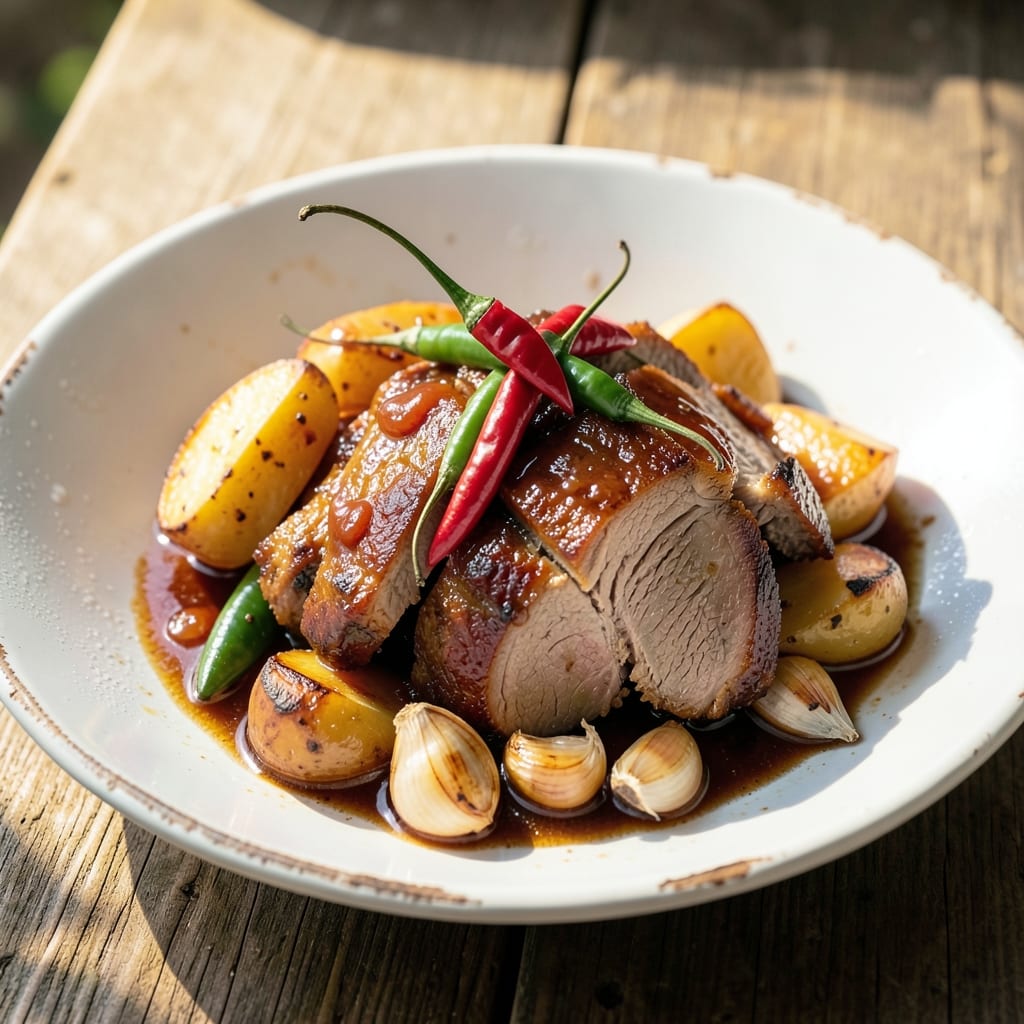
This Batangas pork afritada recipe delivers tender, vinegar-braised pork bites that practically melt in your mouth, infused with the bright, tangy tomato-garlic sauce that defines this Filipino classic. 💛 I first encountered this dish in a small Batangas kitchen where the cook swore by slow braising—no shortcuts, just time and patience transforming tough cuts into something luxurious. The secret lies in balancing vinegar's sharpness with sweet tomatoes and garlic, creating a sauce that clings to every bite like a flavorful hug.
The recipe begins with pork belly or shoulder, cut into bite-sized pieces that will become irresistibly tender through a 30-minute simmer in a rich tomato-vinegar broth. Unlike many afritada versions, this one incorporates siling labuyo (bird's eye chili) for a subtle heat that lingers, while potatoes and eggplant absorb the sauce's depth. The key technique? Deglazing the pan with vinegar after browning the pork—this unlocks layers of umami that store-bought versions simply can't match.
By the time you serve this dish over steamed rice with a side of atchara (pickled papaya), you'll understand why Batangas families gather around tables for hours. The pork falls apart at the touch of a fork, bathed in a glossy sauce that's both tangy and sweet, with just enough heat to wake up your palate. This isn't just comfort food—it's a celebration of Filipino home cooking that deserves a place in your weekly rotation.
For those who love regional variations, this recipe stays true to Batangas' traditions while offering flexibility—swap in patis (fish sauce) for extra depth, or add bell peppers for crunch. The method scales perfectly for crowds, making it ideal for family dinners or potlucks where you want to bring the flavors of home. Let's get cooking—your taste buds will thank you.
Ingredients for batangas pork afritada
Pork belly, tomatoes, vinegar, and garlic—these are the stars of Batangas' most beloved comfort dish.
| Ingredient | Amount | Notes |
|---|---|---|
| Pork Belly or Shoulder 🥓 | 1 ½ lb | Cut into 1.5-inch cubes |
| Canned Tomatoes 🍅 | 2 cups | San Marzano preferred |
| White Vinegar 💧 | ½ cup | Distilled preferred |
| Garlic Cloves 🧄 | 6 cloves | Minced for depth |
| Siling Labuyo (Bird's Eye Chili) 🌶️ | 2 whole | Adjust for heat preference |
| Russet Potatoes 🥔 | 2 medium | Peeled, cut into chunks |
| Eggplant 🍆 | 1 medium | Cut into 1-inch cubes |
| Onion 🧅 | 1 whole | Sliced thin |
| Bay Leaves 🌿 | 2 whole | Fresh preferred |
| Salt 🧂 | 1 ½ tsp | Kosher or sea salt |
| Black Pepper 🌶️ | ½ tsp | Freshly ground |
| Olive Oil 🫒 | 2 tbsp | For browning pork |
| Sugar 🍚 | 1 tbsp | Balances acidity |
| Patis (Fish Sauce) 🍶 | 1 tbsp | Optional for umami |
The pork cut matters here. Pork belly gives you that coveted marbled texture, but shoulder works just as well if it's cheaper. Look for cuts with good fat marbling at your local Asian grocery store—they often have better selections than regular supermarkets. If you're buying a whole piece, ask the butcher to cut it into 1.5-inch cubes. The tomatoes? San Marzano is ideal, but any good-quality canned tomatoes will do. Just make sure they're crushed or chopped—whole tomatoes won't break down enough for that silky sauce. And that vinegar? Distilled white vinegar is the standard, but apple cider vinegar adds a nice fruity note if you're feeling adventurous.
No siling labuyo? Substitute with 1-2 Thai bird's eye chilies—they're easier to find in most grocery stores. The potatoes and eggplant can be swapped for any starchy veggie you've got: sweet potatoes or zucchini both work well. Short on garlic? Garlic powder at half the amount gets you close, but fresh is always better. The patis (fish sauce) is optional but adds that signature Filipino umami—if you're vegetarian, just skip it or use soy sauce instead. For the sugar, brown sugar gives a deeper flavor, but white works fine in a pinch. And if you're worried about the vinegar being too sharp, don't be—the tomatoes and sugar balance it perfectly.
This dish tastes even better the next day, so make extra. Store leftovers in an airtight container in the fridge for up to 5 days. The sauce thickens as it cools, so just add a splash of water or vinegar when reheating. For freezing, portion into 1-cup containers—they reheat perfectly for quick lunches. The potatoes and eggplant will soften further when reheated, so they're best eaten fresh. If you're prepping ahead, you can even freeze the pork cubes separately and cook them from frozen—just add 10 extra minutes to the simmering time.
Why You'll Love This Recipe
- Pantry-Friendly Magic: I swear by this one—no fresh herbs, no fancy prep. Just pork, tomatoes, vinegar, and a few cloves of garlic. That’s it. The vinegar cuts through the richness, and the tomatoes? They melt into a thick, tangy sauce that’s ridiculously easy to throw together.
- Tangy-Sweet Bite: Here’s what sold me—the way the vinegar and tomatoes marry with the pork’s fat. It’s not just sweet or sour—it’s both, in the best way. Add a few siling labuyo for heat, and suddenly, you’ve got a dish that’s bold but still homey.
- Leftover Hero: Between us, this tastes even better the next day. The flavors deepen, the pork gets more tender, and it reheats like a dream. Pack it for lunch, freeze portions, or just reheat a bowl when you’re too tired to cook. It’s my lazy-day secret weapon.
- Budget Meal, Big Flavor: Pork belly or shoulder is affordable, and you’re using canned tomatoes—no waste, no fuss. A single batch feeds four, and the leftovers? They’re just as good cold in sandwiches. Honestly, it’s the kind of dish that makes grocery day feel like a win.
Step-by-step instructions for Batangas pork afritada
Here's how to transform tough pork into melt-in-your-mouth bites with that signature tangy tomato-chili sauce.
🔥 Step 1: Sear the Pork Until Deeply Browned
Heat a large Dutch oven over medium-high heat until hot. Add the 2 tablespoons olive oil and let it shimmer for 30 seconds. Working in batches, add the 1.5 lb pork belly or shoulder cubes and sear undisturbed for 3-4 minutes per side until deeply golden brown.
This browning step develops the rich, caramelized flavors that form the base of your sauce. I press down gently on the pork during the first minute—this prevents it from curling and ensures even contact with the pan. If the oil starts smoking, reduce heat slightly to maintain control without losing that beautiful crust.
🍳 Step 2: Build the Flavor Base with Aromatics
Remove the seared pork and set aside. In the same pot, add the 1 whole sliced onion and cook for 3-4 minutes until softened and golden. Add the 6 cloves minced garlic and cook for 30 seconds until fragrant—you'll smell that sweet, pungent aroma filling your kitchen.
Here's where the magic begins: add the 2 whole siling labuyo (bird's eye chili) and cook for 1 minute until the chili softens slightly. Be careful not to burn it—just enough to release its fiery essence. The heat will mellow as the sauce simmers, but this step builds that essential spicy backbone.
🥘 Step 3: Braise with Vinegar and Tomatoes
Pour in the 2 cups canned tomatoes and 0.5 cup white vinegar, stirring to deglaze the pan and scrape up all those flavorful browned bits. Return the pork to the pot, add the 2 whole bay leaves, 1.5 teaspoons salt, 0.5 teaspoon black pepper, and 1 tablespoon sugar. Bring to a gentle simmer over medium-low heat.
Here's the thing—this is where patience pays off. Let the mixture simmer uncovered for 30-40 minutes, stirring occasionally, until the pork is fork-tender and the sauce has thickened slightly. You'll see the pork absorbing the vibrant red sauce, transforming from tough to tender with each passing minute. The vinegar will mellow, balancing the acidity perfectly.
👨🍳 Step 4: Add Vegetables and Finish Cooking
Add the 2 medium peeled russet potatoes cut into chunks and 1 medium eggplant cut into 1-inch cubes. Stir gently to coat with the sauce, then cover and simmer for another 15-20 minutes until the vegetables are tender when pierced with a fork.
For that extra umami punch, stir in the 1 tablespoon patis (fish sauce) during the last 5 minutes of cooking. This is optional but makes a world of difference—it deepens the savory notes without overpowering the dish. The vegetables should be tender but still hold their shape, absorbing all that rich, tangy sauce.
⏰ Step 5: Rest and Serve with Perfect Texture
Remove from heat and let the afritada rest for 10 minutes before serving. This resting period allows the flavors to meld completely and the juices to redistribute throughout the pork and vegetables. The sauce will thicken further as it cools slightly, creating that perfect balance of tangy, savory, and slightly sweet.
Serve family-style with steamed rice to soak up every last drop of that glorious sauce. The pork should be fork-tender with a crispy exterior from the initial searing, while the vegetables remain vibrant and slightly al dente. Each bite delivers a perfect harmony of textures and flavors that makes this dish a true comfort food classic.
Pro Tips For Making Batangas Pork Afritada
- Brown the Pork First: Don’t rush the pork—sear it in small batches over medium-high heat until deep golden brown. I used to skip this, thinking it’d just cook faster, but the crust locks in flavor and keeps the meat tender. Use about 2 tablespoons of oil per batch, and don’t crowd the pan—this isn’t a stir-fry. ---
- Mince the Garlic Fine: Skip the rough chop—mince the garlic cloves until they’re almost paste-like. This dissolves faster and infuses the sauce evenly, giving that rich, aromatic base the dish needs. (Yes, even if you’re impatient like me, take the extra 30 seconds.) ---
- Simmer, Don’t Boil: After adding the tomatoes and vinegar, reduce heat to a gentle simmer—you’re not making soup. Boiling turns the sauce watery and dulls the acidity. Let it bubble softly for 20-25 minutes, stirring occasionally, until the sauce thickens naturally. ---
- Add Chili Last: Toss the siling labuyo in at the very end, just before serving. This keeps the heat sharp and vibrant—if you cook it too long, the chilies turn bitter and muddy the sauce. (Pro move: Remove seeds if you want less heat but still keep the flavor.)
Best sauces and condiments for this batangas pork afritada
Tomato-Garlic Base
Start with a rich tomato-garlic foundation—this is where the magic happens. I use 2 cups San Marzano tomatoes (their natural sweetness balances the vinegar beautifully) and 6 cloves minced garlic for that aromatic depth. The key is to sauté the garlic until it's just golden—30 seconds over medium heat—so it adds sweetness rather than bitterness. For extra umami, add 1 tablespoon patis (fish sauce) during the final 5 minutes of simmering. This step transforms the dish from good to extraordinary. 🌶️
Vinegar Brightness
The ½ cup white vinegar is non-negotiable—it tenderizes the pork while adding that signature tang. I prefer distilled white vinegar for its clean acidity, but apple cider vinegar works too if you want a hint of fruitiness. Add it with the tomatoes and let the mixture simmer uncovered for 30-40 minutes—this allows the vinegar to mellow while still keeping that bright, lively flavor. The sauce should coat the back of a spoon but remain silky, not gluey. 💧
Spicy Kick
For heat, 2 whole siling labuyo (bird's eye chilies) are traditional, but adjust based on your tolerance. If you can't find them, 1-2 Thai bird's eye chilies work perfectly. Cook them whole for 1 minute with the garlic—this softens them slightly without burning, releasing their fiery essence into the sauce. The heat will mellow as the dish simmers, but it leaves a lingering warmth that pairs perfectly with the sweet tomatoes. Pro tip: Remove the chilies before serving if you prefer milder heat. 🌶️
Umami Boosters
To deepen the savory notes, I add 1 tablespoon patis (fish sauce) in the last 5 minutes of cooking. If you're vegetarian, swap it for 1 tablespoon soy sauce—it won’t be identical, but it adds that necessary depth. For extra richness, a splash of 1 tablespoon soy sauce or a pinch of ground annatto (achuete) can also elevate the dish. These small additions turn a simple sauce into something truly complex. 💡
Sweet Balance
The 1 tablespoon sugar is crucial—it rounds out the acidity of the vinegar and the heat of the chilies. I use white sugar for simplicity, but brown sugar adds a caramelized depth if you're feeling adventurous. Stir it in with the tomatoes and vinegar, letting it dissolve completely before adding the pork. This step ensures the sauce isn’t too sharp, making every bite satisfying. 🍚
Final Touches
For a restaurant-quality finish, garnish with freshly chopped siling labuyo (if you like heat) or thinly sliced green onions. A drizzle of extra virgin olive oil adds a silky texture, while a sprinkle of toasted sesame seeds gives a nutty contrast. Serve immediately with steamed jasmine rice to soak up every last drop of that vibrant sauce. The contrast of the soft rice with the tender pork and tangy vegetables is pure comfort food magic. ✨
Nutrition facts
Frequently asked questions
Why does this recipe use vinegar for pork?
The vinegar is essential for tenderizing the pork while creating that signature tangy flavor. In Batangas-style cooking, white vinegar breaks down the muscle fibers in the meat, making it fork-tender even with tougher cuts like pork belly. The acidity also balances the richness of the tomatoes and pork fat, creating a harmonious sauce that's both vibrant and complex.
Can I substitute pork belly with another cut?
While pork belly gives the best marbled texture, pork shoulder or pork ribs work beautifully too. Just cut the meat into 1.5-inch cubes for even cooking. If using leaner cuts like pork loin, add 1 extra tablespoon of oil when searing to prevent drying out. The key is to choose a cut with some fat content—it keeps the pork moist during the long simmer.
How do I adjust the heat level in this recipe?
For milder heat, remove the whole siling labuyo chilies before serving or reduce them to 1 chili. If you love spice, add 1 extra chili or mash one into the sauce during the final 5 minutes of cooking. For a smoky flavor without heat, substitute with ½ teaspoon smoked paprika—it adds depth without the burn.
What's the best way to store leftovers?
Store in an airtight container in the fridge for up to 5 days. The flavors actually improve overnight as the sauce thickens! For freezing, portion into 1-cup containers—they reheat perfectly for quick lunches. Just thaw in the fridge overnight and reheat gently on the stove with a splash of water or vinegar to restore the sauce's consistency.
Can I make this recipe in a slow cooker?
Yes! Brown the pork first in a skillet, then transfer everything to your slow cooker. Cook on low for 6-7 hours or high for 3-4 hours, adding the vegetables during the last 30 minutes. The slow cooker method is perfect for hands-off cooking, and the pork will be incredibly tender. Just