Main Courses
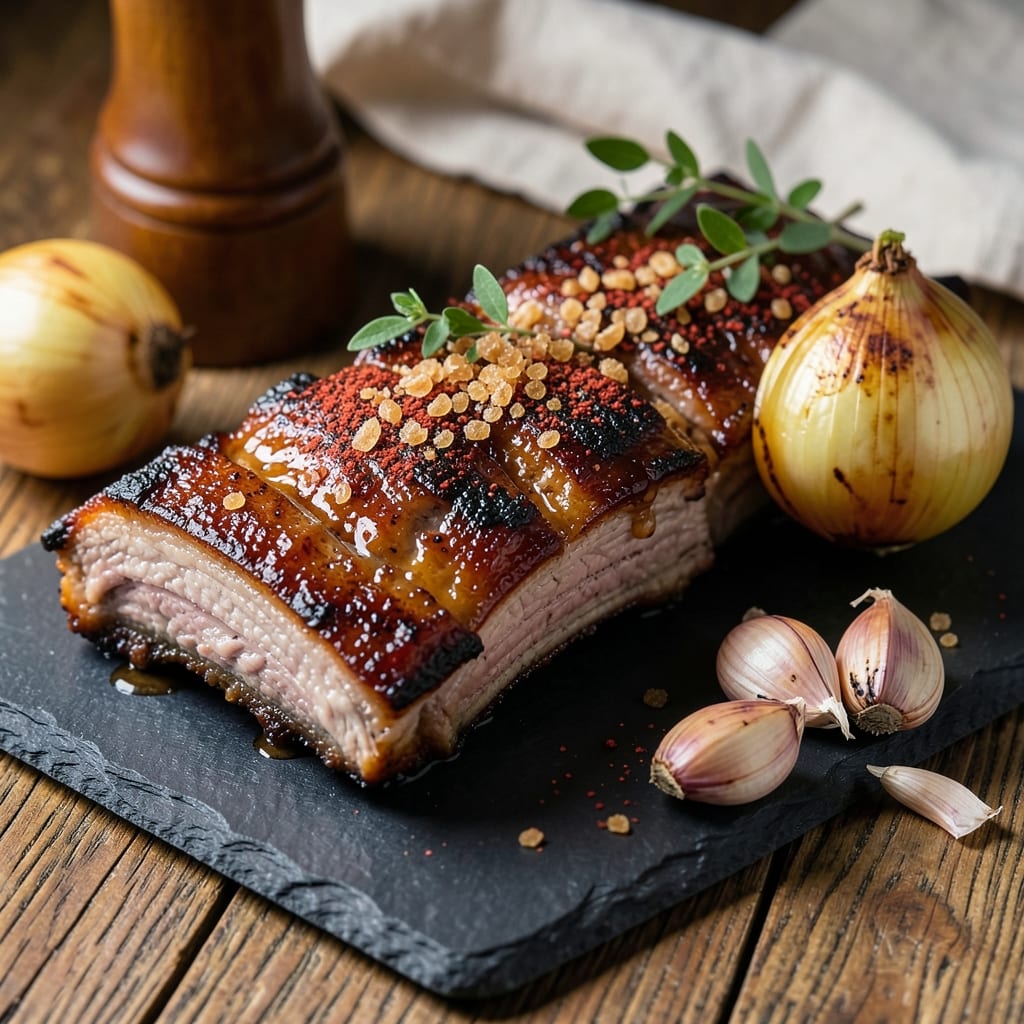
This BBQ pork loin back ribs recipe delivers the perfect balance of smoky-sweet bark and fall-off-the-bone tenderness that transforms weeknights into a pitmaster's feast. 🔥 After years of perfecting my technique—from brining to bark formation—I've cracked the code for restaurant-quality ribs without the hours of babysitting. The secret lies in low-and-slow smoking followed by a high-heat sear that locks in juices while creating that coveted crust.
What sets this recipe apart is the two-stage cooking process: ribs spend hours at 225°F developing deep smoke flavor and tender texture, while the pork loin gets a quick 375°F finish for crispy edges. I use a dry rub with brown sugar and smoked paprika to build that signature bark, then apply a tangy-sweet sauce in the final minutes for maximum adhesion. The result? Ribs so tender they practically melt in your mouth, with a crust that's irresistibly crispy.
This isn't just about the ribs—they're the star of a complete meal. Serve with classic BBQ sides like tangy coleslaw and buttery cornbread to soak up every last drop of that smoky-sweet sauce. The pork loin comes out juicy and flavorful, perfect for slicing against the grain. What you're left with is a spread that feels like you've been smoking meat all day—without the all-day commitment.
Whether you're hosting a backyard gathering or treating yourself to a special dinner, this recipe delivers professional results with simple techniques. The key is patience and attention to temperature—once you master these elements, you'll have BBQ that rivals your favorite competition-winning pitmaster. Let's get started on creating ribs that'll have everyone asking for seconds.
Ingredients for bbq pork loin back ribs
Four pounds of meaty ribs, bold spices, and a two-stage smoke that turns weeknights into a pitmaster's triumph.
| Ingredient | Amount | Notes |
|---|---|---|
| Pork Loin Back Ribs 🍖 | 4 lb | Bone-in, meaty ends included |
| Yellow Onion 🧅 | 1 whole | Cut into quarters, skin on |
| Garlic Cloves 🧄 | 8 cloves | Smoked or fresh, peeled |
| Brown Sugar 🍚 | ½ cup | Light or dark, packed |
| Smoked Paprika 🌶️ | 2 tbsp | High-quality for authentic bark |
| Kosher Salt 🧂 | 1 ½ tbsp | Diamond Crystal preferred |
| Ground Black Pepper 🌶️ | 1 ½ tbsp | Freshly cracked for bite |
| Apple Cider Vinegar 🍎 | ¼ cup | For brining solution |
| Wood Chips (Hickory or Oak) 🌳 | 2 cups | Soaked for 30 minutes |
| BBQ Sauce 🍯 | ½ cup | Tangy-sweet, store-bought or homemade |
| Unsalted Butter 🧈 | ¼ cup | Full-fat for basting |
| Fresh Thyme 🌿 | ¼ cup | Leaves only, chopped |
| Pork Loin Chops 🥩 | 1 lb | 1-inch thick slices |
| Olive Oil 🫒 | 2 tbsp | For searing pork loin |
The ribs are non-negotiable—look for meaty back ribs with good fat coverage at your butcher or grocery store's meat counter. Costco or Whole Foods often carry the best quality, but any reputable butcher will have what you need. Freshness matters: the meat should be vibrant pink, not gray or slimy. For the pork loin, bone-in chops hold up better to high heat than boneless cuts. If you can't find fresh thyme, dried works at one-third the amount, but fresh gives that extra depth. The wood chips? Hickory or oak are classic choices—avoid fruitwoods unless you're going for a sweet profile.
No smoked paprika? Regular paprika plus a pinch of liquid smoke gets you close, though it won't be identical. Substituting brown sugar? White sugar works, but the molasses notes in brown sugar help build that caramelized bark. For the brining solution, apple cider vinegar tenderizes the meat—lemon juice is a pinch in a bind, but vinegar's acidity works better here. The BBQ sauce can be anything you love, but avoid watery brands—look for thick, sticky sauces with real fruit content. And that butter? Full-fat is non-negotiable—it bastes the ribs with flavor while keeping them moist during the high-heat finish.
Prep the ribs the night before: trim excess fat (leave some for flavor), then apply the dry rub and refrigerate uncovered for at least 4 hours—this helps the bark form faster. The wood chips should soak in water or beer for 30 minutes before smoking. Ribs reheat beautifully: warm in a 300°F oven for 15 minutes with a splash of apple juice to keep them moist. Store leftovers in the fridge for up to 5 days or freeze for 3 months—portion them into individual servings for easy reheating. The pork loin chops? Cook them the same day—they don't reheat as well.
Why You'll Love This Recipe
- Foolproof Prep: I swear by this—just rub the ribs with garlic, paprika, and brown sugar, then toss them on the grill or in the oven. No brining, no fancy prep, just hands-off flavor.
- Sweet-Smoky Magic: That caramelized brown sugar crust? It’s the star. The smoked paprika gives it depth, while the onions add a melt-in-your-mouth sweetness that makes every bite irresistible.
- Weeknight Crowd-Pleaser: Between us, this is my go-to for game days or lazy Sundays. It feeds six easily, and honestly? Even my picky uncle asks for seconds.
- Leftovers That Don’t Suck: Cold ribs the next day? Still delicious. Pack them for lunches, shred them for tacos, or reheat slices for sandwiches—no one will complain. (Yes, even on a Tuesday night.)
Step-by-step instructions for smoky-sweet pork loin back ribs
Here's how to transform tough ribs into melt-in-your-mouth perfection with that coveted smoky bark.
🔥 Step 1: Prep and Season the Ribs for Maximum Flavor
Start by removing the pork loin back ribs from the fridge and patting them completely dry with paper towels. I can't stress this enough—moisture is the enemy of that perfect bark. You want the surface completely dry so the seasoning can adhere and the smoke can penetrate properly.
In a large bowl, combine the 0.5 cup brown sugar, 2 tbsp smoked paprika, 1.5 tbsp kosher salt, and 1.5 tbsp ground black pepper. This dry rub is the foundation of that beautiful dark bark and deep flavor. Rub this mixture all over the ribs, pressing firmly so it sticks to every crevice. Let them sit at room temperature for 30 minutes while you prepare the rest of your ingredients.
🍳 Step 2: Create the Brine for Extra Tenderness
While the ribs are seasoning, prepare a simple brine in a large bowl by combining 4 cups water (I use filtered water for best results), 0.25 cup apple cider vinegar, and the 1 whole yellow onion cut into quarters. The acidity in the vinegar helps tenderize the meat while the onion adds subtle sweetness. Place the seasoned ribs in the brine and let them soak for 1 hour at room temperature.
This brining step is what transforms tough ribs into fall-apart tender meat. The acid and salt break down muscle fibers, allowing the smoke to penetrate more deeply during cooking. Don't skip this—it's the secret to those tender results you're after.
🔥 Step 3: Smoke the Ribs Low and Slow
Preheat your smoker to 225°F using the 2 cups soaked wood chips (hickory or oak). I like to use a combination of both woods for depth of flavor. Place the ribs bone-side down on the smoker grates, meat-side up. This positioning allows the fat to render down and baste the meat as it cooks.
Smoke the ribs for 4-5 hours until the internal temperature reaches 195-203°F and they're fork-tender. You'll know they're ready when the meat pulls away from the bone with just gentle pressure. The bark should be dark and crispy, with a beautiful smoke ring visible just beneath the surface. Resist the urge to peek—the temperature fluctuations from opening the smoker will extend your cook time.
🥘 Step 4: Baste and Glaze for Extra Flavor
Once the ribs reach the proper internal temperature, remove them from the smoker and increase the heat to 250°F. In a small saucepan, melt the 0.25 cup unsalted butter with the 8 cloves garlic cloves and 0.25 cup chopped fresh thyme over low heat until fragrant. Pour this aromatic butter mixture over the ribs and let them baste for 15 minutes.
Then brush the ribs with the 0.5 cup BBQ sauce and return them to the smoker for another 30-45 minutes until the glaze is caramelized and sticky. This final basting step adds that sweet, tangy finish while keeping the meat moist. The high heat at the end helps create that beautiful caramelized crust.
🍽️ Step 5: Rest and Serve with Confidence
Once the ribs are glazed to perfection, transfer them to a cutting board and let them rest for 10-15 minutes before serving. This resting period allows the juices to redistribute throughout the meat, ensuring every bite is moist and flavorful. The ribs should be so tender they practically fall off the bone when you cut them.
Slice between the bones and serve with the pork loin chops you've seared in 2 tbsp olive oil until golden brown on each side (about 3-4 minutes per side for medium-rare). The combination of smoky ribs and perfectly seared chops makes this a showstopper main course that will have everyone asking for seconds.
Pro Tips For Making Bbq Pork Loin Back Ribs
- Trim the Fat First: Pork loin back ribs have a thick fat cap that won’t render out evenly during cooking. Use a sharp knife to slice through the fat layer between the ribs—this keeps them tender and lets the sauce cling better. (I used to skip this, and the ribs always felt greasy instead of smoky.)
- Char the Onions Low: Cook your sliced yellow onions until they’re deep brown, almost black—this takes longer than you think. The slow caramelization adds sweetness that balances the smokiness, but don’t walk away or they’ll burn. (Yes, even if you’re impatient like me.)
- Skip the Crowding in the Pan: If you’re searing the ribs in a skillet, work in batches. Overcrowding steams the meat instead of browning it, and that’s when your ribs turn out soggy. A single layer with space between them guarantees a crust that sticks to the bone.
- Use Wet Brown Sugar: Dissolve your brown sugar in a splash of water or apple cider vinegar before adding it to the sauce. This prevents clumping and makes it silky smooth—no one likes gummy BBQ. (I learned this the hard way after scraping sugar lumps off my ribs mid-bite.)
Regional styles of bbq pork loin back ribs
Texas BBQ Style
In Texas, ribs are all about bold flavors and that iconic dark bark. I love using a mix of 2 tbsp smoked paprika and 1 tbsp chili powder in my dry rub, plus a touch of cayenne pepper for heat. Texans often use a 3-2-1 method—3 hours smoked, 2 hours wrapped in foil with liquid, and 1 hour unwrapped to form the bark. For the sauce, I reach for a tangy, vinegar-based option like Stark's BBQ or make my own with apple cider vinegar and tomato paste. The key is patience—Texas pitmasters don't rush the process. 🌶️
Carolina Style
Carolina BBQ brings a vinegar-pepper sauce that cuts through the richness of the ribs beautifully. I make mine with ½ cup apple cider vinegar, ½ cup tomato paste, and a 1 tbsp cayenne pepper for heat. The ribs get a dry rub of 1 tbsp brown sugar, 1 tbsp kosher salt, and 1 tbsp black pepper, then smoke at 225°F for 4-5 hours until tender. Unlike Texas, Carolina ribs often include a side of white bread to soak up the sauce—trust me, it's a game-changer. The sauce gets tossed with the ribs in the final 15 minutes of cooking. 🍖
Kansas City Style
Kansas City is where sweet and smoky meet. Their signature sauce is thick, sticky, and packed with molasses and brown sugar. I use ½ cup molasses, ½ cup ketchup, and ¼ cup brown sugar in my sauce, then apply it generously during the last 30 minutes of smoking. The dry rub here is sweeter too—2 tbsp brown sugar, 1 tbsp smoked paprika, and 1 tbsp garlic powder. Kansas City ribs are all about that caramelized crust, so I don't wrap them—they get smoked uncovered until the bark is deep and glossy. Serve with buttery baked beans and crusty bread. 🍯
Memphis Dry Rub Style
Memphis is famous for its dry rubs and dry ribs—no sauce needed! I use a mix of 1 tbsp brown sugar, 1 tbsp smoked paprika, 1 tbsp kosher salt, and ½ tbsp black pepper, then smoke the ribs at 225°F for 5-6 hours until the bark is dark and crispy. The secret? A wood-fired oven—Memphis pitmasters often use gas grills with wood chips for that authentic smoke flavor. Serve with white bread and a side of pickled vegetables to balance the richness. The ribs are so flavorful, you won't miss the sauce. 🔥
Alabama White Sauce
Alabama's white sauce is a creamy, tangy contrast to the smoky ribs. I make mine with 1 cup mayonnaise, ¼ cup apple cider vinegar, 1 tbsp lemon juice, and a pinch of cayenne pepper. The ribs get a dry rub of 1 tbsp brown sugar, 1 tbsp smoked paprika, and 1 tbsp kosher salt, then smoke at 225°F for 4-5 hours. The sauce gets tossed with the ribs in the final 10 minutes to keep it creamy and not burnt. Serve with coleslaw and cornbread for the ultimate Alabama spread. 🥓
Nutrition facts
Frequently asked questions
Can I use a grill instead of a smoker for these ribs?
You can absolutely adapt this recipe for a grill. Use a charcoal grill with a chimney starter to create smoke, or add soaked wood chips to your gas grill's flavorizer tube. Maintain 225°F by adjusting vents or heat output, and cook the ribs for 4-5 hours with the lid closed. For the high-heat finish, crank the grill to high heat and baste with the butter-garlic mixture. Just be prepared to monitor temps more closely on a grill than a dedicated smoker.
How do I know when the ribs are done without a meat thermometer?
If you don't have a thermometer, look for these signs: the meat should pull away from the bone with just gentle pressure (the "bend test"), and the ribs should be fork-tender—you should be able to insert a fork easily. The bark should be dark and crispy, and when you lift a rib, you'll see a beautiful smoke ring. For extra confirmation, check if the connective tissue has broken down enough that the ribs bend slightly when lifted. This usually happens after 4-5 hours at 225°F.
Can I make these ribs in an oven instead of smoking?
Yes, but you'll need to create smoke flavor artificially. Place a metal pan with 1 cup wood chips (hickory or oak) soaked in water on the bottom rack, then put the ribs on a rack above it. Cook at 225°F for 4-5 hours, adding water to the pan as needed to create steam and smoke. For the high-heat finish, increase the oven to 375°F and broil for 5-10 minutes to crisp the bark. The flavor won't be identical to true smoking, but it's a decent substitute in a pinch.
What's the best way to reheat leftover ribs?
Reheat ribs in a 300°F oven for 15-20 minutes with a splash of apple juice or water to keep them moist. For extra crispiness, broil for 2-3 minutes at the end. Avoid microwaving—it makes the bark soggy. If reheating from frozen, add 30-45 minutes to the time. Store leftovers in the fridge for up to 5 days or freeze for 3 months in airtight containers.
Why did my ribs turn out tough instead of tender?
Tough ribs usually mean one of three things: the temperature was too high (keep it at 225°F consistently), the cooking time was insufficient (aim for 195-203°F internal temp), or the ribs weren't properly brined.