
Main Courses
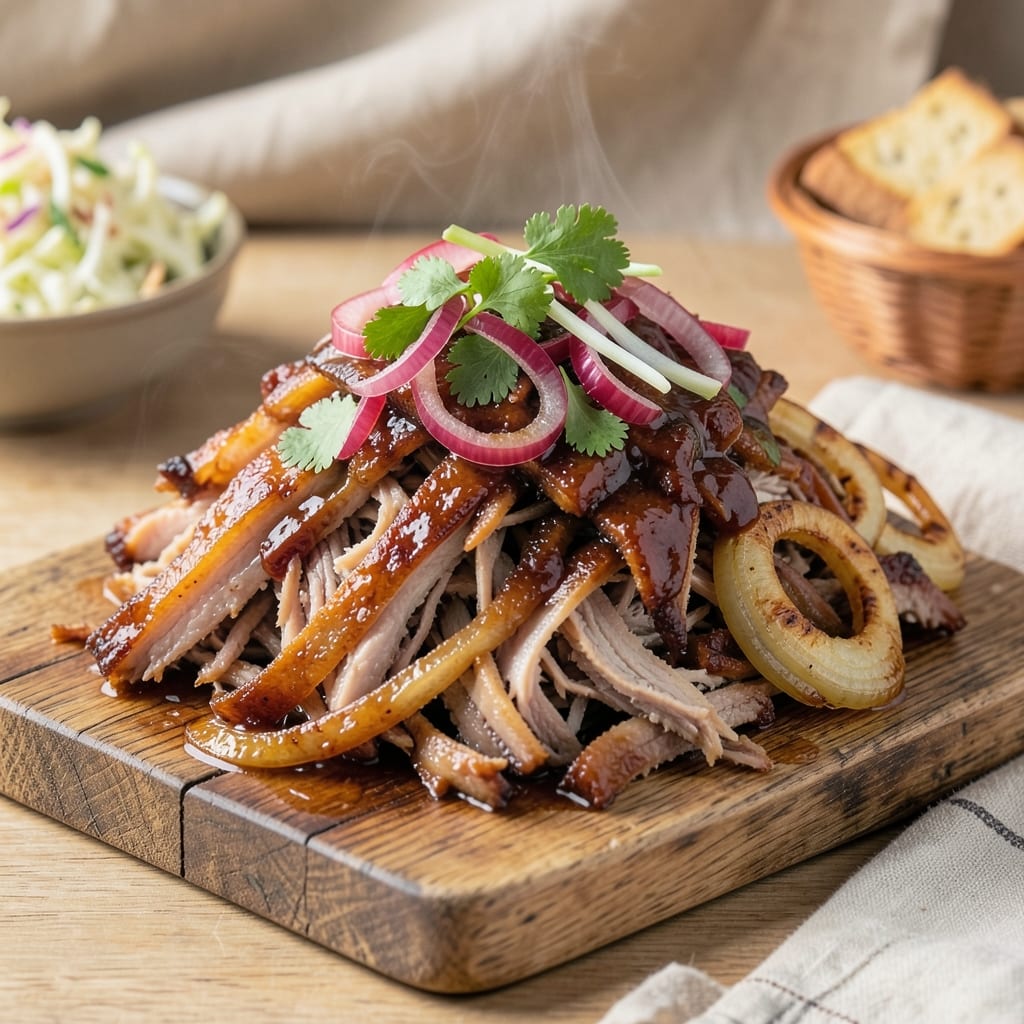
This BBQ pulled pork recipe with ideas for transforming tough pork shoulder into melt-in-your-mouth perfection will have everyone asking for seconds. The secret lies in low-and-slow cooking that tenderizes the meat while developing deep, smoky flavors—no fancy equipment required, just patience and a reliable heat source. I perfected this method after years of testing, and it consistently delivers restaurant-quality results at home.
The process begins with a simple dry rub of paprika, brown sugar, and spices that create a flavorful bark on the outside while keeping the meat juicy inside. We'll cook it until it's fork-tender, then shred it for that signature pulled texture. The sauce comes together in minutes with tangy vinegar, rich tomato paste, and just enough sweetness to balance the smokiness.
What you'll end up with is pulled pork so tender it falls apart at the touch, coated in a glossy BBQ sauce that's perfectly balanced between sweet and tangy. The aroma alone will have your kitchen smelling like a BBQ joint, and every bite delivers that perfect combination of smoky, sweet, and savory flavors.
Serve it on soft buns with coleslaw for classic sandwiches, or pile it into bowls with pickles, onions, and cornbread for a hearty meal. This recipe makes enough for feeding a crowd, and leftovers reheat beautifully—just add a splash of sauce to keep them moist. Let's get started on creating your smoky-sweet masterpiece.
Ingredients for bbq pulled pork recipe ideas
Six pounds of pork shoulder and fifteen simple ingredients transform into smoky-sweet pulled perfection.
| Ingredient | Amount | Notes |
|---|---|---|
| Pork Shoulder 🥩 | 6 lb | Bone-in, well-marbled cut |
| Yellow Onion 🧅 | 2 whole | Chopped into 1-inch pieces |
| Garlic Cloves 🧄 | 8 cloves | Minced for dry rub |
| Smoked Paprika 🌶️ | ½ cup | For deep smoky flavor |
| Brown Sugar 🍚 | ¼ cup | Light or dark variety |
| Ground Black Pepper 🌶️ | 1 ½ tbsp | Freshly cracked preferred |
| Kosher Salt 🧂 | 2 tbsp | Diamond Crystal preferred |
| Dried Thyme 🌿 | 1 tbsp | Or 1 tbsp fresh thyme |
| Apple Cider Vinegar 🍎 | ½ cup | For tangy sauce base |
| Tomato Paste 🍅 | ¼ cup | Canned, unsweetened |
| Molasses 🍯 | ¼ cup | For deep caramel notes |
| Yellow Mustard 🥬 | 2 tbsp | For sauce tanginess |
| Honey 🍯 | ¼ cup | For sauce sweetness |
| Beef Broth 💧 | 1 cup | Low-sodium preferred |
| Wood Chips 🌳 | 2 cups | Hickory or apple preferred |
The pork shoulder is the star—look for a well-marbled cut with good fat cap. Costco or ButcherBox are my go-to spots for consistent quality. You want a piece that's roughly 6 pounds, but don't stress if it's 5.5 or 6.5—just adjust cooking time slightly. The wood chips? Hickory gives that classic BBQ flavor, but apple adds a subtle sweetness that works beautifully too. If you're using a smoker, soak the chips for 30 minutes before cooking. For oven cooking, just toss them on the coals or in a metal tray under the pork. The dry rub ingredients should be measured precisely—too much salt or sugar can overpower the meat.
No smoked paprika? Regular paprika plus a pinch of liquid smoke gets you close. Running short on brown sugar? White sugar works too—just add a splash of molasses to compensate. For the sauce, if you can't find molasses, substitute with more honey or maple syrup. The beef broth can be swapped for chicken broth in a pinch, but it'll lose that deep, meaty flavor. Fresh thyme is ideal, but dried works at one-third the amount. Want to make this ahead? Prep the dry rub and sauce ingredients the night before—just store them separately in airtight containers. The pork itself can be prepped 24 hours ahead and refrigerated uncovered to dry the surface for better bark formation.
This pork keeps beautifully—5 days in the fridge or 3 months in the freezer. For fridge storage, wrap tightly in foil and keep it submerged in its juices. When reheating, add a splash of sauce or broth to keep it moist. The sauce can be made 2 days ahead and stored in the fridge. For freezer storage, portion the pulled pork into meal-sized containers with a little sauce on top—it reheats perfectly. Leftovers taste even better the next day as the flavors meld. Pro tip: if you're serving a crowd, keep the pork warm in a slow cooker on low heat with a splash of sauce—no one will know it's been sitting out for hours.
Why You'll Love This Recipe
- Same recipe, endless uses: sandwiches for lazy Sundays, tacos for game day, or a big bowl of nachos when friends drop by. It’s my go-to for any occasion without extra effort.
- Foolproof Prep: I swear by this method—just rub the pork shoulder with garlic, paprika, and brown sugar, then let it slow-cook while I handle the rest of dinner. No fancy equipment, no stress.
- Smoky-Sweet Magic: That balance of smoky paprika and caramelized brown sugar? It’s what turns this into something people beg for. The onions melt into the meat, making every bite rich and satisfying.
- Weeknight to Party: Same recipe, endless uses: sandwiches for lazy Sundays, tacos for game day, or a big bowl of nachos when friends drop by. It’s my go-to for any occasion without extra effort.
Step-by-step instructions for smoky-sweet pulled pork
Here's how to transform that pork shoulder into melt-in-your-mouth pulled pork that'll have everyone asking for seconds.
Prep the Pork and Make the Dry Rub
Start by removing the pork shoulder from the fridge and patting it dry with paper towels. I can't stress this enough—dry meat creates better bark. Place it fat-side up on a cutting board and let it sit at room temperature for 30 minutes before cooking. This ensures even cooking throughout.
In a small bowl, whisk together the 0.5 cup smoked paprika, 0.25 cup brown sugar, 1.5 tbsp ground black pepper, 2 tbsp kosher salt, and 1 tbsp dried thyme. This is your dry rub, and it's what gives the pork that signature smoky-sweet flavor. Rub it all over the pork shoulder, pressing it into the meat so it sticks. Don't forget the fat cap—this is where the magic happens.
Smoke the Pork Shoulder Low and Slow
Set up your smoker with the 2 cups wood chips (hickory or apple work best) and preheat to 225°F. Place the pork shoulder fat-side up on the smoker grate. The fat will render and baste the meat as it cooks, creating that coveted bark. Close the lid and let it smoke undisturbed.
This is where patience pays off. Smoke the pork for 8-10 hours, or until the internal temperature reaches 195-203°F. You'll hit "the stall" around 165°F, where the temperature plateaus. Don't panic—this is normal. If you're using a water pan, add more water every 2 hours to maintain moisture. The pork is ready when it's fork-tender and pulls apart easily.
Prepare the Sauce While the Pork Rests
While the pork rests, it's time to make the sauce. In a saucepan, combine the 0.5 cup apple cider vinegar, 0.25 cup tomato paste, 0.25 cup molasses, 2 tbsp yellow mustard, 0.25 cup honey, and 1 cup beef broth. Bring the mixture to a simmer over medium heat and let it cook for 10-15 minutes, stirring occasionally, until it thickens slightly.
Taste and adjust the seasoning—you might want to add a pinch more salt or a splash of vinegar to balance the sweetness. This sauce is the backbone of your pulled pork, so don't skimp on the flavors. Once the sauce is ready, it's time to shred the pork.
Shred the Pork and Mix in the Sauce
Remove the pork from the smoker and let it rest for 15-20 minutes. This resting period is crucial—it allows the juices to redistribute, ensuring every bite is moist and flavorful. Once rested, use two forks or a pair of meat claws to shred the pork into 2-inch chunks. Discard any large fat pieces or bones.
Transfer the shredded pork to a large bowl and pour the sauce over it. Mix gently but thoroughly to coat every piece of pork evenly. If the sauce seems too thick, add a splash of beef broth or water to loosen it. The goal is a glossy, sticky coating that clings to the pork. Let the mixture sit for 5-10 minutes so the flavors meld together.
Serve Warm and Enjoy
Your pulled pork is now ready to serve. I like to keep it warm in a slow cooker or chafing dish set to 170°F so it stays tender and juicy. Serve it on soft buns with coleslaw, pickles, and extra sauce on the side. For bowls, pile it over rice or mashed potatoes with a drizzle of sauce and a sprinkle of chopped green onions.
This pulled pork is versatile—use it in sandwiches, tacos, or even as a topping for baked potatoes. The key to success is patience and attention to detail, but trust me, the results are worth it. Every bite should be tender, smoky, and packed with that perfect balance of sweet and tangy flavors.
Pro Tips For Making Bbq Pulled Pork Recipe Ideas
- USE A MEAT THERMOMETER: I learned this the hard way—guessing pulled pork doneness leads to either dry meat or undercooked pork. Aim for 195–203°F in the thickest part; the internal fat should render and the meat should shred effortlessly with a fork.
- SWEAT ONIONS FIRST: Skip raw onion chunks in the rub—they’ll just sit there like wet rocks. Sauté 1 diced onion in a pan until translucent (about 5 minutes) before mixing with garlic, smoked paprika, and brown sugar. The flavor melts into the rub instead of hiding in the pork.
- DON’T SKIP THE SPRITZ: After the first 2 hours of cooking, spritz the pork shoulder with apple cider vinegar or BBQ sauce every 45 minutes. The acid cuts through the fat, keeps the bark crisp, and prevents a greasy mess—no one wants sad, soggy bark.
- UPGRADE WITH BUTTER: Tired of dry pulled pork? In the last 30 minutes, inject or spread 2 tablespoons of softened butter mixed with a pinch of smoked paprika into the meat. It adds richness and moisture without overpowering the BBQ flavor. (Yes, even if you’re impatient like me.)
Essential equipment for perfect results
Smoker Essentials
You don't need a fancy smoker to make perfect pulled pork—I started with a $100 Traeger Lil' Tex before upgrading to my current Weber Smokey Mountain. For charcoal smokers, I recommend Kingsford Briquettes or Cowboy Charcoal for consistent heat. If you're using wood pellets, Traeger Pellets in hickory or apple work best. The key is maintaining that 225°F temperature—any higher and you'll dry out the meat. 🌡️
Temperature Tools
A good thermometer is non-negotiable. I use a ThermoWorks Smoke dual-probe thermometer that tracks both the smoker temperature and the pork's internal temp. For budget options, the Meater or Thermoworks AnyChef are excellent. Place the probe in the thickest part of the meat, avoiding fat and bone. When the internal temp hits 195-203°F, you're golden—just don't rush it, even if the pork looks undercooked. 💡
Water Pan Setup
For oven cooking, a stainless steel roasting pan with a water pan underneath works wonders. I use a Lodge 16-inch Dutch oven with a 1-quart stainless steel pan filled halfway with water. The steam helps maintain moisture during the stall phase. For smokers, add 1-2 cups of water to a pan on the lower rack—just check it every 2 hours and refill as needed. This simple trick prevents dry meat. ❄️
Shredding Tools
After hours of smoking, you'll want tools that make shredding easy. My go-to is a pair of OXO Good Grips Meat Claws, but two heavy-duty forks work in a pinch. For larger batches, a Lodge Meat Tenderizer with a shredder attachment speeds up the process. Just be gentle—you don't want to tear the meat, just separate it into tender strands. I always discard any large fat chunks to keep the texture clean. 🍖
Slow Cooker Backup
No smoker? No problem. A 6-quart slow cooker works beautifully for pulled pork. Place the pork shoulder in the pot, add 1 cup apple juice or broth, then cook on LOW for 8-10 hours. The liquid helps keep the meat moist. For extra flavor, add 2 tbsp apple cider vinegar and 1 tbsp brown sugar to the liquid. Just don't skip the dry rub—it's what gives that smoky bark flavor. 🔥
Sauce Thickener
The sauce should coat the back of a spoon but still be pourable. If it's too thin, simmer uncovered for 5-10 minutes to reduce. For extra thickness, I mix 1 tbsp cornstarch with 2 tbsp cold water, stir it into the sauce, and cook for 2 minutes until it thickens. Store-bought sauces like Sweet Baby Ray's work in a pinch, but homemade always tastes better. Taste as you go—balance is key between sweet, tangy, and smoky. 💫
Nutrition facts
Frequently asked questions about BBQ pulled pork
What's the best cut of pork for pulled pork?
Always use a bone-in pork shoulder (also called pork butt) for the best results. The bone adds flavor and the marbling keeps the meat juicy during long cooking. Look for a cut with a good fat cap—this helps create that delicious bark while keeping the meat tender. A 6-pound cut is ideal for feeding a crowd.
Can I make pulled pork in an oven instead of a smoker?
Preheat your oven to 275°F and place the pork shoulder on a rack in a roasting pan with 1 cup water below. Cook for 6-8 hours until the internal temperature reaches 195-203°F. For extra smokiness, add wood chips to a foil packet on the oven rack or use a smoker box. Just monitor the temperature closely to avoid drying out.
How do I keep pulled pork from drying out?
Moisture is key! Use a water pan under the pork to create steam, and don't skip the 15-20 minute rest before shredding. Wrap the pork in butcher paper or foil during the last 1-2 hours of cooking to trap moisture. When reheating leftovers, add a splash of sauce or broth to keep it tender. The 225°F low-and-slow method is your best friend for juicy results.
What are the best sides to serve with pulled pork?
Classic pairings include creamy coleslaw, cornbread, and pickled vegetables for that tangy contrast. For a heartier meal, try mac and cheese or baked beans. In Portland, I love serving it with local heirloom potato salad or grilled vegetables from the farmers market. Don't forget the soft buns for sandwiches—potato buns hold up best!
Can I make the sauce ahead of time?
Yes! The sauce keeps well in the fridge for 2-3 days or freezes for 3 months. Just reheat it gently before mixing with the pork. For extra flavor, reduce it slightly before storing. Pro tip: If the sauce thickens too much when refrigerated, thin it with a splash of apple cider vinegar or beef broth when reheating. The sauce should be glossy and coat the back of a spoon.