
Main Courses
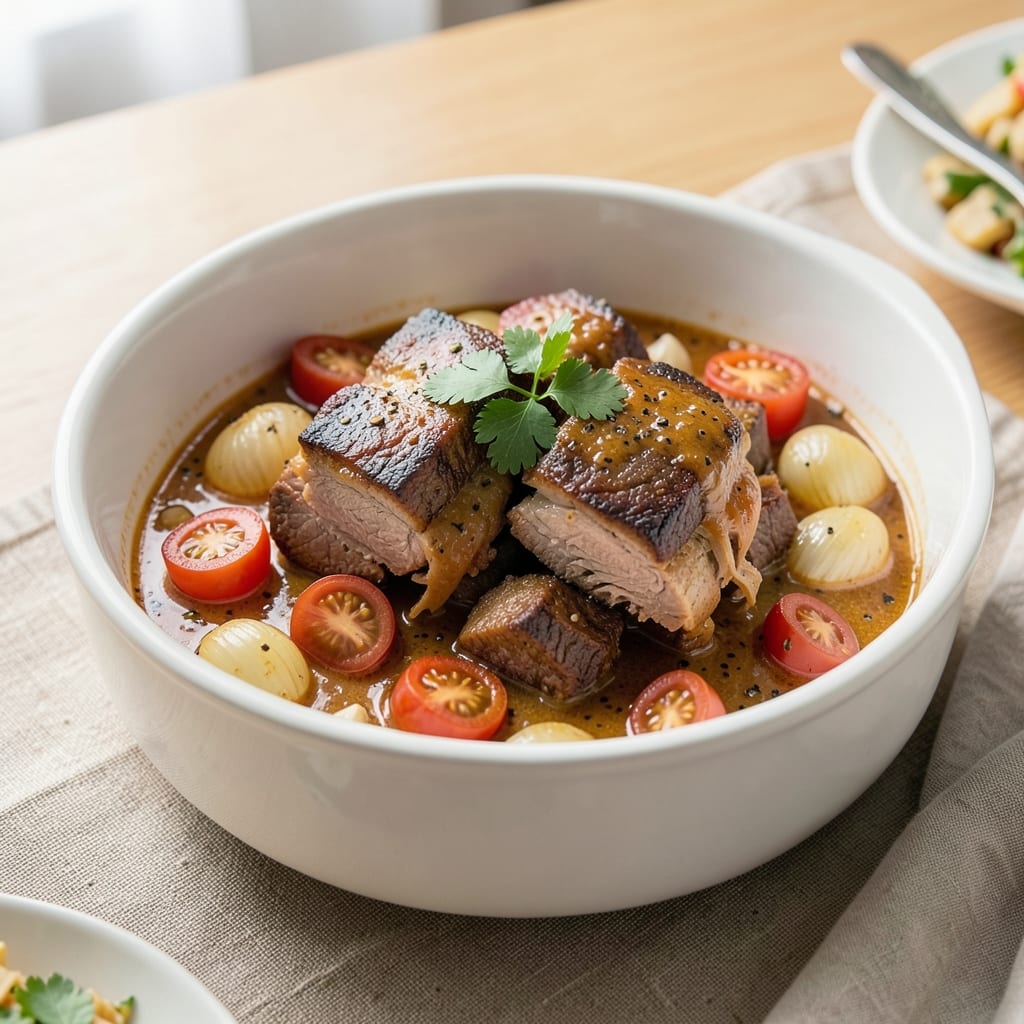
This Filipino beef and pork caldereta recipe delivers the hearty, comforting flavors of home—where tender meat and rich tomato sauce create a dish that feels like a warm embrace. 💛 I first tasted caldereta during a trip to Manila, where it was served in cast iron pots at family gatherings, and I've been perfecting this version ever since to capture that same restaurant-quality depth at home.
The magic lies in the slow simmering process, where beef chuck and pork shoulder become melt-in-your-mouth tender while absorbing the flavors of garlic, onions, and tomatoes. Unlike other stews, caldereta uses a combination of tomatoes and tomato paste to create a sauce that's both sweet and tangy, balanced perfectly with just the right amount of vinegar for brightness. This isn't just a stew—it's a celebration of Filipino comfort food.
What makes this recipe truly special is how it transforms tough cuts of meat into something luxurious through patience and technique. The long cooking time allows the flavors to meld together, creating a sauce that's rich enough to coat every bite while remaining light enough to let the meat shine. The result is a dish that's hearty enough for a family dinner but elegant enough for company—exactly what makes caldereta a Filipino classic.
Serve it with steamed rice to soak up every last drop of that flavorful sauce, or pair it with crusty bread to enjoy the stew itself. The beauty of caldereta is in its simplicity—just a few key ingredients, but each one playing a crucial role in creating this perfect balance of flavors. Let's get cooking!
Ingredients for beef and pork caldereta
Filipino comfort food comes together with these 14 essential ingredients for rich, tender beef and pork caldereta.
| Ingredient | Amount | Notes |
|---|---|---|
| Beef Chuck Roast 🥩 | 2 lb | Cut into 1.5-inch cubes |
| Pork Shoulder 🐖 | 2 lb | Cut into 1.5-inch cubes |
| Yellow Onions 🧅 | 3 whole | Thinly sliced, about 3 cups |
| Garlic Cloves 🧄 | 8 cloves | Minced, about 2 tbsp |
| Tomatoes 🍅 | 4 whole | Medium, quartered |
| Tomato Paste 🍅 | ½ cup | Squeeze tube preferred |
| Canned Tomato Sauce 🍅 | 1 can | 28 oz, San Marzano preferred |
| White Vinegar 💧 | ¼ cup | For brightness |
| Bay Leaves 🌿 | 2 whole | For depth of flavor |
| Fresh Thyme 🌿 | ¼ cup | Leaves only, chopped |
| Black Peppercorns 🌶️ | 1 tsp | Freshly cracked |
| Salt 🧂 | 1 ½ tsp | Diamond Crystal preferred |
| Olive Oil 🫒 | ½ cup | Extra-virgin for richness |
| All-Purpose Flour 🌾 | 2 tbsp | For thickening sauce |
The meat is the heart of this dish—beef chuck for deep flavor and pork shoulder for tenderness. Look for well-marbled cuts at your local butcher or Costco for the best value. If you can't find chuck, brisket or short ribs work too, but trim excess fat. The onions and garlic? Fresh is non-negotiable—dried just won't cut it here. For tomatoes, San Marzano cans give the best flavor, but any good-quality canned tomatoes will do. The tomato paste? Squeeze tubes from Trader Joe's are perfect—no waste, lasts forever.
No fresh thyme? Dried works at one-third the amount, but it won't have the same brightness. Short on vinegar? Lemon juice at half the quantity gives similar tang. The flour is just for thickening at the end—don't skip it, but don't overdo it either. If you're worried about the sauce being too acidic, add a pinch of sugar to balance. The bay leaves? Remove them before serving—they're for flavor, not eating. And if you're using pre-cut meat, pat it dry first to get the best sear.
This stew tastes even better the next day as flavors meld. Store in an airtight container in the fridge for up to 5 days, or freeze for 3 months. I like to portion it into containers with rice for easy lunches. The sauce thickens as it cools, so add a splash of water or broth when reheating. For serving, garnish with fresh thyme if you've got any left—it makes all the difference.
Why You'll Love This Recipe
- One-Pot Magic: I swear by this recipe when I’m too tired to wash a million dishes. Toss the beef chuck and pork shoulder into a Dutch oven with onions, garlic, and tomatoes, then let it slow-cook—no extra pans, no stress. The rich meat practically falls apart, and the sauce thickens right in that same pot.
- Garlic-Tomato Bomb: That first bite? Chef’s kiss. The beef chuck stays tender while the pork shoulder gets just enough bite, all blanketed in a sauce that’s sweet from the tomatoes and punchy from the garlic. It’s the kind of flavor that makes you reach for seconds without even thinking.
- Weeknight to Party Fix: Honestly, this is my go-to when I need to feed a crowd but don’t want to slave over the stove. Simmer it all day, and by dinner, the aroma fills the house—perfect for family dinners or when unexpected guests show up. (Yes, even on a Tuesday night.)
- Budget-Friendly Feast: Between us, this recipe stretches a meal into leftovers that still taste amazing. The beef chuck and pork shoulder are affordable cuts, and the onions and tomatoes bulk it up without breaking the bank. Plus, the leftovers reheat like a dream—no dry, sad meat here.
Step-by-step instructions for beef and pork caldereta
This rich Filipino stew builds flavor through slow simmering and aromatic layers.
🍳 Step 1: Sear the Meats for Deep Flavor
Heat the 0.5 cup olive oil in a large Dutch oven over medium-high heat until shimmering. Working in batches, add the 2 lb beef chuck roast and 2 lb pork shoulder (cut into 1.5-inch cubes), spreading them in a single layer. Sear undisturbed for 3-4 minutes until deeply browned on all sides.
This browning creates the Maillard reaction that forms the stew's rich foundation. Don't rush this step—you'll know it's ready when the meat releases easily from the pan. Transfer the seared meats to a plate and set aside. I like to leave the browned bits in the pot for maximum flavor extraction later.
👨🍳 Step 2: Build the Aromatic Base
In the same Dutch oven, add the 3 whole yellow onions (thinly sliced) and cook for 5-6 minutes until softened and golden. Add the 8 cloves garlic cloves (minced) and cook for 30 seconds until fragrant. Stir in the 0.5 cup tomato paste, scraping up any browned bits from the bottom.
Here's where the flavors start to meld. The tomato paste will darken slightly as it cooks down, creating a deep, concentrated base. If you notice the onions sticking, add a splash of water to deglaze—this prevents burning while maintaining flavor.
🍳 Step 3: Simmer with Tomatoes and Vinegar
Pour in the 1 can canned tomato sauce and 0.25 cup white vinegar, stirring to combine. Add the 4 whole tomatoes (quartered), 2 whole bay leaves, 0.25 cup fresh thyme, 1 tsp black peppercorns, and 1.5 tsp salt. Bring to a gentle boil, then reduce heat to low and cover partially.
Return the seared meats to the pot, spooning the aromatic oil over them. Let it simmer uncovered for 1 hour, stirring occasionally. This initial simmer allows the meats to tenderize while the tomatoes break down into the sauce. The vinegar adds brightness that cuts through the richness.
🥘 Step 4: Thicken and Finish the Stew
After 1 hour, sprinkle the 2 tbsp all-purpose flour over the stew and stir gently to combine. This creates a light roux that thickens the sauce without making it gluey. Simmer uncovered for another 30-45 minutes until the meats are fork-tender and the sauce has reduced to a rich consistency.
You'll know it's ready when the sauce coats the back of a spoon and the meats easily pull apart with minimal resistance. Taste and adjust seasoning—Filipino caldereta should balance rich, tangy, and savory flavors. The sauce should cling to the meats without being overly thick.
⏰ Step 5: Rest and Serve with Perfect Texture
Remove from heat and let the stew rest for 10 minutes before serving. This resting period allows the juices to redistribute throughout the meats, ensuring each bite remains moist and flavorful. Discard the bay leaves before serving.
Serve the caldereta hot, with the rich sauce generously coating each piece of meat. The perfect caldereta should have tender, falling-apart meats in a velvety sauce that balances sweet tomatoes, tangy vinegar, and savory spices. Pair with steamed rice to soak up every delicious bite.
Pro Tips For Making Beef And Pork Caldereta
- Brown the Meat First: Don’t just toss raw meat into the pot—sear both the beef chuck and pork shoulder in batches over medium-high heat until deep golden. I learned this the hard way: skipping this step means bland, gray meat instead of rich, caramelized flavor that builds the sauce. Use about 2 tablespoons of oil per batch, and don’t crowd the pan—give those cuts room to crisp.
- Cut Onions Thinly: Caldereta relies on onions for sweetness and texture, so chop them paper-thin—about 1/8-inch slices. Thicker pieces turn mushy and watery, while thin slices caramelize faster and melt into the sauce. Pro move: Soak them in cold water for 10 minutes first to mellow their sharpness, then drain well before cooking.
- Simmer Slow and Low: After adding tomatoes and liquids, reduce heat to a bare simmer—just enough to see tiny bubbles at the edges. I used to rush this, and the meat turned tough. A gentle simmer for at least 2.5 hours (3 for pork shoulder) keeps everything tender and lets the flavors marry. Cover loosely with foil if the sauce reduces too fast.
- Deglaze with Tomato Juice: After browning the meat, deglaze the pot with 1 cup of tomato juice (not just water) while scraping up those fond bits. It’s a shortcut that upgrades the sauce—tomato juice adds depth and acidity without diluting the flavor. Skip the wine if you’re in a hurry, but don’t skip the deglazing step entirely.
Troubleshooting great beef and pork caldereta
Meat Not Tender Enough
If your beef or pork isn't tender after simmering, it likely didn't cook long enough. The total cook time should be 2-2.5 hours—this stew needs patience! I've found that pork shoulder needs about 1.5 hours to become fork-tender, while beef chuck requires 2 hours minimum. If you're short on time, try cutting the meat into smaller 1-inch cubes initially, which reduces cooking time by 20-30 minutes. 💪
Sauce Too Thin or Watery
A thin sauce usually means the stew didn't reduce enough. After adding flour, simmer uncovered for an extra 15-20 minutes to thicken naturally. If it's still too thin, mix 1 tbsp cornstarch with 2 tbsp cold water, stir into the stew, and cook for another 5 minutes. Pro tip: I always skim excess fat from the surface during simmering—this helps concentrate the sauce. For extra richness, add 1 tbsp tomato paste at the end and simmer for 5 minutes.
Sauce Too Thick or Gluey
Over-thickening happens when too much flour is added or the stew reduces too much. To fix this, whisk in ¼ cup warm water or beef broth and simmer gently for 5 minutes to restore balance. If the sauce is still too thick, add another 2 tbsp water gradually. Remember, the sauce should coat the back of a spoon but still pour easily—think of it like heavy cream consistency. 🥄
Acidic or Sour Taste
The vinegar adds brightness, but too much can make the stew taste sharp. If your caldereta is overly tangy, balance it with 1 tsp sugar or ½ tsp brown sugar and simmer for 5 minutes. For a deeper flavor without sweetness, add 1 extra bay leaf and simmer for 10 minutes. I've also found that a pinch of ground cinnamon (just ¼ tsp) adds warmth and rounds out acidic flavors beautifully.
Meat Too Greasy
Excess fat can make the stew feel heavy. After searing, remove as much visible fat as possible with a paper towel before adding the meat back to the pot. During simmering, skim fat from the surface every 30 minutes using a spoon or fat separator. For extra control, I use a Lodge cast iron Dutch oven with sloped sides—it makes skimming easier. If the stew still feels greasy, add 1 extra tomato (quartered) and simmer for 10 minutes to absorb some of the fat.
Flavors Not Developing
Flavors need time to meld, but if your stew tastes flat, it might not have simmered long enough. After the initial 1-hour simmer, extend cooking to 30-45 minutes more uncovered. For deeper flavor, add 1 extra bay leaf and ½ tsp ground cloves (a traditional Filipino spice) during the final 30 minutes of cooking. I also recommend using San Marzano tomatoes—their natural sweetness enhances flavor development. If you're short on time, deglaze the pot with ¼ cup white wine after searing for extra depth. 🌟
Nutrition facts
Frequently asked questions about Filipino beef and pork caldereta
Can I make caldereta with chicken instead of beef and pork?
Yes! For a chicken version, use 3-4 lbs bone-in chicken thighs and drumsticks instead of the beef and pork. Simmer for 45-50 minutes until fully cooked, then proceed with the tomato sauce and vinegar steps. The chicken version is lighter but just as flavorful—great for weeknight dinners!
How do I store leftover caldereta?
Store in an airtight container in the fridge for up to 5 days or freeze for 3 months. When reheating, add a splash of water or broth to restore the sauce's consistency. I like to portion it with rice for easy lunches—just microwave for 2-3 minutes until heated through.
What makes this different from Spanish caldereta?
The Filipino version uses white vinegar for brightness, while Spanish caldereta often includes red wine and sherry vinegar. Filipino caldereta also typically features tomato paste and fresh thyme, creating a sweeter, more aromatic sauce. The meat cuts differ too—Filipino versions often use tougher cuts like chuck roast that benefit from long simmering.
Can I make caldereta in a slow cooker?
Brown the meats first, then transfer everything to a 6-quart slow cooker. Cook on low for 6-7 hours or high for 4-5 hours. The slow cooker method is perfect for hands-off cooking while maintaining tender meat. Add flour at the end and cook for an additional 15 minutes on high to thicken the sauce.
What's the best way to serve caldereta?
Serve hot with steamed white rice to soak up the rich sauce. For extra presentation, garnish with fresh thyme leaves and a drizzle of olive oil. In the Philippines, it's often served with garlic fried rice or crusty bread to enjoy the stew itself. The sauce should be thick enough to coat the meat but still pour gracefully.