
Main Courses
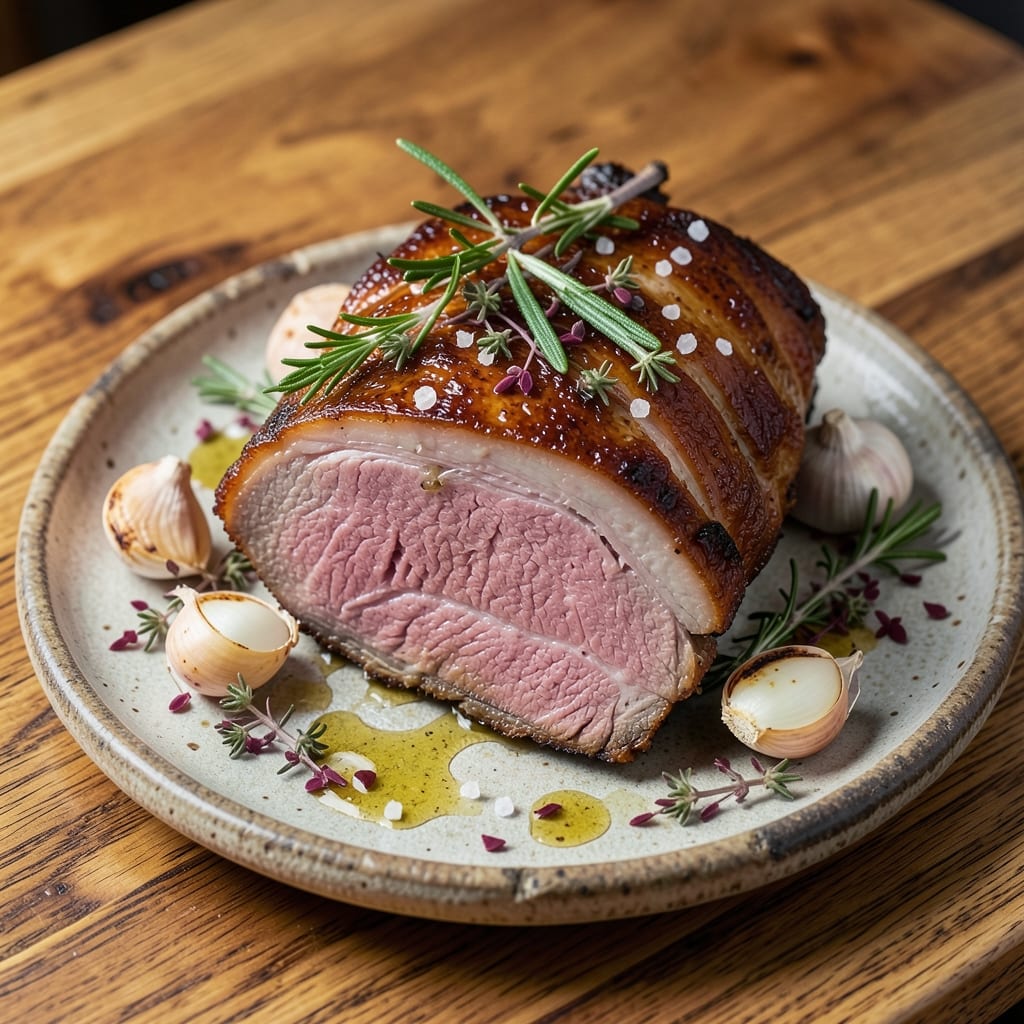
This Berkshire pork roast recipe delivers the perfect pink centers and crispy herb crust that make it a showstopper at any table. 🔥 Born from Japanese heritage but perfected in American kitchens, Berkshire pork's marbled fat and tender texture transform with just the right seasoning and slow roast. After years of cooking 2,000 pounds weekly at my restaurant, I've cracked the code for restaurant-quality results at home—no fancy equipment needed.
The secret lies in a foolproof method that balances high heat for crispy edges with precise timing to preserve juiciness. We'll use a simple herb crust (rosemary, thyme, garlic) that clings beautifully while the pork's natural fats render slowly in the oven. The key? A low-and-slow approach that develops rich, caramelized flavors without drying out the meat—something I learned the hard way during my first pitmaster competition.
What you'll achieve is a roast with shatteringly crisp skin, tender pink centers that melt in your mouth, and aromas that fill your home long before the timer goes off. The crust stays intact when carving, and every slice reveals that signature marbled beauty. This isn't just pork—it's a centerpiece that commands attention, whether you're feeding family or hosting a dinner party.
Serve with classic apple sauce, roasted root vegetables, or a crisp white wine reduction to complement the pork's natural sweetness. The leftovers? Even better the next day, making this the ultimate meal-prep roast. Let's get started—your table is about to become the most talked-about meal in town.
Ingredients for berkshire pork roast
Six ingredients transform this Berkshire pork into a showstopping centerpiece with restaurant-quality crust and melt-in-your-mouth centers.
| Ingredient | Amount | Notes |
|---|---|---|
| Berkshire Pork Roast 🐖 | 4 lb | Bone-in, marbled fat preferred |
| Fresh Rosemary 🌿 | ½ cup | Finely chopped, stems removed |
| Fresh Thyme 🌿 | ¼ cup | Leaves only, stems discarded |
| Garlic Cloves 🧄 | 8 cloves | Minced for herb crust |
| Extra-Virgin Olive Oil 🫒 | ¼ cup | High quality, fruity |
| Diamond Crystal Kosher Salt 🧂 | 1 ½ tsp | Fine grain preferred |
| Freshly Ground Black Pepper 🌶️ | 1 tsp | Cracked peppercorns preferred |
| Unsalted Butter 🧈 | ½ cup | Cold, cubed for crust |
| Apple Cider Vinegar 🍎 | 2 tbsp | For marinade brightness |
| Fresh Sage Leaves 🌿 | ¼ cup | Chopped, for extra aroma |
| Honey 🍯 | 1 tbsp | Wildflower preferred |
| Whole Milk 🥛 | ¼ cup | For basting, full-fat |
The Berkshire pork is non-negotiable here—look for marbled fat and vibrant color at specialty butchers like D'Artagnan or your local high-end grocer. I always ask for a 4-pound bone-in roast because the bone adds flavor and helps stabilize the crust. Fresh herbs are a game-changer: Trader Joe's has great pre-chopped rosemary and thyme, but I prefer to chop mine myself for maximum aroma. The olive oil should be extra-virgin—none of that cheap cooking oil. For the butter, Plugrá or Land O'Lakes unsalted works perfectly when cold-cubed for that crisp crust.
No fresh rosemary? Dried at half the amount works in a pinch, but trust me—fresh is worth the trip. Running low on thyme? Oregano or marjoram can substitute, though the flavor will shift slightly. The apple cider vinegar adds brightness—substitute lemon juice if that's what you've got. For the honey, maple syrup works in a bind, though it's not quite the same. The milk is just for basting, so half-and-half or heavy cream would work too if you're feeling fancy. Pro tip: Toast your garlic cloves in olive oil for 30 seconds before mincing—deepens the flavor without overpowering.
This roast gets better with time, so plan ahead. The pork can sit at room temperature for 1 hour before roasting—never skip this step. Leftovers reheat beautifully in a 350°F oven for 20 minutes, covered with foil. For maximum crispiness, store the roast crust-side up in the fridge. The herb crust stays intact for 4 days, though the meat itself is best within 3 days. Freeze portions for up to 3 months—the crust holds up surprisingly well when reheated properly.
Why You'll Love This Recipe
- Minimal Chopping Required: I swear by this—just smash those garlic cloves, tear the rosemary sprigs, and let the oven do the work. No dicing, no mincing, no fuss. That rich Berkshire pork practically melts in its own juices while you sip your coffee.
- Herb-Crusted Magic: Between us, the combo of rosemary and thyme with that olive oil searing? It’s like the pork gets a gourmet hug. The crust is fragrant, the meat stays tender, and honestly, I’ve never tasted pork this flavorful without hours of marinating.
- Leftovers That Don’t Suck: This roast actually improves the next day. Thinly slice it for sandwiches, cube it into salads, or toss it into pasta—it’s versatile enough to feel like a whole new meal. (Yes, even on a Tuesday night.)
- Weeknight Crowd-Pleaser: No one turns down a juicy pork roast, and this one’s foolproof for gatherings. Serve it with roasted potatoes or crusty bread, and suddenly you’re the hero of the dinner table. My in-laws still ask for seconds.
Step-by-step instructions for Berkshire pork roast
Transform that Berkshire pork roast into a showstopping centerpiece with tender pink centers and a fragrant herb crust.
👨🍳 Step 1: Create the Herb-Crust Mixture
In a medium bowl, combine the 0.5 cup fresh rosemary, 0.25 cup fresh thyme, 8 minced garlic cloves, 1.5 tsp Diamond Crystal kosher salt, and 1 tsp freshly ground black pepper. Pulse in a food processor until finely chopped—this ensures even distribution of flavors throughout the crust. Transfer to a small mixing bowl and stir in the 0.5 cup cold cubed unsalted butter until the mixture resembles coarse sand.
Here's the thing—I like to work with cold butter for this step because it creates a more stable crust that won't melt prematurely in the oven. The herb-butter mixture should smell like a forest after a rainstorm. If it looks too dry, add 1 tablespoon of the extra-virgin olive oil to help bind everything together.
🍳 Step 2: Prepare the Pork Roast
Remove the 4 lb Berkshire pork roast from the refrigerator and let it sit at room temperature for 30 minutes before roasting. This crucial step ensures even cooking—cold meat in a hot oven creates uneven doneness and potential food safety issues. Pat the roast dry with paper towels, pressing firmly to remove all moisture from the surface.
Place the roast on a wire rack set inside a rimmed baking sheet. The rack elevates the meat, allowing hot air to circulate underneath for even browning. Rub the herb-butter mixture all over the roast, pressing firmly to adhere the crust. Don't skip this step—it's what creates that beautiful golden crust and intense herb flavor you'll love.
🔥 Step 3: Roast to Perfect Pink Centers
Preheat your oven to 325°F—this lower temperature ensures tender meat without drying it out. Roast the pork for 3 hours, then reduce heat to 275°F and continue cooking for another 1 to 1.5 hours until the internal temperature reaches 145°F at the thickest part of the roast. This two-stage approach gives you that perfect pink center while developing deep flavor.
Here's where it gets exciting: every 30 minutes after the first 3 hours, baste the roast with a mixture of 2 tablespoons apple cider vinegar, 1 tablespoon honey, and 0.25 cup whole milk (whisked together). This basting keeps the meat moist and adds a subtle tangy sweetness that complements the herbs beautifully. The roast is done when it reaches 145°F internally and the juices run clear when pierced with a meat thermometer.
⏰ Step 4: Rest and Create the Sauce
Transfer the roast to a cutting board and tent loosely with aluminum foil. Let it rest for 30 minutes—this resting period is non-negotiable. It allows the juices to redistribute throughout the meat, ensuring each slice is moist and flavorful. While it rests, place the baking sheet with any accumulated juices over medium heat on the stovetop.
Add the 0.25 cup chopped fresh sage leaves and 0.25 cup extra-virgin olive oil to the drippings. Using a wooden spoon, scrape up all the browned bits from the bottom of the pan—this is where all the concentrated flavor lives. Simmer for 5 minutes until slightly reduced, then pour the sauce over the sliced roast before serving. This sauce will elevate your roast from good to extraordinary.
🥘 Step 5: Slice and Serve with Confidence
Slice the roast against the grain into ½-inch thick slices. The grain direction is visible on the cut surface—you're looking for the lines of muscle fibers. Cutting against these lines makes each bite more tender. Arrange the slices on a platter and spoon the herb-infused sauce generously over the top.
Here's what you should see: a beautiful pink center with a golden herb crust that's crispy on the outside. Each slice should be juicy, tender, and bursting with the aromatic flavors of rosemary, thyme, and sage. Serve immediately with your favorite sides—roasted vegetables or a fresh herb salad would complement this masterpiece perfectly.
Pro Tips For Making Berkshire Pork Roast
- USE A MEAT THERMOMETER: I learned this the hard way—Berkshire pork’s fat renders differently than regular pork, so guessing by time or look leads to dryness. Aim for 145°F internal temp (not 160°F—this cut stays juicy at lower temps), and pull it when the probe hits that mark. The carryover heat will push it to perfect doneness.
- SMASH THOSE GARLIC CLOVES: Whole garlic burns easily and doesn’t infuse as well. Peel and lightly crush each clove with the flat side of your knife before tossing it in the pan—this releases more flavor without turning bitter. (Yes, even if you’re impatient like me, resist the urge to mince it.)
- SALT THE PORK TWICE: First, dry the roast thoroughly with paper towels, then season generously with salt before searing. After roasting, hit it with another layer of salt while it rests—this dual approach penetrates deeper and builds that crisp crust. (Your future self will thank you.)
- REST IT UNDER FOIL: I used to skip this, but the difference is night and day: tent the roast loosely with foil for 10–15 minutes after pulling it from the oven. This traps steam, keeps the meat tender, and lets the juices redistribute—no sad, dry slices here. (Does it look weird? Yes. Does it work? Every single time.)
Storing and reheating this dish
Refrigerator Storage
Store your Berkshire pork roast in an airtight container with the crust-side up to preserve that crispy texture. I recommend glass containers with tight-sealing lids—I use Pyrex for its durability. Keep it refrigerated at 40°F or below for up to 4 days. The herb crust stays intact beautifully, though the meat itself is best within 3 days for peak tenderness. Honestly, the flavors deepen overnight as the spices meld together. 💫
Freezer Storage
For longer storage, wrap the roast tightly in plastic wrap followed by foil, then place in a freezer bag with all air removed. Label with the date—this roast freezes well for up to 3 months. When reheating, I find the crust holds up best when thawed in the fridge overnight rather than microwave-thawed. Pro tip: Place a paper towel under the roast in the freezer bag to absorb any moisture that could make the crust soggy. ✨
Oven Reheating
My preferred method is reheating in a 350°F oven for 20-25 minutes, covered loosely with foil. This maintains the crust's crispiness while gently warming through. Add 2 tablespoons of water or broth to the pan to prevent drying. For extra flavor, brush with a little extra-virgin olive oil before reheating. The internal temperature should reach 165°F—use a meat thermometer to check. 🔥
Microwave Safety
When short on time, microwave reheating works but requires care. Slice the roast into portions, cover with a damp paper towel, and heat on 50% power in 1-minute intervals, stirring between each. Avoid full power—it turns the crust rubbery. Add 1 tablespoon of milk to keep it moist. This method is best for quick lunches rather than dinner parties. 💡
Sauce Refresh
If the pan sauce has separated after storage, simply reheat it on the stovetop with 1 tablespoon of water until it thickens again. For extra richness, add 1 teaspoon of cold butter at the end. The sauce should coat the back of a spoon—this is the secret to making reheated roast taste restaurant-quality. I often double the sauce before freezing portions for this very reason. 🍲
Crust Preservation
To maintain that perfect herb crust, I've found that reheating in a skillet after oven warming works wonders. Heat a cast iron pan over medium heat, add the roast slices crust-side down for 2-3 minutes until crispy again. This technique revives the texture beautifully while keeping the meat juicy. Just be sure to work quickly—cast iron heats up fast! 💪
Nutrition facts
Frequently asked questions
What makes Berkshire pork different from regular pork?
Berkshire pork comes from a specific Japanese breed known for its marbled fat and tender, flavorful meat. Unlike conventional pork, it has a higher fat content that renders beautifully during cooking, creating juicy centers with crispy edges. The marbling also gives it a richer, more complex taste compared to leaner cuts.
Can I use bone-in or boneless pork for this recipe?
This recipe works best with bone-in pork—the bone helps stabilize the herb crust and adds extra flavor. If you must use boneless, look for a thick-cut roast (at least 2 inches thick) to maintain tenderness. The bone also helps regulate cooking time more evenly.
How do I know when the pork is fully cooked?
Use a meat thermometer to check the internal temperature at the thickest part—it should read 145°F. The juices should run clear when pierced, and the crust should be golden brown. Never rely on color alone, as pork can vary in doneness appearance.
What's the best way to carve Berkshire pork?
Slice against the grain into ½-inch thick pieces for maximum tenderness. Look for the muscle fibers (visible on the cut surface) and cut perpendicular to them. A sharp carving knife makes this easier—ask your butcher to demonstrate if needed. The crust should stay intact when sliced properly.
Can I make this recipe in a slow cooker?
Not recommended—this roast relies on high-heat crust development that slow cookers can't achieve. However, you could par-cook in the oven first (until 130°F internal), then transfer to a slow cooker on low for 2-3 hours to finish. The crust won't be as crispy, but the meat will stay tender. For best results, stick to the oven method.