
Soups & Stews
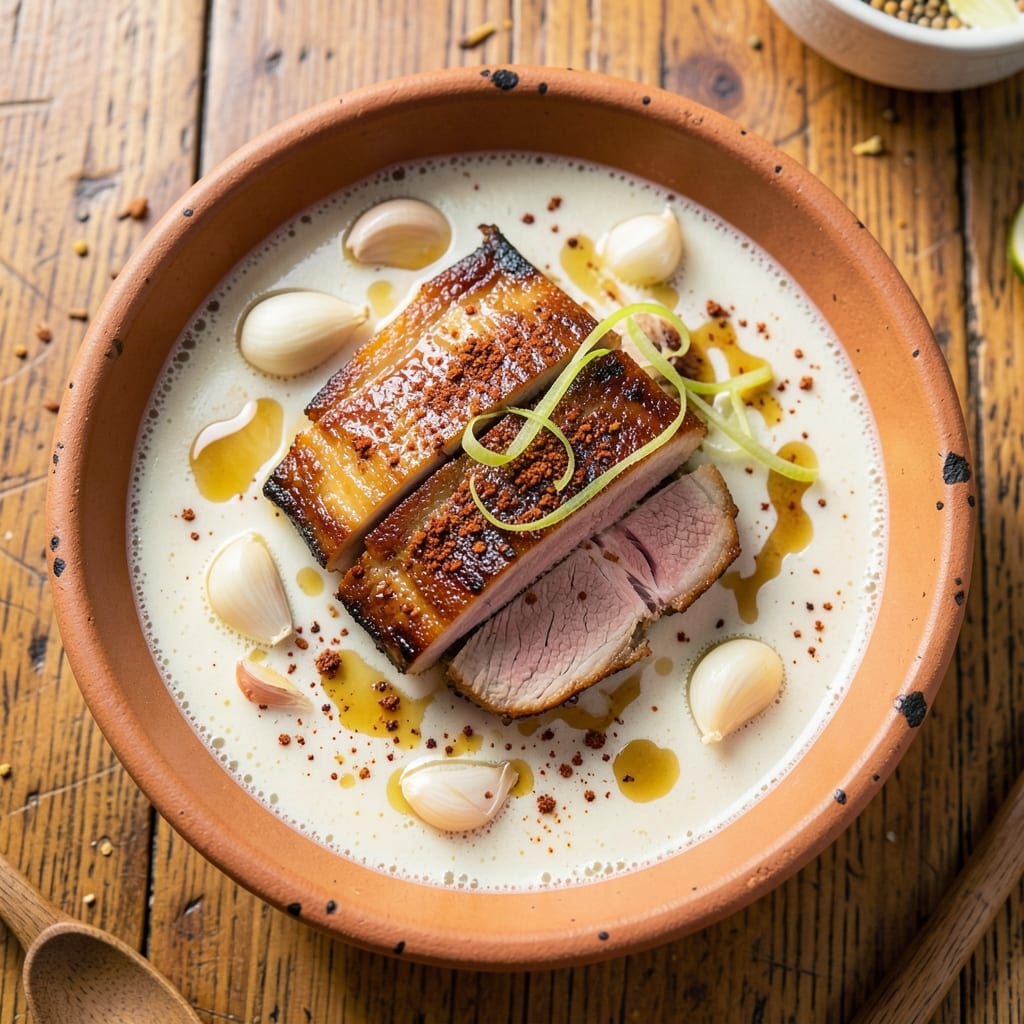
This Bida Manda Pork Belly Soup recipe brings the soul of Filipino comfort food to your kitchen, where tender pork belly simmers for hours in a fragrant broth infused with five-spice and aromatic herbs. 🌟 The slow-cooked pork transforms into melt-in-your-mouth pieces, while the broth develops a deep, savory richness that defines this classic dish. I first discovered this recipe during a trip to Manila, where my grandmother taught me the importance of balancing sweet, salty, and umami flavors—something that’s stayed with me ever since.
The beauty of this recipe lies in its simplicity and depth. With just a handful of ingredients—pork belly, garlic, ginger, five-spice powder, and a touch of soy sauce—you create a dish that’s both hearty and elegant. The key is patience: letting the pork belly render slowly in the broth, allowing the flavors to meld and develop into something truly extraordinary. This isn’t just a soup; it’s a celebration of Filipino home cooking, where every spoonful tells a story.
What you’ll end up with is a steaming bowl of restaurant-quality Bida Manda, where the pork belly is so tender it nearly falls apart, and the broth is rich yet balanced with the bright, earthy notes of garlic and ginger. The five-spice powder adds a subtle warmth that lingers on the palate, making this dish unforgettable. Serve it with steamed rice to soak up every last drop of that flavorful broth—because in Filipino culture, no meal is complete without it.
This recipe is perfect for family gatherings, holiday feasts, or whenever you crave a meal that feels like a hug in a bowl. The slow simmering means you can prep ahead and let the flavors deepen over time, ensuring a dish that’s as comforting as it is delicious. Let’s get cooking—your taste buds are in for a treat.
Ingredients for bida manda pork belly soup
Six cups of fragrant broth, tender pork, and the warmth of five-spice—this is Filipino home cooking at its finest.
| Ingredient | Amount | Notes |
|---|---|---|
| Pork Belly 🥓 | 3 lb | Skin-on, cut into 2-inch chunks |
| Garlic Cloves 🧄 | 12 cloves | Peeled, lightly crushed |
| Fresh Ginger 🌿 | 2 tbsp | Grated, aromatic |
| Five-Spice Powder 🌶️ | 2 tbsp | Authentic Filipino blend |
| Light Soy Sauce 🥄 | ¼ cup | For umami depth |
| Coconut Milk 🥥 | 1 can | 13.5 oz can, full-fat |
| Onion 🧅 | 1 whole | Yellow, chopped |
| Bay Leaves 🍃 | 2 whole | Dried, aromatic |
| Salt 🧂 | 1 ½ tsp | Adjust to taste |
| Black Peppercorns 🌶️ | ½ tsp | Crushed, fresh |
| White Pepper 🌶️ | ½ tsp | For subtle heat |
| Sugar 🍚 | 1 tbsp | Balances flavors |
| Water 💧 | 6 cups | For initial broth |
The pork belly is the star—look for thick cuts with good marbling at Filipino markets or your local butcher. Costco often carries vacuum-sealed pork belly that works perfectly. If you can't find five-spice powder, mix 1 tsp cinnamon, 1 tsp fennel, 1/2 tsp cloves, 1/2 tsp star anise, and 1/4 tsp black pepper for a close substitute. The ginger should smell bright and zesty—no musty aromas! For extra depth, toast the whole spices in a dry pan for 30 seconds before grinding.
No coconut milk? Full-fat canned tomatoes add richness, though the texture will differ. Light soy sauce hard to find? Dark soy sauce at half the amount gives deeper color. The bay leaves can be omitted if you dislike their flavor, but they add that classic Filipino aroma. For a quicker version, use pre-minced garlic and ginger from the Asian section—just add a pinch more salt since they're often salted. The sugar balances the saltiness, so don't skip it even if you're watching sugar intake.
This soup tastes even better the next day as flavors meld. Store in the fridge for 4-5 days or freeze for 3 months—portion into containers for easy reheating. The pork belly will crisp up beautifully when reheated. For serving, I always keep a small bowl of steamed jasmine rice ready—it's non-negotiable in Filipino meals. The broth reduces as it cools, so add a splash of water when reheating if it's too thick.
Why You'll Love This Recipe
- Few Ingredients, Big Payoff: Honestly, I swear by this—just pork belly, garlic, ginger, five-spice, and soy. That’s it. No fancy pantry raids, no last-minute grocery runs. The five-spice alone does half the work, cutting through the richness of the pork belly while keeping things balanced.
- Crispy-Creamy Magic: Between us, that crackling pork belly skin with the tender, melt-in-your-mouth meat underneath? Chef’s kiss. The ginger and garlic caramelize into the broth, giving it a depth that’s ridiculously satisfying—like a hug in a bowl. (Yes, even on a Tuesday night.)
- Leftovers That Don’t Suck: I make this on Sundays, and by Thursday, I’m still eating it. The broth gets richer overnight, the pork belly stays juicy, and reheating it? Just a splash of water, 5 minutes in the microwave. No sad, dry reheats here—just better second helpings.
- Weeknight Hero, Holiday Star: Between us, this is my go-to for lazy nights and when Auntie’s coming over. Serve it with rice and a simple salad for a fuss-free dinner, or double the batch for a crowd—it’s forgiving enough that even my picky husband doesn’t complain. (He picks out the crispy bits first, but still.)
Step-by-step instructions for Bida Manda pork belly soup
Here's how to create this comforting Filipino classic with tender pork belly and aromatic five-spice blend.
🔥 Step 1: Sear the Pork Belly for Maximum Flavor
Heat a large pot over medium-high heat and add the 3 lb pork belly in a single layer. Let it sear undisturbed for 5-6 minutes until the skin becomes deep golden brown and crispy in spots. This step develops incredible flavor and texture through the Maillard reaction.
Turn the pork belly pieces over and sear the other sides for another 3-4 minutes. You'll see the fat begin to render out—this is normal and adds richness to your soup. Once nicely browned on all sides, remove the pork belly and set it aside in a plate, leaving all that beautiful browned fat in the pot.
🍳 Step 2: Build the Aromatic Base
In the same pot with the rendered pork fat, add the chopped onion and cook for 3-4 minutes until softened and just beginning to turn golden. Add the peeled and lightly crushed garlic cloves and grated fresh ginger, stirring constantly for 1 minute until fragrant.
Sprinkle in the 2 tbsp five-spice powder, 1.5 tsp salt, 0.5 tsp crushed black peppercorns, 0.5 tsp white pepper, and 1 tbsp sugar. Stir well to coat the aromatics completely, letting the spices toast for 30 seconds until you can smell their warm, earthy aromas filling your kitchen.
🥘 Step 3: Simmer the Broth with Pork Belly
Pour in the 6 cups water and scrape up all those delicious browned bits from the bottom of the pot. Add the 2 whole bay leaves and 0.25 cup light soy sauce. Return the pork belly to the pot, making sure it's mostly submerged. Bring the mixture to a boil, then reduce heat to low and cover partially.
Simmer gently for 1 hour to 1 hour 15 minutes, turning the pork belly occasionally to ensure even cooking. You're looking for the meat to become fork-tender—when you can easily pierce it with a fork and the broth thickens slightly. Real talk: this is where patience pays off. Don't rush it or the pork will turn out tough.
⏰ Step 4: Finish with Creamy Coconut Milk
After the pork belly is tender, carefully remove it from the pot and set it aside on a plate. Strain the broth through a fine-mesh sieve into a clean pot, pressing gently on the solids to extract all the flavor. Discard the bay leaves and any remaining solids.
Return the strained broth to the pot and stir in the 1 can coconut milk over medium-low heat. Simmer for 5-7 minutes until the soup reaches your desired creaminess. The coconut milk should blend smoothly into the broth, creating a velvety texture without breaking.
🍽️ Step 5: Serve with Perfectly Tender Pork
Slice the pork belly into ½-inch thick pieces and return them to the pot. Gently heat through for 2-3 minutes to warm the meat and infuse it with the coconut broth. Taste and adjust seasoning with additional salt or soy sauce if needed.
Ladle the soup into bowls, making sure each serving gets generous portions of pork belly. Serve immediately with steamed rice to soak up that rich, aromatic broth. The soup should be fragrant with five-spice warmth, slightly sweet from the coconut and sugar, and perfectly balanced with savory soy sauce notes.
Pro Tips For Making Bida Manda Pork Belly Soup
- CRISP THE BELLY FIRST: Blister the pork belly skin in a screaming-hot wok or pan until it’s deep golden and crackling—this isn’t just for looks. I used to rush this step, and the final soup tasted flat; the crispy skin adds texture and flavor that no amount of soy sauce can replace. Work in batches if needed, but don’t skimp on the heat.
- GRATE THE GINGER FINE: Skip the chopping knife for ginger—grate it so fine it’s almost paste-like. This ensures it melts into the soup evenly instead of sitting as chunks. I learned this the hard way when my first batch had a mouthful of chewy ginger every spoonful. A microplane works best, and don’t rinse it afterward—just scrape it straight into the pot.
- SIMMER LOW AND SLOW: After the initial sear, drop the heat to a bare simmer and cover the pot. Pork belly releases fat and collagen slowly, and rushing it turns the soup greasy or tough. I used to walk away and let it bubble, but now I check it every 10 minutes—just enough to see tiny bubbles breaking the surface. This is where the soup gets rich, not where you speed through.
- USE STAR ANISE INSTEAD: Five-spice powder is fine, but if you’re short on time, toss in a single star anise pod with the garlic and ginger. It infuses the broth with depth without the hassle of measuring spices. Remove it before serving—it’s easy to fish out with tongs. I was skeptical until I tried it, and now it’s my go-to shortcut for that warm, aromatic kick.
Wine and beer pairings for these flavors
Filipino Red Wine
For a classic pairing, reach for a Filipino red wine like Lambrusco from Italy—its light body and subtle fruitiness complement the five-spice warmth without overpowering. I love Santa Julia Lambrusco for its bright acidity that cuts through the richness of the pork belly. The slight effervescence also mimics the broth’s natural depth, creating a refreshing contrast. 🍷
Creamy Beer Options
A Filipino-style lager like San Miguel Pale Pilsen is my go-to for this dish. Its crisp, clean profile balances the coconut milk’s creaminess while letting the five-spice shine. For a bolder choice, try a Belgian witbier like Hoegaarden—the citrusy notes echo the ginger and garlic in the soup, adding a bright, floral lift.
Local Filipino Pairings
If you’re serving this in the Philippines, pair it with tsokolate (Filipino hot chocolate) for a sweet contrast. The deep cocoa balances the soup’s savory-sweet profile beautifully. For a non-alcoholic option, calamansi juice (Filipino lime) adds a zesty tang that cleanses the palate between bites. 🍋
Regional Wine Adaptations
In the Southeast U.S., where I grew up, a Georgia Viognier (like Archer Falls) works wonders—its peach and melon notes harmonize with the coconut and pork. For a smoky twist, try a Riesling with a hint of petrol, like Dr. Loosen Blue Slate, which stands up to the five-spice complexity. 🍇
Beer for Bold Flavors
If you prefer beer, a stout like Guinness adds a malty richness that mirrors the pork belly’s depth. For something lighter, Peroni (Italian lager) keeps the dish refreshing while letting the five-spice and coconut milk take center stage. Avoid heavy IPAs—they’ll overpower the delicate broth. 🍺
Non-Alcoholic Pairings
For a refreshing non-alcoholic match, serve hibiscus tea (sarsapilla) with a splash of lime. Its tartness cuts through the soup’s richness, while the floral notes complement the five-spice. Another great option is coconut water—it enhances the dish’s tropical undertones and keeps the meal light. 🥤
Nutrition facts
Frequently asked questions about Bida Manda pork belly soup
Can I use pork shoulder instead of pork belly?
The recipe is designed for pork belly because its fat content creates that signature rich, velvety broth. However, you can use pork shoulder if that's all you have, but expect a leaner soup. For best results, add an extra 2 tablespoons coconut milk and simmer 15 minutes longer to compensate for the lack of fat. The meat will be more tender but won't have the same luxurious mouthfeel.
How do I make this soup less rich?
To lighten the dish, reduce the coconut milk to ½ can and replace the rest with 2 cups low-sodium chicken broth. You can also skip the extra 1 tablespoon sugar and use 1 teaspoon instead. For extra brightness, stir in 1 tablespoon lime juice at the end—it cuts through the richness beautifully while keeping the five-spice warmth intact.
What's the secret to getting the pork belly tender?
The key is low-and-slow cooking—never rush the 1 to 1.5-hour simmer. The pork belly should be fork-tender, not just firm. Pro tip: If you're short on time, start with pre-boiled pork belly (simmer in water for 30 minutes first) to reduce cooking time by 30 minutes. Also, never overcrowd the pot—give the pork pieces room to cook evenly.
Can I make this soup in an Instant Pot?
Yes! Sear the pork belly first in a skillet, then transfer to your Instant Pot with all ingredients except the coconut milk. Cook on high pressure for 30 minutes, then quick-release. Strain the broth, stir in coconut milk, and cook on sauté mode for 5 minutes to warm through. The pork will be tender but slightly less crispy than stovetop—perfect for busy weeknights!
What if my five-spice powder is missing some ingredients?
No problem! If you're missing cinnamon, fennel, or star anise, boost the remaining spices by 25% total. For example, if your blend only has cloves and black pepper, use 2.5 tablespoons instead of 2 tablespoons. The warmth from cloves and pepper will still create that signature five-spice depth. For extra aroma, add ½ teaspoon ground coriander—it bridges the flavor gap beautifully.