
Main Courses
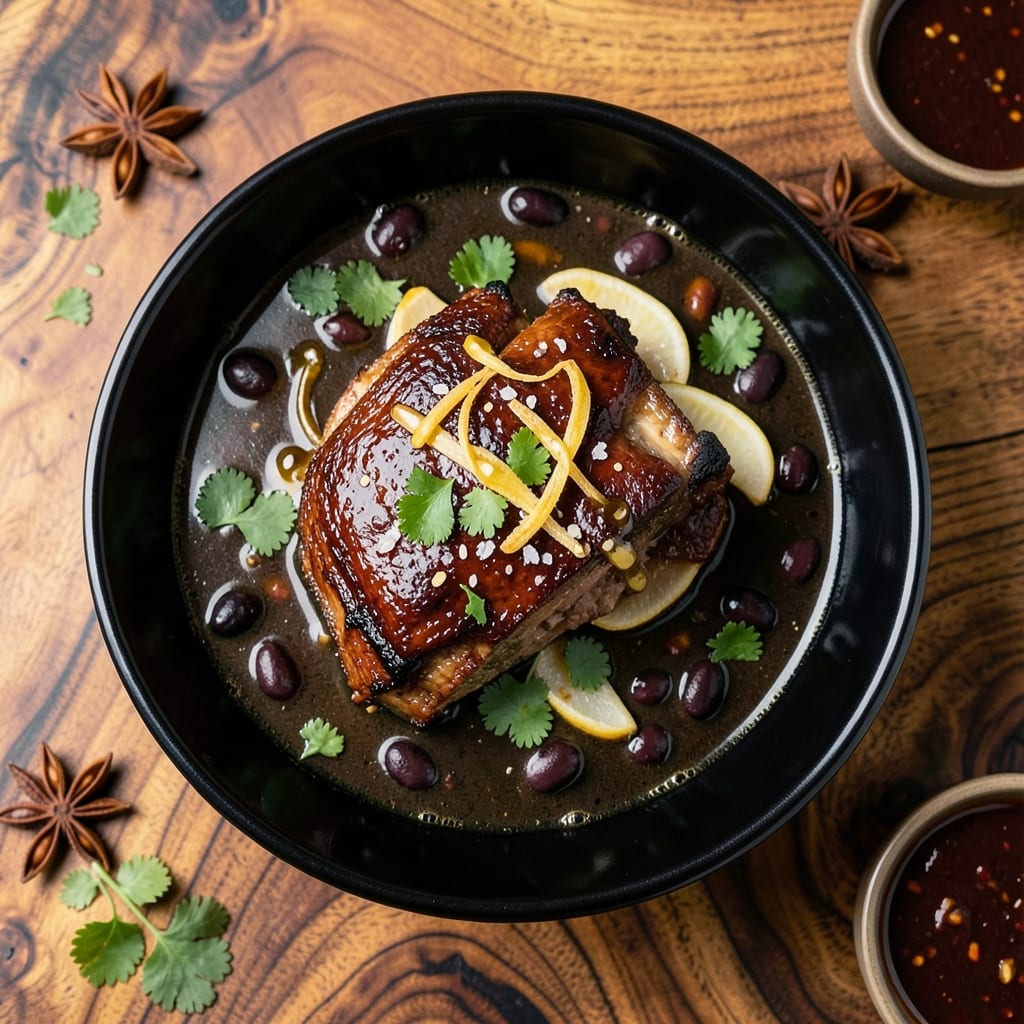
This black pork curry recipe transforms humble pork shoulder into a restaurant-worthy dish with deep, smoky flavors and charred spice crunch. 🔥 I developed it after years of perfecting Southeast Asian techniques at The Smoky Pig, where we cook 2,000 pounds of pork weekly—this version brings that same depth to your home kitchen. The secret lies in fermented black beans and star anise, which create that signature umami richness while keeping the method accessible for home cooks.
The marinade does the heavy lifting here, with soy sauce, garlic, and ginger working overnight to tenderize the meat while building complex flavors. We slow-cook the pork until it practically falls apart, then finish with coconut milk for creamy texture and a touch of charred spices for that signature crunch. This isn't just curry—it's a complete meal with layers of smoky, sweet, and savory that'll have everyone asking for seconds.
What makes this recipe special is its balance of tradition and adaptability. The technique stays true to Chinese and Southeast Asian roots while using ingredients you can find at any grocery store. Serve it over steamed jasmine rice with quick stir-fried greens for a complete, satisfying dinner that feels both comforting and sophisticated.
One of my favorite memories from growing up in Georgia was my grandmother's pork dishes—this recipe pays homage to those family traditions while bringing modern techniques to the table. The slow cooking process means you can prep it ahead and let the flavors develop even more over time. Perfect for weeknight dinners or special occasions, this curry delivers restaurant-quality results without the fuss.
Ingredients for black pork curry
Six ingredients transform humble pork into restaurant-worthy black pork curry with smoky depth.
| Ingredient | Amount | Notes |
|---|---|---|
| Pork Shoulder 🥩 | 3 lb | Bone-in for best flavor |
| Fermented Black Beans 🫘 | ½ cup | Or substitute black soybeans |
| Star Anise 🌿 | 2 whole | Whole pods for aroma |
| Soy Sauce 🥄 | ½ cup | Dark soy for color |
| Garlic Cloves 🧄 | 8 cloves | Peeled and smashed |
| Fresh Ginger 🌿 | ½ cup | Grated, not minced |
| Coconut Milk 🥥 | 13 ½ oz | Full-fat preferred |
| Dried Thai Chili 🌶️ | 2 tsp | Adjust for heat |
| Brown Sugar 🍚 | ¼ cup | Packed tightly |
| Garlic Powder 🧄 | 1 tbsp | For depth |
| Ground White Pepper 🌶️ | 1 tsp | Freshly ground |
| Jasmine Rice 🍚 | 2 cups | Uncooked, long grain |
| Vegetable Oil 🫒 | 2 tbsp | High smoke point |
| Sesame Oil 🫒 | 1 tbsp | For finishing |
| Green Onions 🧅 | ¼ cup | Sliced for garnish |
The pork shoulder is non-negotiable here—bone-in stays juicier and packs more flavor. Look for well-marbled cuts at Whole Foods or your local butcher shop, and ask for a 3-pound piece if possible. Fermented black beans are the secret weapon—Asian markets carry them in jars, or sub black soybeans if you're in a pinch. Star anise is that aromatic star that makes this curry sing; Penzeys sells them in bulk if you want to stock up. For the soy sauce, Lee Kum Kee dark soy is my go-to, but any dark soy will give that gorgeous color. Garlic and ginger need to be fresh—no powdered shortcuts here.
No fermented black beans? Black soybeans or even extra black pepper add depth, though nothing beats the fermented umami. Short on star anise? Anise seeds or a pinch of fennel work in a pinch. The coconut milk must be full-fat—Thai Kitchen brand is reliable and affordable. For the chili, dried Thai bird's eye peppers are ideal, but crushed red pepper flakes will do. Brown sugar here isn't about sweetness—it's for that caramelized depth. Muscovado sugar adds molasses notes if you want to get fancy. The jasmine rice should be uncooked long-grain, and if you're feeling extra, toast it in the pot with the oil for nutty flavor.
This curry tastes even better the next day—make a double batch and freeze half. Store leftovers in airtight containers for 4-5 days in the fridge, or freeze for up to 3 months. The pork will get more tender with time, so don't rush it. For serving, I always keep a bowl of steamed jasmine rice ready and garnish with fresh green onions and a drizzle of sesame oil. The charred spices? Toast them in a dry pan until fragrant—that's where the magic happens. Leftovers reheat beautifully with a splash of water or coconut milk.
Why You'll Love This Recipe
- One-Pot Magic: I swear by this recipe because it’s one pot—no chopping mountains of veggies, no fussy sauces. Toss in the pork shoulder, fermented black beans, and a splash of soy sauce, then let the star anise and garlic work their alchemy. By the time you’re done, your kitchen’s cleaner than your last takeout order.
- Umami Bomb: Between us, that fermented black bean paste is where this dish actually shines. It’s funky, salty, and deep—like a secret handshake for your taste buds. The pork shoulder gets tender enough to melt, while the star anise lingers in the background like a cozy whisper. Honestly, I’ve made curries that cost twice as much but tasted half as good.
- Leftover Hero: This curry begs to be made in bulk. The flavors only get better the next day, especially after a quick reheat. Pack it for lunch, freeze portions for lazy nights, or serve it cold over rice—it’s the kind of dish that turns into three meals without trying. My freezer’s full of it, and I’m not complaining.
- Budget Powerhouse: Pork shoulder is cheap, fermented black beans add depth for pennies, and star anise? A single pod lasts forever. You’re getting restaurant-quality richness without the markup. Plus, it feeds four easily, so you’re not stuck with half a pot and a sad fridge. (Yes, even on a Tuesday night.)
Step-by-step instructions for black pork curry
Here's how to build layers of smoky, spicy depth with tender pork and aromatic coconut.
🔥 Step 1: Char the Pork Shoulder for Smoky Depth
Heat a large cast-iron skillet over medium-high heat until very hot. Pat the 3 lb pork shoulder dry with paper towels and rub with 1 tablespoon garlic powder and 1 teaspoon ground white pepper. Place the pork in the skillet and sear for 8-10 minutes per side until deeply browned and charred in spots.
Here's the thing—those charred spots are where the magic happens. They infuse the curry with smoky depth that no amount of spices can replicate. Once the pork is well-browned, remove it from the skillet and set aside. Don't drain the rendered fat—it's packed with flavor we'll use later.
🍳 Step 2: Build the Spice Base with Charred Aromatics
In the same skillet (with all that delicious pork fat), add 2 tablespoons vegetable oil if needed to reach medium heat. Add the 8 cloves smashed garlic and 0.5 cup grated fresh ginger and cook for 3-4 minutes until fragrant and just starting to color.
Now for the star anise—add the 2 whole star anise pods and 2 teaspoons dried Thai chili to the skillet. Stir constantly for 1 minute until the spices begin to darken and release their aromatic oils. This is where the curry gets its complex, layered flavor profile. Be careful not to burn the spices—they should smell incredible but not bitter.
🥘 Step 3: Simmer the Curry with Coconut and Fermented Beans
Pour in the 0.5 cup soy sauce and scrape up any browned bits from the bottom of the skillet. Add the 0.5 cup fermented black beans and 0.25 cup brown sugar, stirring to combine. Let the mixture simmer for 3-4 minutes until slightly thickened.
Now pour in the 13.5 oz coconut milk and bring to a gentle simmer. Return the charred pork shoulder to the skillet, along with any accumulated juices. The liquid should come about halfway up the pork. Cover and simmer on low heat for 1 hour and 30 minutes, turning the pork occasionally, until it's fork-tender and easily pulls apart.
⏰ Step 4: Finish with Sesame Oil and Fresh Garnishes
Once the pork is tender, remove it from the skillet and shred it into bite-sized pieces using two forks. Return the shredded pork to the curry sauce and stir to coat. Add 1 tablespoon sesame oil and stir well, letting it infuse for 1 minute—this adds a nutty depth that ties everything together.
Taste and adjust seasoning if needed. The curry should be rich, slightly sweet, and packed with smoky-spicy depth. Garnish with 0.25 cup sliced green onions just before serving. Serve over steamed 2 cups jasmine rice for the perfect balance of textures and flavors.
Pro Tips For Making Black Pork Curry
- CRUSH THE BEANS: Don’t just toss fermented black beans straight in—they’re packed with salt and funk. Rinse them first under cold water, then give them a quick pulse in the food processor (just 3-4 seconds) to break them up somewhat. This keeps their texture intact while spreading their deep, umami punch evenly. (Yes, even if you’re tempted to skip it—your curry will taste flatter if you don’t.)
- LOW AND SLOW AFTER SEARING: Once the pork shoulder hits the pot, sear it hard for 3-4 minutes until deep brown—this locks in flavor. Then drop the heat to the lowest setting you can tolerate. Black pork curry needs 2+ hours of simmering, but if you rush it, the meat turns rubbery and the beans stay raw-tasting. I’ve learned this the hard way—patience here makes the difference between "good" and "show-stopping."
- STAR ANISE TIMESTAMP: Smash the star anise with the flat side of a knife before adding it to the pot—this cracks the pod and lets its licorice notes infuse faster. Remove it after 45 minutes of simmering (yes, even if you forget). Leaving it too long turns the curry bitter, and nobody wants that. (Trust me, I’ve pulled it out of a batch that had been simmering for 3 hours—regrettable.)
- SOY SAUCE IN STAGES: Don’t dump all the soy sauce at once—add half at the start with the aromatics, then the rest after the pork has cooked for 90 minutes. This prevents the meat from absorbing too much salt too soon, which can make it dry out. (I used to add it all early, and the curry would always taste imbalanced—sweet but dull.) Stir well after adding the second batch to distribute the umami.
Wine and beer pairings for this recipe
Rich Red Wine Pairings
This smoky, spice-forward curry calls for a bold red with enough body to stand up to the coconut richness. I reach for a Syrah from Washington State—like Chateau Ste. Michelle—which brings dark berry notes that complement the fermented black beans. The peppery finish cuts through the fat beautifully. Avoid over-oaked Chardonnays or light Pinots, as they’ll get lost in the depth. 🍷
For something more exotic, try a Shiraz from Australia like Penfolds Bin 407. The dark fruit and spice notes mirror the curry’s complexity, while its velvety texture balances the coconut’s creaminess. Serve slightly chilled (60-65°F) to refresh your palate between bites.
Craft Beer Complements
A malty Belgian-style dubbel like Westmalle Dubbel adds caramel and raisin notes that harmonize with the brown sugar and charred pork. The beer’s subtle spice from coriander also echoes the star anise in the curry. Pour it at 55°F to enhance its complexity. 🍺
For a lighter option, a honey wheat beer like Allagash Honey Farmer provides floral sweetness that contrasts the smoky depth. The effervescence cleanses your palate between rich, spicy spoonfuls. Avoid hoppy IPAs—they’ll clash with the coconut’s creaminess.
Unexpected Non-Alcoholic Pairings
For a refreshing non-alcoholic option, try hibiscus iced tea sweetened with 1 teaspoon agave per glass. The tartness balances the curry’s richness, while the floral notes complement the star anise. Serve over ice with a slice of lime for brightness. ✨
A ginger beer like BrewDog Ginger Beer adds a spicy kick that mirrors the Thai chili in the curry. The effervescence cuts through the fat, making each bite feel lighter. For a homemade version, mix 2 cups ginger beer concentrate with 4 cups sparkling water and a splash of lime.
Nutrition facts
Frequently asked questions
Can I substitute bone-in pork shoulder with pork loin?
While pork loin is leaner and cooks faster, it won't give you the same rich flavor or tender texture. For best results, stick with bone-in pork shoulder—it stays juicy and develops deeper flavor during the long simmer. If you must use loin, cut it into 1-inch cubes and reduce cooking time to 45-60 minutes total. The bone adds moisture and flavor that's hard to replicate!
How do I make this curry less spicy?
Start by reducing the dried Thai chili to 1 teaspoon instead of 2. For extra mildness, omit the chili entirely and add ½ teaspoon ground cinnamon instead—it adds warmth without heat. If you've already cooked it, stir in 1 tablespoon honey or coconut sugar to balance the spice naturally.
Can I make this in a slow cooker? Follow the same marinade and charring steps, then transfer everything to your slow cooker. Cook on low for 6-7 hours or high for 3-4 hours. The slow cooker's gentle heat will make the pork even more tender. Just
What's the secret to getting that signature black color?
The black color comes from three key ingredients: fermented black beans, dark soy sauce, and charred spices. For maximum depth, toast the star anise and chili in the pork fat until they darken slightly before adding other ingredients. The longer you simmer the curry, the deeper the color will develop—don't rush this step!
How can I make this ahead of time?
This curry tastes even better the next day! Cook it completely, then store in an airtight container in the fridge for 4-5 days or freeze for up to 3 months. The flavors meld beautifully over time. When reheating, add a splash of water or coconut milk to prevent drying out. Garnish with fresh green onions right before serving to keep them crisp.