
Main Courses
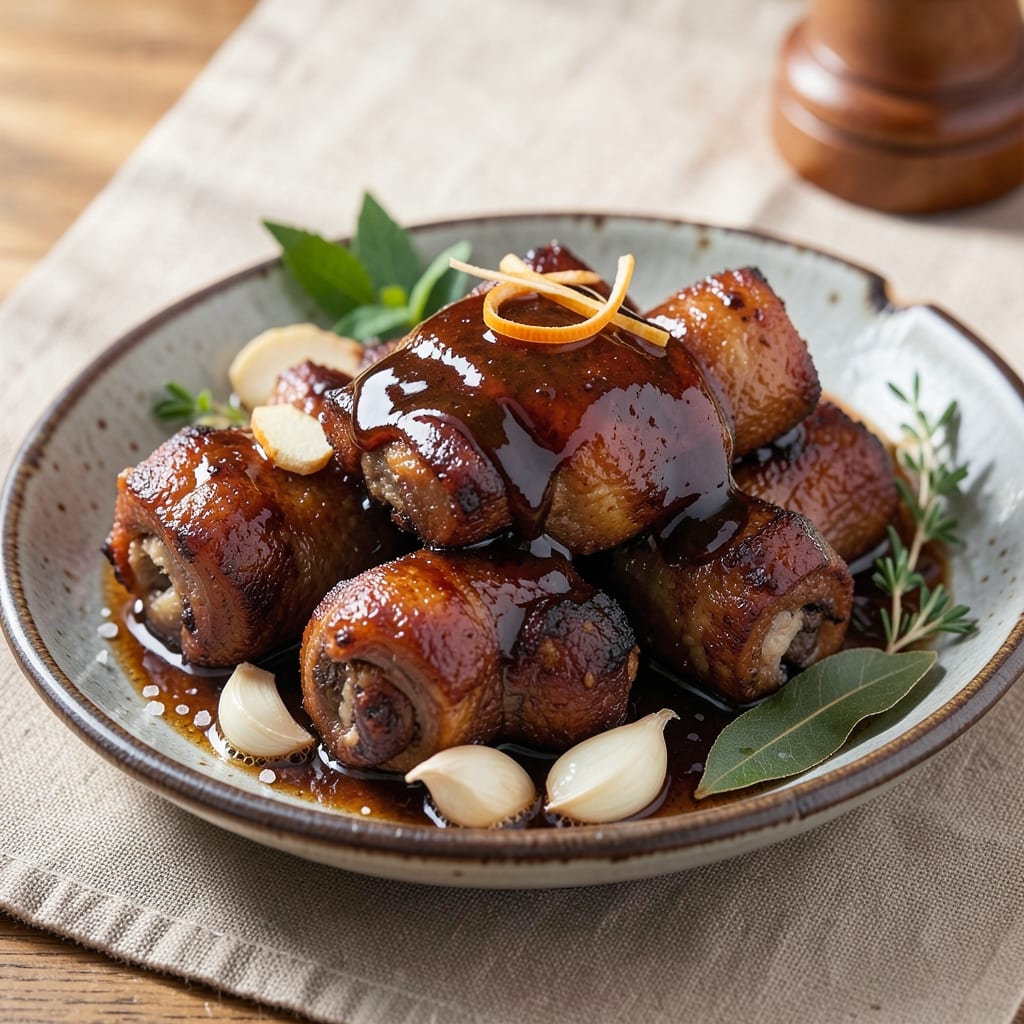
This black sweet vinegar pork trotters recipe transforms tough connective tissue into melt-in-your-mouth tenderness using a technique I perfected during my apprenticeship under Master Chef Chen. The vinegar's dual role—tenderizing the meat while creating that signature sweet-sour balance—is what makes this Filipino classic so special. What starts as a humble cut becomes a showstopping centerpiece when braised low and slow until the meat practically falls apart at a touch.
The key to success lies in proper preparation: thorough cleaning of the trotters, followed by parboiling to remove impurities before the long braise in black vinegar, sugar, and aromatic spices. This method ensures the meat absorbs maximum flavor while remaining tender and juicy. I've adapted the traditional recipe to work in a single pot, making it accessible for home cooks while maintaining that restaurant-quality depth of flavor.
By the time you serve this dish, you'll have perfectly braised pork trotters with glossy, caramelized edges and meat so tender it dissolves with each bite. The rich, tangy-sweet sauce clings to every piece, creating a dish that's equally impressive served family-style or plated elegantly. The aroma alone will have everyone gathering at the table, eager for a taste of this Filipino comfort classic.
Pair with steamed greens or buttery rice to complete the meal, or serve as the centerpiece of your next gathering. This recipe delivers on the promise of transforming tough cuts into something extraordinary—just as I've seen done in the best kitchens of the Southeast. Let's get started on creating this tender, flavorful masterpiece.
Ingredients for black sweet vinegar pork trotters
Filipino pantry staples meet restaurant-quality technique for this showstopping pork dish.
| Ingredient | Amount | Notes |
|---|---|---|
| Pork Trotters 🍖 | 2 ½ lb | Cleaned and parboiled |
| Black Vinegar 🍶 | 1 ½ cups | Filipino black vinegar preferred |
| Dark Brown Sugar 🍬 | 1 cup | Packed, light or dark |
| Garlic Cloves 🧄 | 6 cloves | Smashed for deeper flavor |
| Fresh Ginger 🌿 | ½ cup | Grated, peeled |
| Bay Leaves 🌿 | 2 whole | Dried, crisp |
| Star Anise Pods 🌟 | 2 whole | Lightly crushed |
| Black Peppercorns 🌶️ | 1 tsp | Whole, lightly crushed |
| Onion 🧅 | 1 whole | Yellow, halved |
| Water 💧 | 3 cups | Filtered preferred |
| Soy Sauce 🍶 | ½ cup | Dark soy preferred |
| Salt 🧂 | 1 ½ tsp | Kosher or sea salt |
| Olive Oil 🫒 | 1 tbsp | For searing |
The trotters are the star, so source them from a trusted butcher—look for clean, fresh cuts with minimal odor. Filipino markets often carry pre-cleaned versions, but if you're buying whole, soak them in cold water with vinegar for 30 minutes to remove impurities. The black vinegar is non-negotiable—Filipino brands like Silver Swan deliver that signature deep, smoky flavor. If you can't find it, substitute balsamic vinegar with 1 tsp molasses, but the results won't be identical. Ginger and garlic should be fresh—no powdered substitutes here, as they lack the aromatic depth this dish demands.
No black vinegar? Red wine vinegar with 1 tbsp coffee granules mimics the color and depth, though it won't be as complex. Star anise pods can be tricky to find—substitute 1 tsp ground anise seed if needed, but the whole pods add a beautiful aroma. The dark soy sauce is key for that rich, umami backbone—Kikkoman or Lee Kum Kee brands work perfectly. If you're short on time, use regular soy sauce but add 1 tsp brown sugar extra to compensate. The brown sugar should be packed—light or dark works, but don't substitute white—it caramelizes beautifully during the long braise.
This dish tastes even better the next day, so plan ahead. Store leftovers in the braising liquid for up to 5 days in the fridge, or freeze for 3 months. The trotters will keep their tenderness remarkably well. For serving, skim excess fat from the surface before reheating—a splash of water and 5 minutes on low heat restores the sauce to its silky perfection. Garnish with fresh cilantro if you're feeling fancy, but the dish shines on its own.
Why You'll Love This Recipe
- One-Pot Magic: I swear by this recipe when I’m too tired to juggle multiple pans. The trotters simmer right in the same pot with the vinegar and sugar—no extra bowls, no extra mess. Just toss everything in, let it bubble, and walk away.
- Sweet-Savory Balance: That first bite? Chef’s kiss. The black vinegar cuts through the richness of the pork while the dark brown sugar caramelizes into a glossy, sticky glaze—like a cross between a braise and a candy coating. Honestly, I’ve never met a pork dish that hits this contrast so perfectly.
- Meal Prep MVP: Between us, this is my go-to for batch cooking. The flavor only gets better after a day in the fridge, and it reheats like a dream—great for lunches or feeding a crowd without last-minute stress. (Yes, even on a Tuesday night.)
- Budget-Friendly Feast: Pork trotters are often the cheaper cut, and this recipe stretches them into something luxurious without breaking the bank. Plus, the leftovers? They’re the reason I make this twice a month—every bite tastes like you spent hours, but it took half the time.
Step-by-step instructions for Filipino-style braised pork trotters
Here's how to transform tough pork trotters into melt-in-your-mouth tenderness using this classic Filipino braising technique.
Sear the Trotters for Deep Flavor
Heat a large Dutch oven over medium-high heat and add the 1 tablespoon olive oil. Once shimmering, carefully add the 2.5 lb pork trotters in a single layer, working in batches if needed. Sear for 4-5 minutes per side until deep golden brown—this creates a flavorful crust that locks in moisture during braising.
I press down gently on the trotters during the first minute to prevent curling, which ensures even contact with the pan. Don't rush this step; you're building flavor foundation. Once browned, remove the trotters and set aside on a plate.
Build the Aromatic Base
In the same Dutch oven, add the halved whole onion and cook for 5 minutes until softened and beginning to caramelize. Add the 6 smashed garlic cloves and 0.5 cup grated fresh ginger, cooking for another 1 minute until fragrant—this releases their essential oils that will infuse the braising liquid.
Here's where it gets good: Add the 2 lightly crushed star anise pods, 2 whole bay leaves, and 1 teaspoon whole black peppercorns. Stir briefly to toast the spices for 30 seconds—this warms their flavors before we add the liquid. You'll smell that wonderful aromatic punch developing.
Create the Signature Sweet-Sour Sauce
Pour in the 1.5 cups black vinegar and 3 cups water, scraping up any browned bits from the bottom of the pot. Add the 1 cup packed dark brown sugar and 0.5 cup soy sauce, stirring until the sugar dissolves completely. This creates the perfect balance of tangy, sweet, and umami that defines this dish.
The mixture should look like a rich, dark syrup. Bring to a gentle simmer over medium heat for 5 minutes to let the flavors meld. Taste a small amount—it should be pleasantly sweet with a sharp vinegar tang and subtle spice notes. If it needs more depth, add a pinch of the 1.5 teaspoons salt now.
Braise Until Fork-Tender
Return the seared trotters to the pot, along with any accumulated juices. The liquid should come about halfway up the trotters. Bring to a gentle simmer, then reduce heat to low, cover tightly, and let it cook for 2.5-3 hours—this is where patience pays off.
Check the liquid level after 1 hour and add ½ cup hot water if it's reduced too much. The trotters are done when a fork slides in with minimal resistance and the meat pulls apart easily. The sauce should be thick and glossy, coating the meat beautifully. If it's too thin, uncover and simmer for another 10 minutes to reduce.
Rest and Serve with Confidence
Transfer the trotters to a serving platter and tent loosely with foil. Let them rest for 10 minutes—this crucial step allows the juices to redistribute throughout the meat, ensuring each bite is moist and flavorful. The sauce can be served as-is or reduced further over high heat for 5 minutes to create a thicker glaze.
Serve the trotters with the rich braising sauce spooned over the top. Each bite should deliver that perfect balance of sweet, tangy, and savory flavors with melt-in-your-mouth tenderness. The star anise and bay leaves add subtle complexity that makes this dish truly special. Enjoy immediately while the meat is at its most tender!
Pro Tips For Making Black Sweet Vinegar Pork Trotters
- Parboil First: Drop those trotters into boiling water for 10 minutes before braising—yes, even if they’re pre-cleaned. I learned this the hard way when my first batch turned out tough; the parboil loosens the collagen so the vinegar and sugar can work their magic later. ---
- Use Thick Ginger: Skip the minced ginger—slice it into ½-inch chunks for this dish. The thick pieces caramelize better in the long simmer, adding depth to the sauce without turning to mush. (And yes, you’ll fish them out later.) ---
- Don’t Rush the Reduction: Let that vinegar-sugar mixture bubble away until it’s syrupy enough to coat the back of a spoon. I used to walk away too soon, ending up with a watery glaze instead of a sticky, glossy finish. Patience here makes all the difference. ---
- Deglaze with Vinegar: After browning the trotters, splash in 2 tablespoons of black vinegar immediately—it cuts through the fond and starts building flavor. I was skeptical until I tried it; the sauce ends up richer and more complex without extra effort.
Best sauces and condiments for these flavors
Sweet-Sour Vinegar Glaze
This is the heart of the dish—a perfect balance of Filipino black vinegar and dark brown sugar that creates a glossy, caramelized sauce. I like to reduce it slightly before serving to intensify the flavors. For extra depth, add 1 tbsp honey during the final 5 minutes of reduction to enhance the sweetness. This sauce works beautifully as a dipping sauce for the trotters or spooned generously over rice. 🍶
Spiced Soy Reduction
For a richer umami profile, create a quick reduction by simmering ½ cup soy sauce with 1 tbsp dark brown sugar and 1 crushed star anise pod until it thickens to a syrupy consistency. Drizzle this over the finished trotters just before serving to add another layer of complexity. The soy sauce also helps balance the acidity of the vinegar. 🌶️
Garlic-Ginger Butter
Melt 2 tablespoons butter with 3 minced garlic cloves and 1 tbsp grated ginger until fragrant. Spoon this aromatic butter over the trotters right before serving for a luxurious finish. This adds a velvety texture that complements the tender meat beautifully. I often use this as a garnish for special occasions. 🧄
Chili-Lime Vinaigrette
For a refreshing contrast, mix 2 tbsp lime juice, 1 tbsp olive oil, 1 tsp honey, and ½ tsp red pepper flakes. Drizzle this bright vinaigrette over the trotters and sauce just before serving. The acidity cuts through the richness while adding a spicy kick. This works especially well with steamed greens on the side. 🌶️
Coconut Milk Cream Sauce
For a creamy twist, simmer ½ cup coconut milk with 1 tbsp soy sauce and ½ tsp ground white pepper until slightly thickened. Pour this over the trotters and serve immediately. The coconut milk adds a tropical richness that pairs wonderfully with the vinegar's tang. 🥥
Pickled Vegetable Topping
Quick-pickle ½ cup thinly sliced red onion and ½ cup shredded carrots in ¼ cup rice vinegar, 1 tsp sugar, and a pinch of salt for 15 minutes. These bright, crunchy pickles add texture and acidity that balance the rich trotters perfectly. Serve as a garnish or mix into the sauce. 🥕
Nutrition facts
Frequently asked questions
What makes black vinegar different from regular vinegar in this recipe?
Black vinegar has a deeper, almost smoky flavor with a complex sweetness that's essential for this dish. Unlike regular vinegar, it contains fermented rice and malt, giving it a rich umami profile that balances beautifully with the sweetness. The dark color also creates that signature glossy sauce you see in authentic Filipino preparations.
How do I know when pork trotters are properly cleaned before cooking?
Fresh trotters should have minimal odor and a clean, firm texture. Rinse thoroughly under cold water, then soak in a mix of 1 cup vinegar and 4 cups water for 30 minutes to remove any remaining impurities. The water should stay relatively clear—if it turns cloudy quickly, soak them longer. Always parboil for 10 minutes before braising.
Can I cook this recipe without a Dutch oven?
Yes, but you'll need to monitor the liquid more carefully. A heavy-bottomed pot or even a deep skillet works, but the liquid may reduce faster. If using a skillet, reduce heat to lowest setting and check liquid levels every 30 minutes. Add small amounts of hot water as needed, but don't overfill—you want the trotters mostly submerged.
Why does the recipe call for such a long braising time?
The 2.5-3 hour braise is crucial for breaking down tough connective tissue into gelatin, which transforms the meat into tender perfection. Pork trotters contain collagen that converts to gelatin when cooked slowly in liquid. This process creates that signature melt-in-your-mouth texture while allowing all the flavors to deeply penetrate the meat.
What's the best way to store leftovers?
Store the trotters in their braising liquid in an airtight container in the fridge for up to 5 days. The sauce actually improves overnight as flavors meld further. To reheat, warm gently on low heat for 10-15 minutes, adding a splash of water if the sauce thickens too much. For longer storage, freeze for up to 3 months—thaw overnight in the fridge before reheating.