
Main Courses
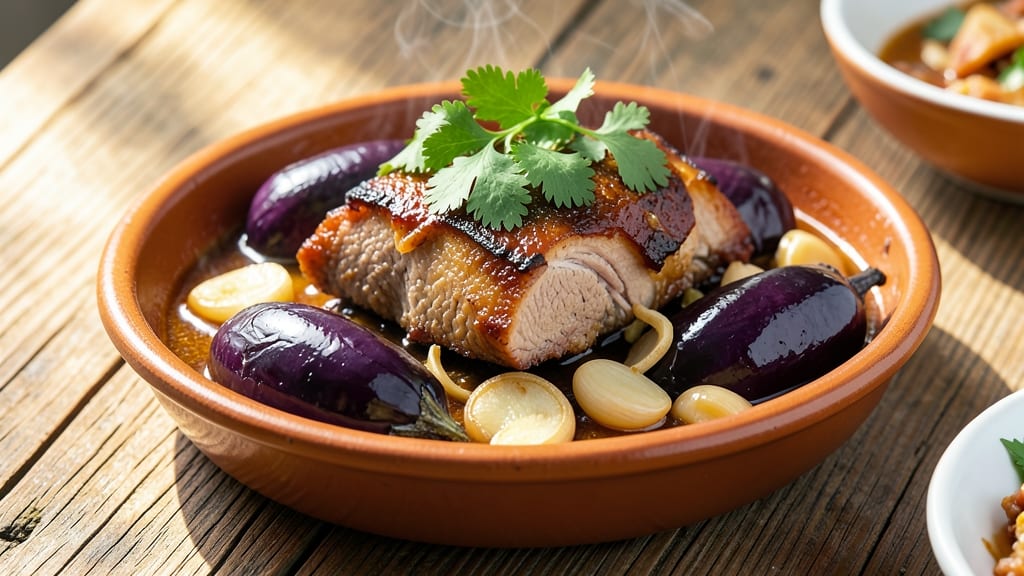
This adobong talong with pork recipe brings the rich, smoky flavors of Filipino home cooking to your table. 🔥 As someone who's spent years perfecting pork dishes, I can tell you this braised combination of tender eggplant and pork shoulder delivers deep umami with just the right balance of sweet, sour, and salty.
The key lies in the slow vinegar-braising technique that transforms simple ingredients into something extraordinary.
The beauty of this dish is in its simplicity—just a few core ingredients working together to create complex flavors. We'll start with a quick marinade for the pork, then build the sauce through careful sautéing and simmering.
The eggplant absorbs all those delicious flavors while staying tender, while the pork becomes fork-tender and infused with the aromatic sauce. This is the kind of recipe that gets better with time, as flavors meld and deepen during the long cooking process.
What you'll end up with is a restaurant-quality Filipino classic that pairs perfectly with steamed rice or atchara. The sauce will be rich and slightly glossy, clinging to every bite of eggplant and pork.
I've tested this recipe countless times, and it never fails to impress—whether you're serving it for a family dinner or a special gathering. The best part? It's a one-pot meal that requires minimal effort but delivers maximum flavor.
Ready to master this dish? We'll walk through every step—from marinating to plating—so you can achieve the same results I've perfected over years in the kitchen. Let's get started on this flavorful journey that'll transport you straight to the Philippines.
Ingredients for adobong talong with pork
Filipino pantry staples plus a few fresh ingredients for this smoky, umami-packed pork and eggplant dish.
| Ingredient | Amount | Notes |
|---|---|---|
| Pork Shoulder 🥩 | 1 ½ lb | Boneless, cut into 1-inch cubes |
| Eggplant 🍆 | 2 medium | Asian or Japanese preferred |
| Soy Sauce 🍶 | ½ cup | Dark soy for color, or regular |
| Cane Vinegar 💧 | ⅓ cup | White vinegar substitute |
| Garlic Cloves 🧄 | 6 cloves | Minced, for marinade |
| Ginger 🌿 | 1 inch | Fresh, grated |
| Brown Sugar 🍚 | ¼ cup | Packed, for balance |
| Bay Leaves 🍃 | 2 whole | Dried, for aroma |
| Black Peppercorns 🌶️ | 1 tsp | Crushed, for heat |
| Olive Oil 🫒 | 2 tbsp | For searing pork |
| Green Onions 🧅 | 3 whole | Sliced, for garnish |
| Salt 🧂 | 1 ½ tsp | Adjust to taste |
The pork shoulder is the star—look for well-marbled cuts at Filipino markets or the meat department at Asian grocery stores like H Mart. If you can't find cane vinegar, white vinegar works in a pinch, though it's less authentic. Eggplant? Asian varieties are thinner-skinned and less bitter, but regular eggplant works too. For the soy sauce, Lee Kum Kee dark soy adds that signature color, but any dark soy or even regular soy with a bit of sugar will do. Fresh ginger and garlic are non-negotiable here—they're the aromatic base that makes this dish sing.
No cane vinegar? White vinegar or apple cider vinegar will work, but add a splash of sugar to mimic the sweetness. Running out of brown sugar? White sugar at the same amount is fine, though the caramelization won't be as rich. The green onions can be swapped for cilantro or chives if that's what you've got. For a deeper smoky flavor, add 1/2 tsp smoked paprika to the marinade. And if you're feeling adventurous, a dash of fish sauce (just 1/2 tsp) adds umami depth—though it's not traditional. The key is balancing sweet, sour, and salty, so taste as you go.
This dish tastes even better the next day as flavors meld. Store leftovers in an airtight container in the fridge for up to 5 days, or freeze for 3 months. I like to portion it into containers with steamed rice—just reheat with a splash of water. The sauce thickens as it cools, so adding a splash of water when reheating keeps it glossy. For serving, I always garnish with extra green onions and a drizzle of soy sauce—simple but makes it look restaurant-worthy.
Why You'll Love This Recipe
- Here’s what sold me: this reheats like a dream. Pack the leftovers for work, and it’ll taste just as good cold or warmed up—no sad, rubbery eggplant here.
- One-Pan Magic: I swear by this recipe when I’m too tired to wash extra dishes. The pork shoulder and eggplant cook together in the same pot, and honestly? That’s all the cleanup I can handle after work.
- Tangy Twist: Between us, the cane vinegar and soy sauce combo is chef’s kiss—sharp, savory, and just a little sweet. The eggplant soaks it all up like a sponge, giving every bite that perfect balance of rich and bright.
- Lunchbox Hero: Here’s what sold me: this reheats like a dream. Pack the leftovers for work, and it’ll taste just as good cold or warmed up—no sad, rubbery eggplant here.
Step-by-step instructions for adobong talong with pork
Here's how to create this rich, smoky Filipino favorite with tender pork and glossy eggplant.
🔥 Step 1: Sear the Pork Shoulder for Deep Flavor
Heat the 2 tablespoons olive oil in a large Dutch oven over medium-high heat until shimmering. Add the 1.5 lb pork shoulder cut into 1-inch cubes and cook undisturbed for 3-4 minutes until golden brown on all sides. This initial sear locks in juices and builds that smoky foundation.
Real talk: Don't move the pork around too soon—you want that caramelized crust. Once the pork is evenly browned, remove it from the pot and set aside. You'll notice the pork releases easily when it's ready to flip, so watch for that signal. This step is what makes the final dish taste restaurant-quality.
🍳 Step 2: Build the Flavor Base with Aromatics
In the same Dutch oven, add the 6 cloves minced garlic cloves and 1 inch grated ginger. Sauté for 30 seconds until fragrant—you should smell that bright, zesty aroma filling your kitchen. Be careful not to burn them; garlic turns bitter fast.
Next, add the 2 whole bay leaves and 1 teaspoon crushed black peppercorns. Stir for 10 seconds to toast the spices slightly. This quick toasting releases their essential oils and deepens the flavor profile. The bay leaves will infuse the dish with their earthy aroma, while the peppercorns add just the right amount of heat.
🥘 Step 3: Combine Wet Ingredients for the Sauce
Pour in the 0.5 cup soy sauce and 0.33 cup cane vinegar all at once. Stir vigorously to deglaze the pot, scraping up all those delicious browned bits from the bottom. This is where all the magic happens—those bits are pure flavor. Let the mixture simmer for 2 minutes until slightly reduced.
Add the 0.25 cup packed brown sugar and 1.5 teaspoons salt, stirring until the sugar dissolves completely. Here's the thing—this step balances the acidity of the vinegar and the saltiness of the soy sauce. Taste the mixture now; it should be rich and complex, with a perfect harmony of sweet, salty, and slightly tangy flavors. If you need more depth, add another ½ teaspoon salt.
🍳 Step 4: Cook the Pork Until Tender
Return the pork to the pot and add enough water to just cover the pork—about 1 cup. Bring to a gentle simmer, then reduce heat to low. Cover and cook for 45-50 minutes, stirring occasionally, until the pork is fork-tender and easily pulls apart. You'll know it's done when the meat shreds easily with two forks and the sauce has thickened slightly.
I know it seems like a long time, but patience is key here. The pork needs to become fall-off-the-bone tender. If the liquid reduces too much before the pork is tender, add 2-3 tablespoons water to keep it moist. The goal is tender pork with a rich, glossy sauce.
🥘 Step 5: Add Eggplant and Finish the Dish
While the pork simmers, prepare the 2 medium eggplant. Cut them into 1-inch thick rounds and lightly brush both sides with a little of the cooking liquid from the pot. This helps them absorb flavor and prevents them from drying out.
Add the eggplant to the pot with the pork and simmer uncovered for 10-12 minutes, turning occasionally, until the eggplant is tender and slightly caramelized. The eggplant should be soft when pierced with a fork but still hold its shape. If the sauce gets too thick, add 1-2 tablespoons water to loosen it.
🍽️ Step 6: Garnish and Serve with Confidence
Remove the 2 whole bay leaves from the pot. Stir in the 3 whole sliced green onions and let them wilt slightly in the hot sauce for 1 minute. This adds a fresh, bright contrast to the rich, smoky flavors of the dish.
Taste and adjust the seasoning if needed—maybe a little more soy sauce for saltiness or a splash of vinegar for tang. Serve the adobong talong hot, family-style, with steamed rice. The pork should be tender and flavorful, the eggplant glossy and slightly sweet, and the sauce perfectly balanced. Don't forget to save some for leftovers—it tastes even better the next day!
Pro Tips For Making Adobong Talong With Pork
- CHAR THE GARLIC FIRST: Toss whole garlic cloves into the hot pan with the pork fat before adding anything else—this unlocks their flavor without burning. I used to peel them first, and the dish always tasted underwhelming until I saw how much richer the aroma was when cooked raw.
- CUT EGPLANT IN EVEN SLICES: Use a sharp knife and aim for ½-inch thick rounds—thicker pieces stay rubbery, thinner ones turn to mush. My first batch looked beautiful but tasted like overcooked shoe leather until I standardized the thickness.
- SIMMER LOW AND SLOW: After the initial sear, drop the heat to medium-low and let the pork break down for at least 45 minutes. Rushing this step means tough meat and a sauce that’s more glaze than adobo.
- USE LESS VINEGAR AT FIRST: Start with half the vinegar called for, then add more to taste at the end—this prevents the sauce from turning harsh and one-note. I learned this after making a batch that tasted like a science experiment gone wrong.
Essential equipment for adobong talong with pork
Dutch Oven Essentials
A 5-7 quart Dutch oven is your best friend for this recipe—it holds heat beautifully and distributes it evenly, which is crucial for the slow braising process. I swear by Le Creuset or All-Clad for their even heating and durable construction.
If you're on a budget, Farberware makes a solid stainless steel version that works just as well. The deep sides prevent spills when you're stirring vigorously, and the tight lid keeps moisture locked in for that perfect tender texture. 🔥
Vinegar and Soy Sauce
You'll need cane vinegar (or white vinegar in a pinch) and soy sauce—both are non-negotiable for authentic flavor. I recommend Lee Kum Kee dark soy sauce for its rich color and depth, but any good-quality dark soy or even regular soy with an extra pinch of sugar will do.
For vinegar, Filipino brands like Silver Swan are ideal, but Bragg's apple cider vinegar works if you can't find cane vinegar. The key is balancing the acidity and saltiness, so taste as you go. A small squeeze bottle comes in handy for precise vinegar additions during adjustments. ✨
Precision Tools for Pork
For searing the pork, a heavy-bottomed skillet or Dutch oven is essential—it prevents hot spots that can burn your pork. I use a 12-inch Lodge cast iron for its even heat distribution. A meat thermometer is a game-changer here; the pork should reach 195-203°F internally for that perfect tender texture.
Don't skimp on a good one—I love the ThermoWorks Smoke for its accuracy. And a sharp chef's knife (like Wüsthof) makes quick work of cutting the pork into even 1-inch cubes, which ensures consistent cooking. 💪
Eggplant Prep Tools
Prepping eggplant properly is key to avoiding bitterness and ensuring it absorbs the sauce. A mandoline slicer makes quick work of cutting 1-inch thick rounds, but a sharp knife works too if you're careful.
I always brush the cut sides with a little of the cooking liquid before adding them to the pot—this helps them absorb flavor without drying out. A fine-mesh strainer comes in handy if you want to strain the sauce for a smoother texture when serving.
And trust me, a tongs (like OXO Good Grips) makes flipping those eggplant rounds effortless. 🍆
Garnish and Serve
For that restaurant-worthy finish, you'll want green onions sliced thinly—either a mandoline or a sharp knife works. I also keep a small bowl of soy sauce on the table for guests to drizzle on their portions.
A ladle with a long handle (like OXO Stainless Steel) makes serving family-style easy without spills. And if you're feeling fancy, a small squeeze bottle for drizzling extra sauce adds a professional touch.
Don't forget a steamer basket for perfect rice—this dish is all about the contrast of tender pork and eggplant with fluffy, hot rice. 🍽️
Nutrition facts
Frequently asked questions
Can I substitute pork shoulder with another cut?
For this dish, pork belly or pork butt work beautifully—they're both fatty enough to stay moist during the long braising. If you prefer leaner options, try pork loin but cut it into thinner slices (½-inch) since it cooks faster. Just remember, fattier cuts like shoulder or belly will give you that rich, glossy sauce we love in Filipino adobo dishes.
Why does my eggplant turn bitter or watery?
This usually happens when eggplant isn't cooked long enough or is overcrowded in the pot. For best results, cut eggplant into 1-inch thick rounds and cook them in batches if needed. Lightly brushing the cut sides with cooking liquid before adding to the pot helps prevent bitterness. Also, make sure your Dutch oven isn't overfilled—eggplant needs room to absorb flavors without steaming too much.
How can I make this dish spicier?
Filipino adobo already has depth from soy and vinegar, but you can add heat by incorporating ½ teaspoon ground black pepper (instead of whole peppercorns) or 1-2 slices of fresh chili (like siling labuyo) when sautéing the aromatics. For smoky heat, add ½ teaspoon smoked paprika to the marinade. Pro tip: Toast whole peppercorns longer (20 seconds) for extra spice intensity.
What's the best way to reheat leftovers?
Reheat in the same Dutch oven over low heat with 2-3 tablespoons water to restore moisture. Cover and simmer for 5-7 minutes, stirring occasionally, until heated through. The sauce will thicken as it cools, so adding water keeps it glossy. For microwave reheating, use 30-second intervals on medium power, stirring between each interval to prevent drying. Leftovers taste even better the next day!
Can I make this dish in an Instant Pot?
Yes! Sear the pork first in a skillet, then transfer to the Instant Pot with all ingredients except eggplant. Cook on high pressure for 20 minutes, then add eggplant and cook for 5 more minutes on high pressure. Quick release the pressure, then adjust seasoning. The Instant Pot version cooks faster but may need a splash of water to achieve the same sauce consistency. For best results, finish with a 5-minute simmer on the stove to thicken the sauce.