
Main Courses
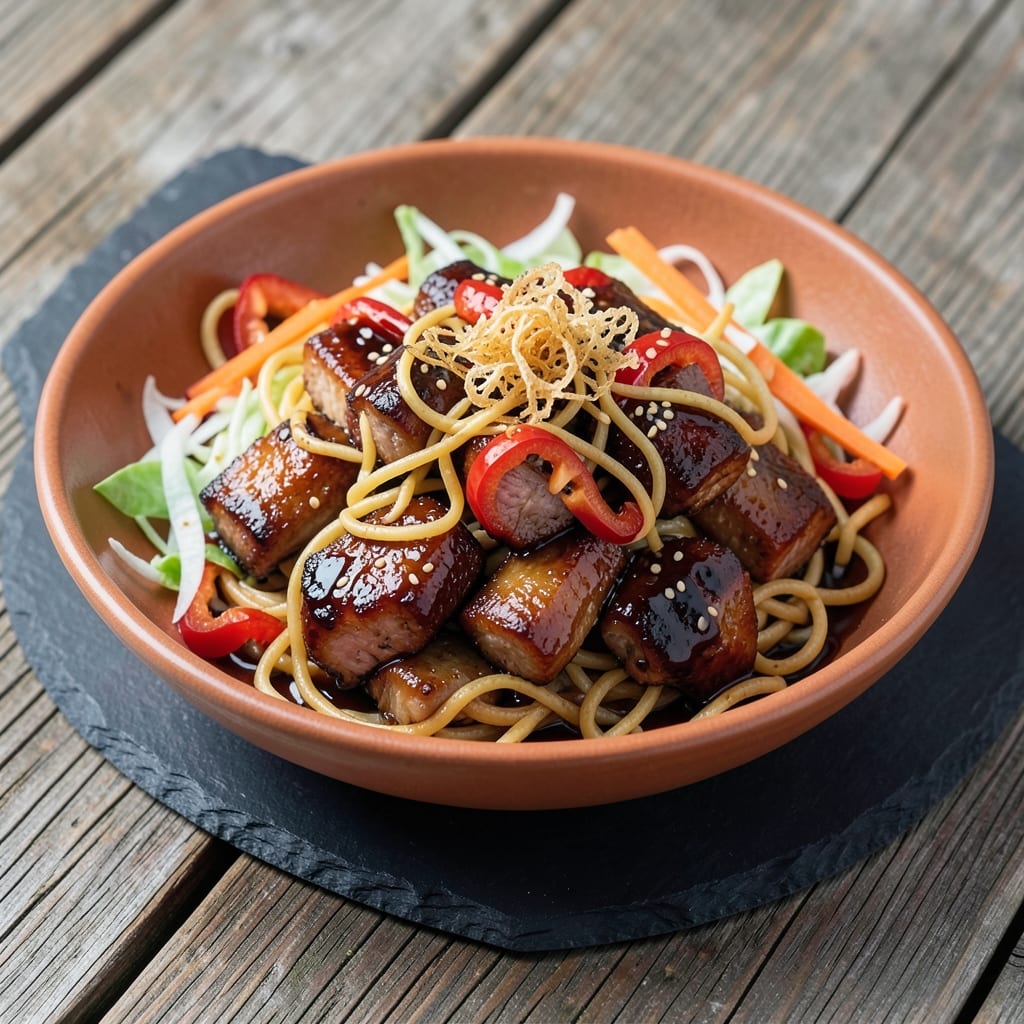
This BBQ pork chow mein recipe delivers restaurant-quality wok-tossed noodles in just 20 minutes—where smoky-sweet pork meets crisp vegetables and chewy noodles in a perfect umami crunch. 🔥 I developed this after years of perfecting stir-fry techniques, blending my pitmaster background with the precision of French wok hei. The secret? A quick-marinated pork shoulder that stays tender yet develops deep caramelized flavors, tossed with fresh vegetables and a homemade sauce that balances sweet, tangy, and umami notes.
The magic happens in the wok, where high heat transforms simple ingredients into a dish that’s both nostalgic and exciting. You’ll start with a 30-minute marinade for the pork—just soy sauce, brown sugar, and a touch of vinegar—to build flavor without overpowering. Meanwhile, the vegetables (bell peppers, cabbage, carrots) get prepped into uniform strips for even cooking, and the noodles soak up the sauce instantly during the final toss. This isn’t your childhood takeout chow mein; it’s a restaurant-quality dish that’s foolproof for home cooks.
What you’ll end up with is a plate of golden-brown noodles coated in glossy sauce, crisp-tender vegetables, and slices of perfectly seared pork that practically melt in your mouth. The aroma alone—smoky, sweet, and herbaceous—will have everyone at the table asking for seconds. The best part? It comes together faster than ordering takeout, with minimal cleanup. This is the kind of dish that turns a weeknight into a special occasion without the fuss.
Serve it with a sprinkle of sesame seeds and sliced green onions for color, or drizzle with extra sauce for those who can’t get enough. The leftovers reheat beautifully, making it perfect for meal prep. Let’s get cooking—your wok is waiting.
Ingredients for bbq pork chow mein
Restaurant-quality chow mein starts with these bold, umami-packed ingredients—where smoky pork meets crisp veggies in a wok-tossed symphony.
| Ingredient | Amount | Notes |
|---|---|---|
| Pork Shoulder 🐖 | 1 ½ lb | Boneless, cut into thin strips |
| Egg Noodles 🍜 | 12 oz | Fresh or dried, wide or thin |
| Red Bell Pepper 🧅 | 1 whole | Cut into thin strips |
| Green Cabbage 🥬 | 4 cups | Shredded, thin strips |
| Carrots 🥕 | 2 medium | Julienned, thin strips |
| Sesame Oil 🫒 | 1 tbsp | For aroma, not cooking |
| Soy Sauce 🥄 | ½ cup | High-quality, light color |
| Brown Sugar 🍯 | ¼ cup | Packed, light brown |
| Rice Vinegar 🍶 | 2 tbsp | White or seasoned |
| Garlic Cloves 🧄 | 6 cloves | Minced, fresh preferred |
| Ginger 🌿 | 1 tbsp | Fresh, grated |
| Sesame Seeds 🌰 | 2 tbsp | Toasted, for garnish |
| Green Onions 🧅 | 3 whole | Sliced, for garnish |
| Vegetable Oil 🫒 | ½ cup | High smoke point |
| Cornstarch 🌾 | 1 tbsp | For thickening sauce |
Pork shoulder is non-negotiable here—it stays juicy while developing deep caramelized flavors. Ask your butcher to trim excess fat if you're not doing it yourself, but leave some for flavor. For the noodles, fresh egg noodles from Trader Joe's or Whole Foods give the best texture, but dried works in a pinch. The bell pepper and cabbage should be crisp—avoid any with yellowing or soft spots. Carrots? The julienne technique (thin matchsticks) is key for quick cooking. If you're prepping ahead, store the veggies in airtight containers with a paper towel to keep them crisp.
No sesame oil? Toasted peanut oil works in a pinch, though it'll change the aroma slightly. Swapping soy sauce for coconut aminos cuts sodium but loses depth—stick with the real stuff. The brown sugar should be light, not dark—it dissolves better and won't overpower. Fresh ginger and garlic are worth the extra minute to grate/mince, but if you're in a rush, pre-minced jarred ginger (no added sugar) is fine. For the cornstarch, Arrowhead brand is my go-to—it blends smoothly without clumping. Pro tip: Mix your marinade ingredients in a bowl with the pork strips, then let it sit at room temp for 10 minutes before cooking—this jumpstarts the flavor development.
This dish reheats like a dream—better the next day as flavors meld. Store leftovers in airtight containers for up to 4 days, or freeze for 3 months (portion into single servings for easy reheating). The sauce thickens as it cools, so thin with a splash of water or vinegar when reheating. Garnishes like sesame seeds and green onions keep best in the fridge for 1 week—just slice them fresh before serving. For extra crispiness, reheat the veggies separately in a dry pan for 1-2 minutes before tossing with the noodles.
Why You'll Love This Recipe
- One-Pan Wonder: I swear by this—just toss everything in one skillet, no fancy steps. The pork shoulder gets tender while the veggies soften, and those egg noodles soak up all the smoky BBQ sauce without a single extra dish.
- Smoky-Sweet Magic: That sticky-sweet BBQ glaze on the pork? It’s the star. The cabbage and bell peppers get just enough char, but the real win is when the sauce clings to the noodles—like a hug in every bite.
- Lunchbox Hero: Between us, this is my go-to for meal prep. The flavors only get better the next day (yes, even on a Tuesday night), and it reheats like a dream—no soggy noodles here.
- Budget Stretch: Pork shoulder is cheap, cabbage lasts forever, and you’re using basic veggies. For under $10, you feed four people with leftovers that taste better than takeout. My wallet thanks me every time.
Step-by-step instructions for wok-tossed BBQ pork chow mein
Here's how to create restaurant-quality chow mein with smoky-sweet pork and crisp-tender veggies!
🔥 Step 1: Marinate and Cook the Pork Shoulder
In a bowl, combine the 1.5 lb pork shoulder strips, 0.5 cup soy sauce, 0.25 cup brown sugar, 2 tbsp rice vinegar, 6 cloves minced garlic, and 1 tbsp grated ginger. Mix well until the pork is fully coated and let it marinate for at least 30 minutes (or up to 2 hours for deeper flavor).
Heat 0.25 cup vegetable oil in a wok or large skillet over medium-high heat until shimmering. Add the marinated pork in a single layer and cook undisturbed for 3-4 minutes until the edges are golden brown. Stir and continue cooking until the pork is fully cooked through and caramelized in spots—this should take about 8-10 minutes total. Remove the pork and set it aside on a plate.
🍳 Step 2: Prepare the BBQ Sauce
In the same wok, reduce the heat to medium and add the remaining 0.25 cup vegetable oil. Toss in the 1 whole red bell pepper in thin strips and 2 medium carrots julienned—cook for 3-4 minutes until the vegetables begin to soften but still retain a crisp bite.
Add 1 tbsp cornstarch to the wok and stir to coat the vegetables. Pour in 0.25 cup soy sauce and 2 tbsp rice vinegar, then scrape up any browned bits from the bottom of the pan. Let the sauce simmer for 2-3 minutes until it thickens slightly and coats the back of a spoon. This is your BBQ glaze—it should be sticky but not syrupy.
👨🍳 Step 3: Cook the Noodles and Vegetables
In a separate pot, bring 4 cups water to a rolling boil and cook the 12 oz egg noodles according to package instructions until al dente. Drain the noodles, rinse briefly under cold water to stop the cooking, and toss with 1 tbsp sesame oil to prevent sticking. Set aside.
Return the wok to high heat and add 4 cups shredded green cabbage. Stir-fry for 2-3 minutes until the cabbage wilts but still has a satisfying crunch. Add the cooked noodles and toss everything together for 1-2 minutes to heat through and combine.
🥘 Step 4: Combine and Finish with Garnishes
Return the pork to the wok and toss everything together for 1-2 minutes until the pork is evenly coated with the BBQ glaze. Taste and adjust seasoning with additional soy sauce or brown sugar if needed—this is your chance to balance the flavors.
Divide the chow mein among 4 plates and garnish with 2 tbsp toasted sesame seeds and 3 whole green onions sliced. For extra crunch, top with additional shredded cabbage. Serve immediately while everything is hot and the noodles are still slightly springy!
Pro Tips For Making Bbq Pork Chow Mein
- Sear the Pork First: Before shredding, hit the pork shoulder with a quick sear in a screaming-hot pan—no oil needed, just the natural fat. This locks in flavor and gives your chow mein that deep, caramelized edge that store-bought BBQ sauce can’t replicate. (Yes, even if you’re impatient like me, resist the urge to rush this.) ---
- Shred, Don’t Chop: The second the pork shoulder hits 205°F, pull it from the heat, wrap it in foil, and let it rest for 10 minutes. Then shred with two forks—not a knife. Big, uneven shreds hold up better in the stir-fry and soak up the sauce like a sponge. Knife-chopped pork turns to mush in seconds. ---
- Prep Veggies in Order: Slice the cabbage and bell pepper into thin, even matchsticks first—they’ll wilt fastest. Cut the carrots into slightly thicker sticks so they stay crisp longer. Toss the cabbage and peppers in a bowl with a splash of rice vinegar while you cook; this softens them just enough without turning them to sludge. ---
- Cook Noodles Al Dente: Egg noodles for chow mein should be al dente—not mushy, not crunchy, but with a slight bite. Taste one at 1 minute less than the package says, then drain and toss immediately with a teaspoon of oil to prevent sticking. Cold noodles = sad chow mein. (Trust me, I’ve served it.)
Serving suggestions for this recipe
Plating Presentation
Serve this BBQ pork chow mein in wide, shallow bowls to showcase the vibrant colors and textures. I like using white or light-colored ceramic bowls—they make the red bell peppers, green cabbage, and golden pork pop against the plate. Arrange the noodles in a swirling motion around the bowl's edge, then place the pork slices in the center to create a visual anchor. 🌟
For an elevated touch, drizzle the dish with a thin stream of chili oil (mix 1 tbsp vegetable oil with ½ tsp red pepper flakes) before serving. The oil will pool beautifully, adding a subtle heat and glossy finish. If you're feeling extra fancy, sprinkle edible gold leaf over the pork for a restaurant-worthy presentation.
Side Dish Pairings
Pair your chow mein with steamed jasmine rice to soak up any extra sauce—it’s a classic combo that balances the dish’s richness. For a lighter option, serve cucumber salad with rice vinegar, sugar, and sesame seeds. The crisp, cool cucumbers cut through the smoky-sweet flavors perfectly. 🥗
If you're serving a crowd, add egg rolls or spring rolls as an appetizer—they complement the chow mein’s bold flavors while offering a fun, handheld option. For a vegetarian-friendly addition, include stir-fried bok choy with garlic and ginger. It’s simple, fresh, and lets everyone at the table enjoy the meal.
Sauce Variations
For a spicier kick, add 1 tsp gochujang (Korean chili paste) to the BBQ sauce while simmering. It deepens the umami and adds a subtle heat that pairs beautifully with the pork. If you prefer sweetness, swap out 1 tbsp of the brown sugar for honey—it caramelizes differently and adds a floral note. 🌶️
For a nutty twist, stir 1 tbsp peanut butter into the sauce during the final minutes of cooking. The richness balances the acidity of the vinegar, and the texture adds a creamy contrast to the crisp veggies. Trust me, it sounds weird, but it works—like a fusion of BBQ and peanut sauce magic.
Drink Pairings
A light lager like Asahi Super Dry is my go-to pairing—its crisp, clean finish cleanses the palate between bites of smoky pork and sweet sauce. For something with a little more body, try a dry Riesling from Germany. The wine’s acidity cuts through the richness, and its citrus notes complement the vinegar in the dish. 🍷
If you're serving this at a casual gathering, iced green tea with a squeeze of lemon is refreshing and traditional. For a non-alcoholic option, mix ginger beer with a splash of lime juice—it adds a fizzy, tangy contrast that’s surprisingly delicious. Avoid heavy, oaky wines or dark beers, as they’ll overpower the dish’s delicate balance.
Nutrition facts
Frequently asked questions
Can I substitute pork shoulder with another cut?
For a leaner option, use pork tenderloin (cut into strips) or pork loin, but reduce marinating time to 15-20 minutes since these cuts cook faster. If you prefer fattier meat, pork belly works beautifully—just slice it thinly and reduce cooking time by 2-3 minutes to avoid toughness.
How do I make this dish gluten-free?
Swap the soy sauce for tamari or coconut aminos (use ⅔ cup since they're saltier). For the noodles, opt for rice noodles or gluten-free egg noodles. Double-check labels on cornstarch too—some brands process in gluten facilities. The flavor profile will still shine with these adjustments!
Can I prep this ahead of time?
Yes! Marinate the pork overnight for maximum flavor. Cook the pork and sauce 1 day ahead, then refrigerate separately. Reheat the pork in a skillet with a splash of water, and warm the sauce on the stove. Cook noodles and veggies fresh—this keeps them crisp. Pro tip: Store components in airtight containers to maintain texture.
Why does my pork turn out chewy?
Overcooking is the #1 culprit! Pork should reach 145°F internal temp—use a meat thermometer. For thicker cuts, start cooking at medium heat until browned, then finish at medium-low. Also, don't overcrowd the pan—cook in batches if needed. Rest the pork 5 minutes before slicing to retain juices.
What's the best way to reheat leftovers?
Reheat in a wok or skillet over medium heat with 1 tbsp oil and 2 tbsp water, tossing constantly for 3-4 minutes. Add a splash of soy sauce if the sauce seems too thick. Microwave method: Cover with a damp paper towel and heat in 30-second bursts, stirring between each. Leftovers actually improve as flavors meld!