
Main Courses
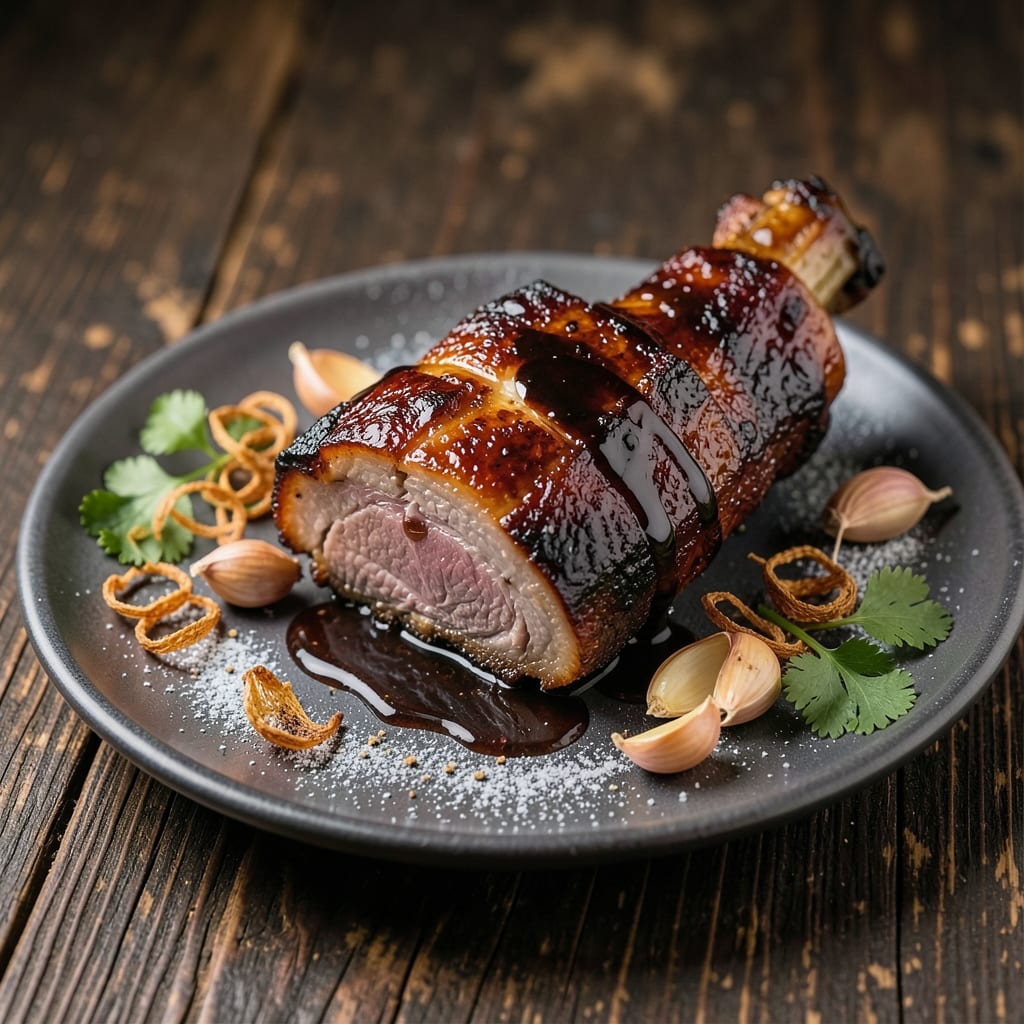
This black vinegar pork knuckle recipe delivers restaurant-quality results with tender meat, crispy crackling, and a deep umami glaze that's worth the wait. 🔥 The secret lies in slow-braising at 300°F for hours, transforming tough pork into melt-in-your-mouth perfection while developing complex flavors through traditional Chinese techniques. What sets this recipe apart is the five-spice marinade combined with black vinegar, which creates that signature tangy-sweet balance. Unlike quick-cook methods, this dish rewards patience—each hour in the oven deepens the flavor, resulting in meat that practically falls apart. The crackling skin adds texture contrast that makes every bite exciting. By the time you're done, you'll have a centerpiece dish with rich, caramelized edges and meat so tender it's nearly impossible to resist. The aroma alone will have your whole house anticipating dinner. This is the kind of recipe that transforms a simple weeknight into a special occasion. Pair it with steamed jasmine rice or stir-fried bok choy to complete the meal. The braising liquid makes an excellent sauce for dipping or deglazing. Here's how to make it.
Ingredients for black vinegar pork knuckle
Four pork knuckles and a handful of pantry staples transform into a restaurant-worthy centerpiece.
| Ingredient | Amount | Notes |
|---|---|---|
| Pork Knuckles 🍖 | 4 whole | Fresh, skin-on, 1.5-2 lbs each |
| Black Vinegar 🍶 | ½ cup | Authentic Chinese black vinegar |
| Five-Spice Powder 🌶️ | 2 tbsp | Traditional Chinese blend |
| Honey 🍯 | ¼ cup | Wildflower preferred |
| Soy Sauce 🍶 | ⅓ cup | Dark soy sauce for color |
| Garlic Cloves 🧄 | 6 cloves | Minced, fresh preferred |
| Ginger Root 🌿 | 1 tbsp | Fresh, grated |
| Brown Sugar 🍚 | ¼ cup | Light or dark |
| Sesame Oil 🫒 | 1 tbsp | Toasted, for aroma |
| Water 💧 | 1 ½ cups | For braising liquid |
| Salt 🧂 | 1 ½ tsp | Kosher or sea salt |
| Black Peppercorns 🌶️ | ½ tsp | Freshly cracked |
| Cornstarch 🌾 | 1 tbsp | For crispy coating |
| Jasmine Rice 🍚 | 2 cups | Uncooked, for serving |
The pork knuckles are the star—look for fresh, skin-on joints at your local butcher or Asian market. Costco often carries them prepped, but if you're buying whole, ask for the knuckles to be trimmed of excess fat. The skin should be thick and unbroken for that signature crackling. For the black vinegar, Asian grocery stores have the real deal—avoid the imitation stuff in regular supermarkets. It's worth tracking down a small bottle of authentic Chinese black vinegar; it's tangy, smoky, and packed with umami that transforms this dish. If you can't find it, balsamic vinegar in a pinch, but it won't be the same.
No five-spice powder? Mix 1 tsp each of cinnamon, cloves, fennel seeds, star anise, and Szechuan peppercorns—toast the whole spices first for deeper flavor. The honey can be swapped for maple syrup if you're avoiding it, but it'll taste slightly different. Dark soy sauce is ideal for that rich color, but regular soy sauce works in a bind. For the ginger, fresh is non-negotiable here—it adds brightness the powder can't match. The sesame oil should be toasted, not the flavored kind. If you burn it, start over—it's the aroma bomb of this dish. And that cornstarch? Don't skip it—it's what creates that magical crackling skin.
This dish tastes even better the next day, so make a double batch if you're feeding a crowd. Store leftovers in the braising liquid to keep the meat moist—3-4 days in the fridge, 3 months frozen. The crackling stays crispy for about a day if you reheat it gently in the oven. For serving, steam extra jasmine rice—it absorbs all the delicious juices. The braising liquid? Strain it, reduce it, and use it as a dipping sauce or glaze for veggies. Every drop is flavor gold.
Why You'll Love This Recipe
- One-Pot Magic: The pork knuckles simmer right in the same pot as the sauce—no extra pans, no fuss. Just toss in the knuckles, black vinegar, and five-spice, then let the slow cook do the work. Honestly, the cleanup is so minimal I’ll sometimes make it just for that.
- Umami Bomb: That black vinegar? It’s the star—tangy, deep, and just a little funky in the best way. The honey balances it out, so you get this perfect mix of sweet, salty, and smoky that sticks to your ribs. I’ll be real: my husband licks the plate after seconds.
- Leftovers That Shine: This dish actually tastes better the next day—yes, really. The flavors meld into something even richer, and it reheats like a dream. I keep a batch in the fridge for lazy mornings or when unexpected company drops by. (Between us, it’s my secret weapon for potlucks.)
- Budget Feast: Pork knuckles are cheap, and this recipe stretches them into a meal that feels special. A few knuckles, a splash of vinegar, and some pantry staples turn into a dish that feeds four for under $15. Not the prettiest, but the taste makes up for it—and my wallet thanks me.
Step-by-step instructions for black vinegar pork knuckles
Here's how to transform tough pork knuckles into melt-in-your-mouth perfection with irresistible crackling.
🔥 Step 1: Parboil and Score the Pork Knuckles
Place the 4 whole pork knuckles in a large pot and cover with cold water by 2 inches. Bring to a boil over high heat, then immediately reduce to a gentle simmer. Cook for 30 minutes until the meat is slightly firm but not fully cooked—it should still have some resistance when pierced with a knife.
While they simmer, score the skin in a crosshatch pattern using a sharp knife, being careful not to cut into the meat. This creates channels for the marinade to penetrate and helps develop those coveted cracklings. Drain the pork knuckles and let them cool slightly on a wire rack before proceeding.
👨🍳 Step 2: Create the Five-Spice Glaze
In a small bowl, whisk together the 0.5 cup black vinegar, 0.33 cup soy sauce, 0.25 cup honey, 0.25 cup brown sugar, 2 tbsp five-spice powder, 1 tbsp grated ginger root, 6 minced garlic cloves, 1.5 tsp salt, and 0.5 tsp cracked black peppercorns. This aromatic blend is what transforms ordinary pork into something extraordinary.
Pour the glaze into a large resealable plastic bag and add the scored pork knuckles. Seal the bag and massage the glaze all over the meat, ensuring it penetrates the crosshatched skin. Let the pork knuckles marinate in the refrigerator for at least 4 hours, preferably overnight—this deepens the flavors and tenderizes the meat.
🔥 Step 3: Braise Until Fork-Tender
Preheat your oven to 300°F. Transfer the marinated pork knuckles to a Dutch oven along with the marinade from the bag. Add the 1.5 cups water and bring to a simmer over medium heat on the stovetop. The liquid should just cover the bottom of the knuckles.
Cover the Dutch oven and transfer to the preheated oven. Braise for 2.5 to 3 hours until the meat is fork-tender and pulls away from the bone with minimal resistance. The braising liquid should have reduced to a thick, glossy glaze—this is your secret weapon for flavor. Check the internal temperature; it should read 195-205°F in the thickest part of the meat.
🍳 Step 4: Achieve Crispy Crackling
Remove the pork knuckles from the braising liquid and pat them dry with paper towels—this step is crucial for crispy crackling. Place them skin-side up on a wire rack set over a baking sheet lined with parchment paper. Brush the skin generously with 1 tbsp sesame oil, focusing on the scored areas.
Broil on high heat for 3-5 minutes, watching carefully to prevent burning. You'll know it's perfect when the skin turns a deep golden brown and develops those beautiful cracklings. If any spots brown too quickly, move the rack and rotate the knuckles for even browning. Let them rest for 5 minutes before serving.
🥘 Step 5: Prepare Jasmine Rice and Serve
While the pork knuckles broil, rinse the 2 cups jasmine rice under cold water until the water runs clear. Cook in a rice cooker or pot with 3 cups water (or according to package instructions) until fluffy and tender. In a small bowl, whisk together 1 tbsp cornstarch with 2 tablespoons of the braising liquid to create a quick glaze. Simmer this mixture for 1 minute until slightly thickened.
Slice the pork knuckles across the joints and serve with the jasmine rice, drizzled with the reduced braising liquid and cornstarch glaze. The contrast of tender meat with crispy crackling and aromatic rice makes every bite unforgettable. Don't forget to save some of that flavorful braising liquid for dipping!
Pro Tips For Making Black Vinegar Pork Knuckle
- PARBOIL FIRST: The pork knuckles won’t fall apart if you blanch them for 10 minutes in salted boiling water before braising. I learned this the hard way—skipping it leads to tough, chewy results, and no amount of slow cooking fixes it.
- USE THICK VINEGAR: Thin black vinegar? Dilute it with water to a syrup-like consistency—about 1:1 ratio. The thicker it is, the richer the flavor and the better it clings to the meat, so resist the urge to use it straight from the bottle.
- CRISP THE SKIN LAST: Don’t rush the final crisping stage—wait until the knuckles are fork-tender before broiling or searing. Overdoing it turns the skin rubbery, and you’ll have to start over. Five minutes at high heat is all you need.
- SWEAT THE FIVE-SPICE: Toast the five-spice powder in a dry pan for 30 seconds until fragrant, then bloom it in the oil with the honey before adding vinegar. This step makes a real difference—skipping it leaves the spices tasting flat and underdeveloped.
Wine and beer pairings for this recipe
Chinese Red Wine
For this dish, I always reach for a dry Chinese red wine like Cabernet Sauvignon from Ningxia or Gewürztraminer from Yunnan. These wines complement the black vinegar's tang and the five-spice complexity beautifully. The Ningxia Cabernet has enough tannin to stand up to the rich pork flavors, while the Gewürztraminer offers floral notes that brighten the dish. Serve slightly chilled to enhance the wine's crispness against the warm pork. 🍷
Rice Wine (Huangjiu)
If you're feeling traditional, Chinese rice wine (huangjiu) is a perfect pairing. Look for Shaoxing wine—it's slightly sweet and nutty, which balances the dish's umami and acidity. Pour it into small cups and serve at room temperature. The wine's earthy notes enhance the five-spice marinade, creating a harmonious flavor bridge between the pork and the meal. I often keep a bottle on hand for special occasions. 🥃
Light Japanese Sake
A dry junmai sake like Dassai or Kubota works wonders with this dish. The sake's clean, crisp profile cuts through the richness of the pork without overpowering it. Serve it slightly warmed to release its aromatic qualities. The subtle sweetness of the sake complements the honey in the glaze, while its acidity refreshes the palate between bites. 🍶
Beer Pairings
For beer lovers, a light lager like Asahi Super Dry or a crisp pilsner such as Sapporo provides a refreshing contrast. The beer's mild bitterness balances the dish's sweet and tangy elements. If you prefer something bolder, try a German wheat beer (weissbier)—its citrusy notes pair surprisingly well with the five-spice marinade. Serve the beer ice-cold to highlight its crispness. 🍺
Non-Alcoholic Options
Don’t have wine or beer? A sparkling yuzu soda or ginger beer works brilliantly. The effervescence cleanses the palate, while the citrus or ginger notes enhance the dish's aromatic profile. For a more traditional approach, serve jasmine tea—its floral aroma complements the five-spice blend and adds a soothing finish to the meal. 🍵
Pro Tip for Pairing
Always let your wine or beer breathe before serving. For reds, decant for 30 minutes to soften tannins, and for sake, warm gently in a sake warmer to 40°F. The goal is to let the drink’s natural qualities shine while harmonizing with the dish’s deep umami and tangy-sweet balance. Trust me, your guests will notice the difference! 💡
Nutrition facts
Frequently asked questions
Can I substitute regular vinegar for black vinegar?
While you can use balsamic vinegar in a pinch, it won't deliver the same deep umami and smoky complexity. Black vinegar has a distinct fermented taste that's essential for this recipe. For best results, track down authentic Chinese black vinegar at an Asian market—it's worth the effort for that signature flavor profile.
How do I know when the pork knuckles are fully cooked?
The meat should be fork-tender and pull away from the bone with minimal resistance. Check the internal temperature—it should read 195-205°F in the thickest part. If it's still slightly firm, return it to the oven for another 30 minutes. The braising liquid should also be thick and glossy, indicating proper cooking.
Can I make this recipe in a slow cooker?
Yes! After parboiling and marinating, transfer everything to a 6-quart slow cooker and cook on low for 8-10 hours or high for 5-6 hours. The texture will be slightly different but still delicious. Just skip the broiling step—pat the knuckles dry and broil them separately for crackling.
Why is my crackling not crispy? Crispy crackling requires perfectly dry skin and high heat.
How long can I store leftovers?
Store in the braising liquid in an airtight container for 3-4 days in the fridge or 3 months frozen. The crackling stays crispy for about 1 day if reheated gently in the oven. The meat actually tastes better the next day as flavors meld! For reheating, warm in the oven at 300°F for 20 minutes covered.