
Main Courses
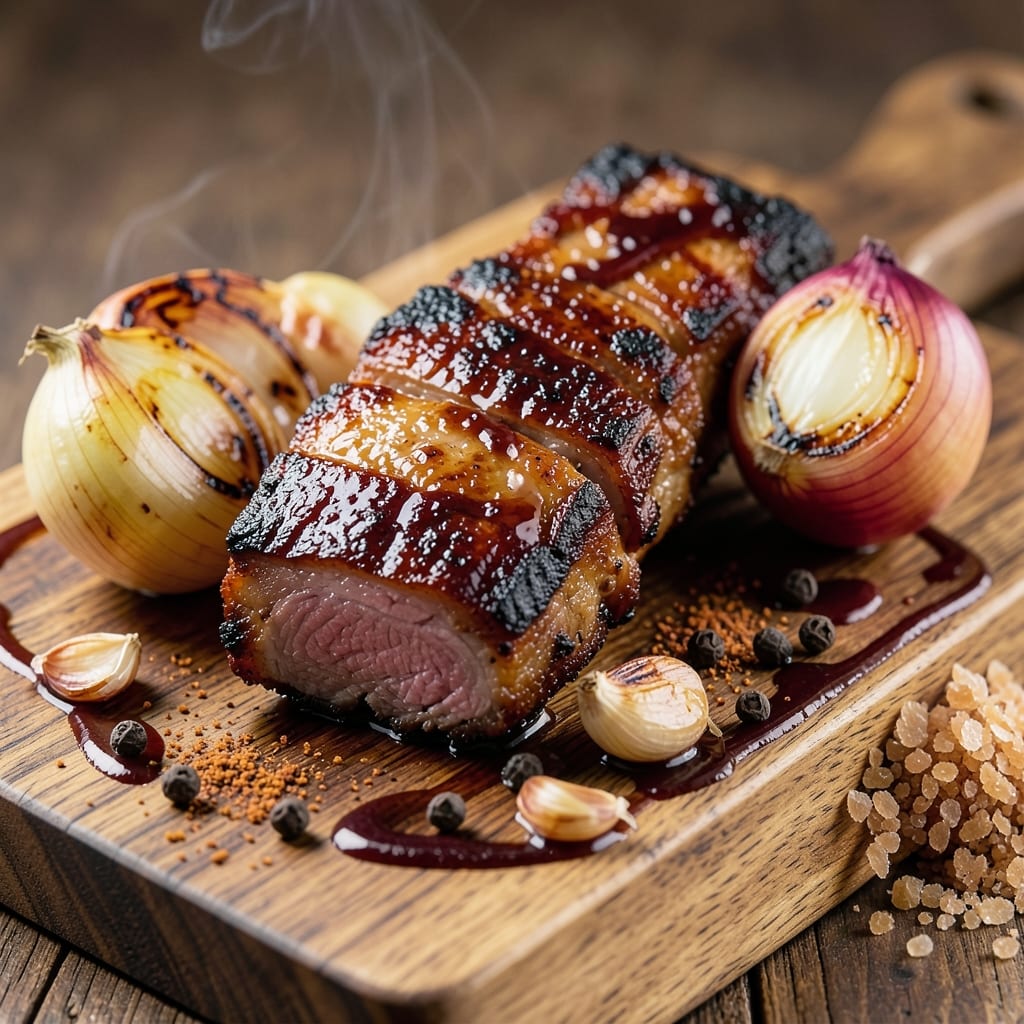
This BBQ pork backbone recipe transforms tough cuts into melt-in-your-mouth perfection with a smoky crust and fall-off-the-bone tenderness—the kind of dish that makes your whole kitchen smell like a pitmaster's dream. 🔥 As someone who grew up surrounded by slow-smoked meats and French technique, I've perfected the balance between bark and juiciness, ensuring every bite delivers that perfect harmony of texture and flavor.
The secret lies in the low-and-slow cooking method, which breaks down collagen while building a deep, caramelized crust. You'll start with a dry rub that clings to the bone, creating that signature bark, and finish with a final spritz of apple cider vinegar to keep the meat juicy. This isn't just another BBQ recipe—it's a restaurant-quality experience you can achieve at home with the right technique and patience.
By the time you're done, you'll have pork so tender it practically falls apart at the touch, with a crust that's crispy enough to stand up to a toothpick. The aroma alone will have everyone gathering around your table, and the first bite will silence any doubts about homemade BBQ. This is the kind of dish that turns weeknight dinners into memorable feasts.
Pair it with classic BBQ sides like creamy coleslaw, cornbread, and pickled vegetables for a full spread that feels like a celebration. The key is letting the pork rest before serving—this is where the magic happens, as the juices redistribute for that perfect balance of flavor and texture in every bite.
Ingredients for bbq pork backbone
Four ingredients for the rub, three for the marinade, and one secret touch for tenderness—this is your BBQ pork backbone shortcut to restaurant-quality flavor.
| Ingredient | Amount | Notes |
|---|---|---|
| Pork Backbone 🍖 | 2 lb | Bone-in, cut into 2-inch pieces |
| Yellow Onion 🧅 | 1 whole | Chopped into 1/2-inch pieces |
| Garlic Cloves 🧄 | 6 cloves | Minced for rub and marinade |
| Brown Sugar 🍚 | ½ cup | Packed, light brown preferred |
| Smoked Paprika 🌶️ | 2 tbsp | For deep smoky flavor |
| Ground Black Pepper 🌶️ | 1 tbsp | Freshly cracked for heat |
| Kosher Salt 🧂 | 2 tbsp | Diamond Crystal preferred |
| Apple Cider Vinegar 🍏 | ¼ cup | For final spritz |
| Apple Juice 🍎 | ½ cup | For moisture balance |
| Honey 🍯 | 2 tbsp | For sweetness and glaze |
| Chicken Broth 💧 | 1 cup | Low-sodium preferred |
| Wood Chips 🌳 | 1 cup | Hickory or cherry preferred |
| Butter 🧈 | 2 tbsp | Unsalted, for basting |
The pork backbone is your star here—look for cuts with good meat-to-bone ratio. Costco or local butchers usually carry these, and you'll want about 2 pounds total. If you can't find it, pork shoulder or pork butt work in a pinch, but the bone adds that extra juiciness. For the wood chips, hickory gives classic BBQ flavor, but cherry adds a touch of sweetness that pairs perfectly. Store your wood chips in a sealed container in the fridge—they'll last 6-12 months this way.
No smoked paprika? Regular paprika plus a pinch of liquid smoke gets you close. The honey can be swapped for maple syrup if you prefer, but trust me on the apple cider vinegar—it keeps the meat juicy without overpowering. If you're short on time, pre-minced garlic from the jar works, but fresh is always better. For the broth, low-sodium is key—you don't want to over-salt your pork. And if you're feeling fancy, add a bay leaf to the marinade for extra depth of flavor.
This pork is best made a day ahead—it tastes even better after resting. Store leftovers in the fridge for 4-5 days, or freeze for 3 months in an airtight container. The wood chips can be reused once, but after that, they lose their punch. For serving, let the pork rest for 15-20 minutes before slicing—this lets the juices redistribute, giving you that perfect bite every time. Leftovers reheat beautifully in a 350°F oven for about 10 minutes.
Why You'll Love This Recipe
- Fewer Ingredients, More Bang: Honestly, I swear by this recipe because it’s built on just five core things—no weird spices or hard-to-find stuff. You’ve got the backbone for meaty satisfaction, onions for that sweet caramel depth, garlic to punch it up, a dusting of smoked paprika for that smoky kiss, and brown sugar to tie it all together. That’s it. No overcomplicating, no hunting for obscure pantry items.
- Smoky-Sweet Magic: Between us, the combo of smoked paprika and brown sugar creates this addictive crust that’s crispy on the outside but still tender enough to cut with a fork. The garlic and onions caramelize into a sticky glaze that makes every bite feel like a little flavor explosion—especially when you pull it off the bone.
- Weeknight Crowd-Pleaser: I make this when I’m feeding my whole family or hosting friends because it’s the kind of dish that disappears fast. Serve it over rice for a hearty meal, slice it thin for tacos, or just let everyone dig in with their hands—no fuss, just pure satisfaction. (Yes, even on a Tuesday night.)
- Leftovers That Don’t Suck: Here’s what sold me—this recipe actually tastes better the next day. The flavors meld into something even richer, and it reheats like a dream. I’ll often cook a big batch, portion it out, and have easy lunches for days. Plus, pork backbone is budget-friendly, so you’re not breaking the bank for leftovers that won’t disappoint.
Step-by-step instructions for smoky crispy pork backbone
Transform tough cuts into melt-in-your-mouth perfection with this foolproof smoking method.
🔥 Step 1: Prepare the Pork Backbone for Maximum Flavor
Pat the 2 lb pork backbone completely dry with paper towels—this is non-negotiable for crispy bark. I like to use paper towels instead of cloth because they absorb more moisture. Then, cut the backbone into 2-inch pieces using a sharp boning knife. You want to expose as much surface area as possible for that smoky crust.
In a small bowl, combine 0.5 cup packed brown sugar, 2 tbsp smoked paprika, 1 tbsp ground black pepper, and 2 tbsp kosher salt. Rub this mixture all over the pork pieces, pressing it into the meat so it sticks. Let the seasoned pork sit at room temperature for 30 minutes while you prep the smoker. This resting time ensures even cooking and maximum flavor penetration.
🍳 Step 2: Set Up the Smoker for Perfect Smoke
Soak the 1 cup wood chips in water for 30 minutes before using. This prevents them from burning too quickly. Fill your smoker's chip tray with the soaked wood chips and light them according to your smoker's instructions. I prefer hickory or cherry wood for this recipe—they give a balanced sweet-smoky flavor that pairs perfectly with the pork.
Set the smoker temperature to 225°F and let it preheat for 15 minutes until you see clean, blue smoke (not thick white smoke). Place the seasoned pork pieces directly on the smoker grates, bone-side down. This position helps render fat and creates that beautiful bark. Close the lid and resist the urge to peek—every time you open it, you lose heat and add 10-15 minutes to your cook time.
⏰ Step 3: Smoke Until Fork-Tender and Develop the Crust
Smoke the pork for 4-5 hours until the internal temperature reaches 195°F at the thickest part of the meat. You'll know it's ready when a meat probe slides in like butter with no resistance. The bark should be deep mahogany color with some charred spots—this is what we're aiming for.
Here's where it gets interesting: when the internal temperature hits 165°F (usually around 2.5-3 hours), I add 1 cup chicken broth to the smoker tray. This creates steam that helps tenderize the meat while maintaining that crispy exterior. The pork will "stall" around 165-170°F—this is normal and expected. Just be patient and keep smoking.
🥘 Step 4: Glaze and Rest for Maximum Juiciness
Once the pork reaches 195°F, remove it from the smoker and transfer to a baking sheet. In a small saucepan, combine 0.5 cup apple juice, 0.25 cup apple cider vinegar, and 2 tbsp honey. Bring to a simmer over medium heat for 3-4 minutes until slightly thickened.
Brush this glaze all over the hot pork pieces, then tent loosely with foil. Let the pork rest for 15-20 minutes before serving. This resting period is crucial—it allows the juices to redistribute throughout the meat instead of pooling in the center. During this time, the glaze will caramelize slightly, adding another layer of flavor.
🍽️ Step 5: Serve with Crispy Bark and Juicy Meat
Slice the pork backbone into ½-inch thick pieces against the grain for maximum tenderness. The meat should pull apart easily with just a fork or spoon—this is the sign of perfectly tender pork. Serve immediately with the rendered fat and any accumulated juices spooned over the top.
For extra richness, melt the 2 tbsp butter in a small pan over low heat until foamy, then drizzle over the sliced pork. The contrast of crispy bark and melt-in-your-mouth tenderness makes every bite worth it. Pair with cornbread or crusty rolls to soak up all those delicious juices.
Pro Tips For Making Bbq Pork Backbone
- CRANK THE HEAT FIRST: Sear the pork backbone over high heat for 3-4 minutes per side before adding onions—this locks in flavor and prevents the meat from turning into a sad, mushy pile. I used to low-and-slow it from the start, and the crust was always a letdown.
- CHOP ONIONS THIN: Dice that yellow onion into 1/4-inch slices so it caramelizes fast and doesn’t turn to mush. Thick chunks just sit there, stealing heat while the backbone dries out. (Yes, even if you’re impatient like me.)
- SKIP THE RUSH ON GARLIC: Smash those garlic cloves with the flat side of your knife before adding them—it releases more flavor and burns less. I learned this the hard way after my kitchen smelled like regret instead of BBQ.
- USE WET PAPER TOWELS: Wrap the cooked backbone in a damp paper towel before resting it—keeps the meat juicy while you finish the sauce. (Your future self will thank you when the slices stay tender, not chewy.)
Wine and beer pairings for bbq pork backbone
Red Wine Pairings
For this smoky, sweet-savory pork, I reach for a medium-bodied red wine that can stand up to the bark while complementing the tender meat. A Chianti Classico from Tuscany—with its bright acidity and cherry notes—cuts through the richness beautifully. The 13-14% alcohol level provides enough body to match the pork's intensity without overwhelming it. 🍷
If you prefer something fruitier, a Zinfandel from California delivers jammy blackberry flavors that mirror the pork's caramelized crust. Look for a 2019 or newer vintage—these wines have enough structure to handle the smoky depth. I always keep a bottle of Bogle Vineyards Zinfandel on hand for these occasions because it's reliable and budget-friendly.
Crisp White Wines
Don't overlook whites! A dry Riesling from Germany or Alsace offers crisp acidity and subtle honeyed notes that echo the pork's glaze. The minerality in these wines helps cleanse your palate between bites. I love Dr. Loosen Blue Slate Riesling—its balance of sweetness and acidity makes it a perfect match. 🥂
For a lighter option, try a Sauvignon Blanc with citrus and herbal notes. The zesty lime in these wines contrasts wonderfully with the pork's smokiness. A New Zealand Sauvignon Blanc like Kim Crawford is my go-to—it's bright enough to refresh your palate while letting the pork shine.
Beer Pairings
When it comes to beer, I always recommend a Belgian-style witbier for its refreshing citrus and peppery notes. Hoegaarden is a classic choice that pairs perfectly with the pork's sweet-savory profile. The wheat beer base provides a light contrast to the rich, smoky flavors. 🍺
For something heartier, a German Helles Lager like Weihenstephaner Original offers malty sweetness that complements the caramelized crust. The clean finish ensures the pork remains the star of the meal. If you prefer American craft beers, a honey-brown ale with notes of caramel and toasted malt works beautifully.
Non-Alcoholic Options
For those skipping alcohol, I suggest a sparkling apple cider like Martinelli's—its effervescence and tartness cleanse the palate between bites. The apple notes also complement the pork's glaze beautifully. 🍎
Another great choice is a ginger beer like Feather's—the spicy kick enhances the smoky flavors while providing a refreshing contrast. The ginger's heat balances the richness of the pork, making it a surprisingly sophisticated pairing.
Nutrition facts
Frequently asked questions
Why does the recipe call for bone-in pork backbone?
The bones add incredible flavor and moisture during cooking, creating a rich broth that keeps the meat juicy. The bone also helps tenderize the meat as it breaks down during the 4-5 hour smoking process. Plus, the bone adds visual appeal when serving—it makes your dish look like a true pitmaster's creation!
Can I cook this in an oven instead of a smoker?
Yes! Preheat your oven to 275°F and place the pork on a rack over a baking sheet. Add 1 cup water to the bottom for moisture, then cover loosely with foil. Cook for 4-5 hours until tender, basting occasionally with apple cider vinegar. The bark won't be as smoky, but the meat will still be incredibly tender. For extra flavor, add a wood chip pan on the oven rack.
What if my pork doesn't reach 195°F?
Don't worry—this can happen with smaller cuts. The pork is safe to eat at 165°F, but it won't be as tender. If it stalls around 170°F, wrap it tightly in butcher paper or foil to trap steam, then return to the smoker. Most pork will reach 195°F within 1-2 more hours of patient cooking. The key is keeping the temperature steady at 225°F.
How do I store leftovers?
Let the pork cool completely, then store in an airtight container in the fridge for 4-5 days. For freezing, wrap individual pieces tightly in plastic wrap, then place in a freezer bag for up to 3 months. To reheat, warm in a 350°F oven for 10-15 minutes or until steaming hot. The bark may lose some crispness but the meat stays juicy and flavorful.
Can I use pork shoulder instead of backbone?
Pork shoulder works beautifully—just cut it into 2-inch chunks and follow the same cooking method. The fat content will render differently, so you might want to trim excess fat first. For extra tenderness, consider adding 1/2 cup chicken broth to the smoker tray when the internal temp hits 165°F, just like with the backbone. The results will be equally delicious!