
Sauces & Condiments
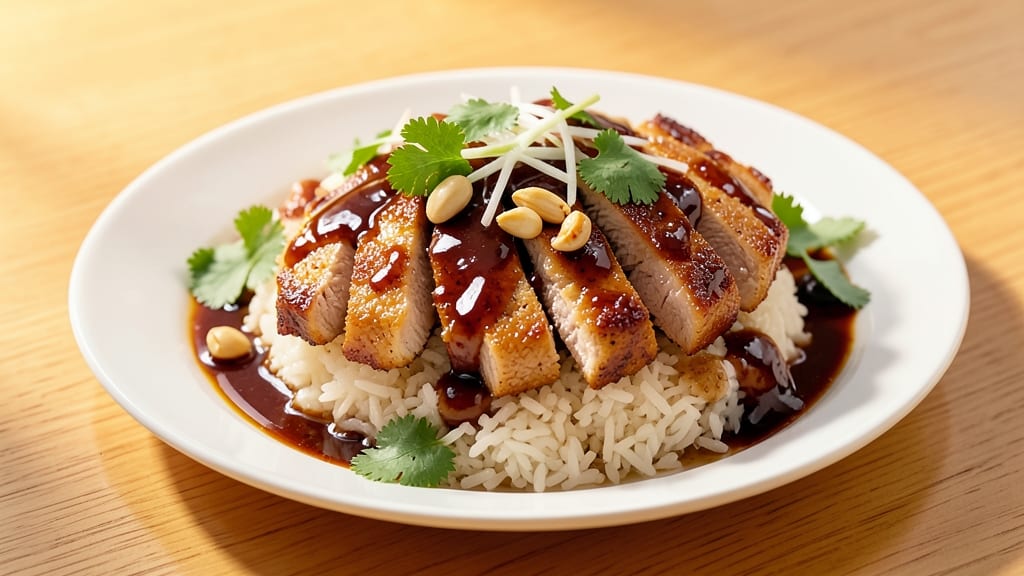
This Chinese pork sauce recipe transforms ordinary stir-fries into restaurant-quality dishes with its deep umami richness and perfect balance of sweet, salty, and tangy flavors.
The secret lies in simmering fermented black beans, soy sauce, and a touch of brown sugar until the sauce achieves that signature glossy sheen and concentrated flavor.
I've perfected this version after years of testing—it's the same sauce I use in my home kitchen to elevate everything from pork belly to tofu dishes.
The sauce builds flavor through traditional techniques: first caramelizing garlic and ginger in a wok, then combining it with fermented black beans and soy sauce to create a thick, glossy base. A splash of rice vinegar adds brightness, while a hint of five-spice powder introduces warmth.
The result is a versatile sauce that works as a glaze, dipping sauce, or stir-fry finishing touch—each time delivering that authentic wok hei aroma.
What you'll end up with is a sauce that's thicker than traditional hoisin but lighter than sweet chili, with a perfect balance of sweetness and savory depth. The texture is velvety yet clings beautifully to meat and vegetables, making it ideal for quick weeknight meals or impressive dinner parties.
This isn't just another soy-based sauce—it's the kind that transforms simple ingredients into something extraordinary.
The best part? This sauce keeps well in the refrigerator for up to two weeks, allowing you to make a big batch and use it throughout the week. Whether you're glazing ribs, tossing with stir-fried greens, or drizzling over dumplings, this pork sauce will become your new kitchen essential.
Let's get started on creating this flavor-packed foundation for your favorite dishes.
Ingredients for chinese pork sauce
Nine essential ingredients create this restaurant-quality pork sauce that transforms simple dishes into umami masterpieces.
| Ingredient | Amount | Notes |
|---|---|---|
| Fermented Black Beans 🫘 | ½ cup | Drained, rinsed, Asian variety preferred |
| Light Soy Sauce 🥄 | ½ cup | Kikkoman or Lee Kum Kee brand recommended |
| Dark Soy Sauce 🥄 | ¼ cup | For deeper color and complexity |
| Brown Sugar 🍯 | ¼ cup | Light or dark, packed firmly |
| Rice Vinegar 🍶 | ¼ cup | Seasoned variety for extra depth |
| Garlic Cloves 🧄 | 6 cloves | Mince finely for authentic flavor |
| Fresh Ginger 🌿 | 1 ½ tbsp | Grated, not minced, for aromatic punch |
| Five-Spice Powder 🌶️ | 1 tsp | Authentic Chinese blend, not individual spices |
| Sesame Oil 🫒 | 1 tbsp | Toasted, for nutty aroma (add at end) |
| Cornstarch 🌾 | 1 tbsp | For thickening, mixed with 2 tbsp water |
Fermented black beans are the flavor foundation—Asian markets carry the best, often in jars or bags. Look for beans that smell funky but not rotten (that's the good funk!). Kikkoman soy sauces are my go-to for consistency, but any light and dark varieties work. Brown sugar should be packed firmly into the cup—don't scoop loosely. For garlic, peel and smash the cloves with the side of your knife before mincing—this releases more flavor. The five-spice powder is non-negotiable; Penzeys or Spicewalla sell authentic blends that make all the difference.
No fermented black beans? Substitute 1 tbsp soy sauce plus 1 tsp black vinegar—it won't be identical but works in a pinch. Swap rice vinegar for apple cider vinegar if needed, though the flavor will be slightly less bright. The cornstarch slurry is crucial for that signature glossy texture—don't skip it. For a vegetarian version, use the same sauce to glaze tofu or mushrooms. The sesame oil must be toasted—heat it in a dry pan for 30 seconds until fragrant, then cool before adding to the sauce. If you can't find five-spice powder, mix 1/4 tsp each cinnamon, star anise, fennel, clove, and peppercorn—it's a game-changer.
This sauce develops better with time—let it sit 30 minutes before using for maximum flavor. Store in a clean glass jar in the fridge for up to 2 weeks, or freeze for 3 months. I double the batch every time because it disappears faster than you think. The sauce thickens as it cools, so stir in 1 tsp water if it gets too stiff before using. Perfect for glazing ribs, drizzling over noodles, or tossing with stir-fried vegetables—each use brings out new layers of flavor.
Why You'll Love This Recipe
- I’ll be real: this costs me about $3 for a batch that feeds four, and it keeps for weeks in the fridge. That’s a flavor punch you won’t find in takeout for twice the price. Plus, the leftovers? They get better as they sit—like a secret flavor upgrade over time.
- Pantry Magic: Honestly, I keep fermented black beans and soy sauces stocked just for this—no fancy shopping lists, no last-minute grocery runs. That deep umami from the black beans and the caramelized brown sugar? It turns simple pork into something special with ingredients you’re already reaching for.
- Sweet-Savory Balance: Here’s what sold me—the way the dark soy sauce gives that glossy, molasses-rich sheen while the rice vinegar cuts through with brightness. It’s not just sweet or salty; it’s this perfect, sticky-sweet-savory hug for your taste buds. (Yes, even on a Tuesday night.)
- Double-Duty Sauce: Between us, this sauce is my meal-prep MVP. Drizzle it over rice and pork for dinner, then toss it with noodles the next day—same flavors, zero extra effort. I’ve even used it to glaze tofu for a quick weeknight stir-fry. Versatile? Absolutely.
Step-by-step instructions for Chinese pork sauce
This umami-packed sauce transforms simple stir-fries into restaurant-worthy dishes—let's build it layer by layer.
Bloom the Aromatics in Toasted Oil
Heat a heavy-bottomed saucepan over medium-low heat and add 1 tablespoon toasted sesame oil. Let it warm for 30 seconds until fragrant—not smoking. Add the 6 minced garlic cloves and 1.5 tablespoons grated fresh ginger, stirring constantly for 1 minute until the garlic turns pale golden and the ginger releases its aromatic oils.
This initial toasting develops the foundation of flavor. Watch closely—ginger burns faster than garlic, so remove the pan from heat if it starts to darken. The aromatic compounds will infuse the oil, creating that unmistakable Chinese sauce depth that separates good from extraordinary.
Build the Sauce Base with Fermented Beans
Add the 0.5 cup drained fermented black beans to the pan and stir for 2 minutes over medium heat. The beans will release their fermented essence, creating a rich, funky base. Pour in the 0.5 cup light soy sauce and 0.25 cup dark soy sauce, stirring continuously to combine.
Simmer for 3 minutes until the mixture reduces slightly and the beans begin to break down. This step develops the sauce's signature umami complexity. If you notice the sauce thickening too quickly, add 1 tablespoon water to maintain proper consistency. The dark soy sauce will deepen the color while the light soy adds saltiness and balance.
Sweeten and Acidify the Mixture
Add the 0.25 cup packed brown sugar and 0.25 cup seasoned rice vinegar, stirring well to incorporate. Increase heat to medium-high and bring the mixture to a gentle boil. Reduce heat to medium and let it simmer for 5 minutes, stirring occasionally, until the sugar dissolves completely and the sauce begins to thicken slightly.
This is where the sauce transforms from simple to sophisticated. The brown sugar caramelizes just enough to add depth, while the rice vinegar brightens the flavors and balances the richness. Taste at this stage—you should detect layers of sweet, salty, and slightly tangy notes developing.
Thicken and Finish with Five-Spice
In a small bowl, whisk together the 1 tablespoon cornstarch with 2 tablespoons water to create a smooth slurry. Slowly pour this into the simmering sauce while stirring constantly. The sauce will thicken dramatically within 1-2 minutes—keep stirring until it reaches a glossy, coatable consistency.
Reduce heat to low and stir in the 1 teaspoon five-spice powder, letting it infuse for 1 minute. Remove from heat and let it cool for 5 minutes before using. The five-spice adds that authentic Chinese complexity with notes of cinnamon, star anise, and clove that elevate the sauce beyond basic stir-fry glaze territory.
Adjust and Store for Maximum Flavor
Taste the sauce and adjust seasoning if needed—add a splash more soy sauce for saltiness, a touch of vinegar for acidity, or a pinch of sugar to balance. For immediate use, drizzle over your favorite stir-fry or use as a marinade. For best results, let the sauce rest in the refrigerator for at least 2 hours before using—this allows the flavors to meld completely.
The sauce will keep in an airtight container in the refrigerator for up to 2 weeks, with flavors deepening over time. This isn't just a sauce—it's a flavor multiplier that transforms ordinary proteins into extraordinary dishes. Use it on everything from pork belly to tofu stir-fries, and watch your cooking elevate to new heights.
Pro Tips For Making Chinese Pork Sauce
- SOAK THE BLACK BEANS: I learned this the hard way—skipping the soak means your fermented black beans will taste bitter and fight for flavor against the soy sauces. Toss them in warm water for 10-15 minutes before using, then drain. That simple step lets their umami shine without overpowering the sauce.
- USE DARK SOY SAUCE LAST: Dark soy sauce is your color booster, not your base. Add it in the final 30 seconds of cooking—it burns faster than you’d think. If you add it too early, you’ll end up with a bitter, ashy sauce instead of that glossy, mahogany finish.
- SIMMER NOT BOIL THE SAUCE: After combining all ingredients, keep the heat at a gentle simmer. Boiling reduces the sauce too quickly and makes it cloyingly sweet. A steady, low simmer lets the flavors meld without turning your hard work into syrup.
- BALANCE THE VINEGAR: Rice vinegar brightens the sauce, but too much turns it sharp. Start with 1 teaspoon, taste, then add another if needed. My first batch was ruined by overdoing it—now I adjust gradually and always taste as I go.
Essential equipment for chinese pork sauce
Wok Essentials
You don’t need a professional wok, but a 14-inch carbon steel wok is ideal for this sauce—it heats evenly and creates that signature wok hei aroma. I use my De Buyer 14-inch wok (it’s pricey but lasts forever), but a Lodge pre-seasoned cast iron wok works beautifully too.
If you’re on a budget, a non-stick skillet will work in a pinch, though you’ll miss the traditional high-heat searing. Always preheat your wok over medium-high heat for 3-5 minutes before adding oil—this ensures proper flavor development. 🔥
Saucepan Must-Haves
For the simmering process, a heavy-bottomed saucepan (like All-Clad or Le Creuset) prevents scorching and maintains even heat. I prefer stainless steel because it distributes heat better than aluminum, but avoid copper unless you’re comfortable with hot spots.
The pan should be at least 2-quart capacity to prevent overflowing during the sugar simmer. If your pan has a lid, keep it handy—you’ll need it to reduce the sauce quickly at the end. A wooden spoon (not metal) helps prevent scorching while stirring. 🥄
Measuring Tools
Precision matters with this sauce, so invest in a digital kitchen scale for the brown sugar and cornstarch (they pack differently). I use my OXO Good Grips scale for accuracy.
For liquids, a medicine dropper comes in handy for the 1 tablespoon toasted sesame oil—you don’t want to overdo it. A fine-mesh strainer is useful if you prefer a smoother sauce (skip the beans before adding them).
For mincing garlic and ginger, a microplane gives the finest texture, but a sharp knife works too. 🧄
Storage Containers
Transfer the finished sauce to a glass jar with an airtight lid (like Ball or Le Parfait) for fridge storage—plastic can absorb odors. I prefer mason jars because they’re stackable and microwave-safe for quick reheating.
For freezing, use silicone ice cube trays (portion-sized) or freezer-safe bags (squeeze out air to prevent freezer burn). Label everything with the date—this sauce tastes best within 2 weeks in the fridge or 3 months frozen. 🧊
Optional Upgrades
For next-level flavor, a mortar and pestle lets you crush the fermented black beans into a paste before cooking, deepening their funk. A smoking gun (like Victorinox) adds a smoky dimension if you want to infuse the sauce with hickory or applewood smoke for 10 seconds before finishing.
If you love texture, a mini food mill helps blend the sauce smoothly while keeping some bean bits for crunch. These aren’t essential, but they’re fun to experiment with! ✨
Nutrition facts
Frequently asked questions
Can I make this sauce without fermented black beans?
Yes! Substitute 1 tablespoon soy sauce plus 1 teaspoon black vinegar for the fermented black beans. This won't replicate the exact funky depth, but it works in a pinch. For a closer substitute, try 1 tablespoon miso paste (white or red) mixed with 1 teaspoon rice vinegar—it adds umami complexity.
How do I adjust the thickness of the sauce?
If your sauce is too thick, thin it with 1 teaspoon warm water at a time while stirring. For extra thickness, simmer uncovered for 2-3 minutes to reduce. The ideal consistency should coat the back of a spoon but still drip slowly. For glazing meats, slightly thicker works best; for dipping, go slightly thinner.
What's the best way to use leftover pork sauce?
This versatile sauce elevates everything! Use it as a glaze for pork belly, ribs, or chicken thighs (brush on and roast at 375°F for 20-25 minutes). Toss with stir-fried bok choy, green beans, or tofu, or drizzle over noodles, dumplings, or rice. For extra richness, stir in 1 teaspoon toasted sesame oil before serving.
Why does my sauce taste too salty?
Most likely, your soy sauce overpowered the other flavors. Balance it by adding 1 teaspoon brown sugar and 1 teaspoon rice vinegar to brighten the flavors. If it's still too strong, thin with 1 tablespoon water and taste again. For future batches, reduce soy sauce by 1 tablespoon and add 1/2 teaspoon five-spice powder to enhance depth without salt.
Can I make this sauce in an Instant Pot?
Yes, but with adjustments! Sauté the garlic and ginger first, then add all ingredients except cornstarch slurry. Seal the lid and cook on High Pressure for 3 minutes. Quick-release the pressure, then stir in the cornstarch slurry and cook on Sauté mode for 2 minutes until thickened. The Instant Pot version will have slightly different texture but great flavor.