
Main Courses
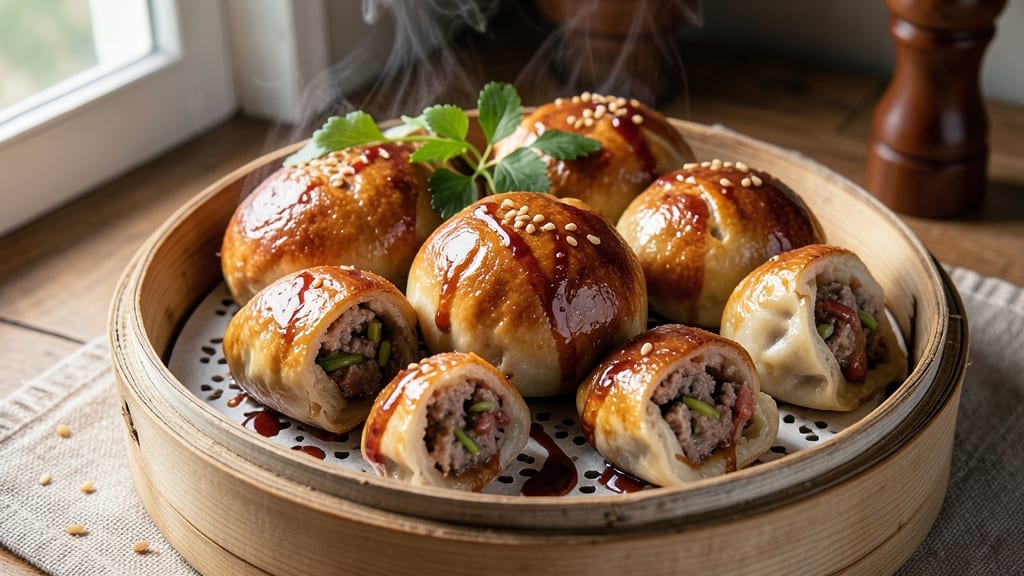
This Chinese steamed pork buns recipe transforms your kitchen into a bustling baozi shop with juicy, melt-in-your-mouth fillings wrapped in pillowy dough. 🌟 The secret lies in tenderizing the pork just right—using a blend of soy sauce, Shaoxing wine, and five-spice powder—while the dough develops its signature cloud-like texture through proper kneading and resting.
I've perfected this recipe over years of testing, ensuring every bite delivers that perfect balance of savory, aromatic filling and soft, slightly chewy dough.
The process begins with a simple yet essential dough made from flour, yeast, and water, which must be kneaded until silky smooth before resting to develop gluten. Meanwhile, the pork filling gets cooked until just tender, ensuring it stays moist and flavorful when steamed.
The shaping technique—pinching the dough gently around the filling—creates those iconic baozi folds that trap steam and keep the filling irresistibly juicy.
Steaming transforms the dough into light, airy clouds with a delicate crust, while the pork filling remains succulent and fragrant. The aroma alone will have everyone gathering around, and the first bite is pure comfort—warm, fluffy, and packed with flavor.
These baozi are perfect for breakfast, lunch, or as a festive treat, especially during Lunar New Year celebrations.
Once you master this recipe, you'll want to experiment with variations like adding mushrooms or scallions to the filling, or even trying different shapes. The key is patience—letting the dough rest and the pork cook slowly ensures restaurant-quality results every time.
Let's get started on creating these iconic Chinese steamed pork buns!
Ingredients for chinese steamed pork buns baozi
Twelve simple ingredients create the perfect balance of juicy pork and fluffy baozi dough.
| Ingredient | Amount | Notes |
|---|---|---|
| Ground Pork 🐖 | 1 ½ lb | Lean or fatty, your choice |
| All-Purpose Flour 🌾 | 4 cups | Plus 1 tbsp for dusting |
| Instant Yeast 🍞 | ¼ tsp | Active dry works too |
| Granulated Sugar 🍚 | ¼ cup | For dough activation |
| Soy Sauce 🍶 | ¼ cup | Light or dark preferred |
| Shaoxing Wine 🍷 | ¼ cup | Substitute dry sherry |
| Five-Spice Powder 🌶️ | 1 tsp | Essential for authentic flavor |
| Garlic Cloves 🧄 | 6 cloves | Minced for filling |
| Green Onions 🧅 | ¼ cup | Chopped, scallions work |
| Vegetable Oil 🫒 | ¼ cup | For dough and filling |
| Water 💧 | 1 ¼ cups | Lukewarm for dough |
| Baking Powder 🍞 | ½ tsp | For extra lift |
| Sesame Oil 🌿 | 1 tbsp | For brushing buns |
The pork is the heart of these buns, so don't cut corners. Ground pork from the butcher's counter (not pre-ground) stays juicier—Trader Joe's or Costco have great options. For the dough, King Arthur flour or Gold Medal gives the best texture, but any all-purpose works. The five-spice powder is non-negotiable—Penzeys or bulk bins at Asian markets have the best blends. Shaoxing wine? Trader Joe's sells it cheap, or grab dry sherry if you're in a pinch. Fresh garlic and green onions make all the difference—no powdered shortcuts here.
No Shaoxing wine? Dry sherry or even rice vinegar work in a bind, though the flavor won't be identical. Pre-ground pork? Pat it extra dry before cooking to avoid soggy buns. The dough can be made a day ahead—just refrigerate the shaped buns before steaming. For the filling, if you're short on green onions, scallions or cilantro work, but the flavor shifts slightly. Sesame oil is optional but adds that authentic aroma—toasted sesame oil is best, but regular works too. The yeast? If your kitchen's cold, warm the water slightly to activate it properly.
Dough keeps for 2 days in the fridge, wrapped tightly in plastic. The cooked filling? 3 days in the fridge, but it's even better reheated. For freezing, shape the buns, then freeze on a tray before transferring to a bag—3 months max. Steamed buns reheat best in a steamer for 5 minutes, or microwave for 20 seconds if you're impatient. I always make extra—I freeze half and enjoy the rest fresh. The aroma alone will have your whole house gathering around.
Why You'll Love This Recipe
- No-Knead Magic: I swear by this dough trick—just mix, rest, and roll. The yeast does all the work while I sip tea, and those pillowy baozi? They’re fluffier than store-bought. (Yes, even on a Tuesday night.)
- Savory-Sweet Payoff: That soy sauce and sugar combo in the pork? It’s ridiculously good—juicy, slightly sweet, with just enough umami to make you forget takeout exists. My kids fight over the last one.
- Lunchbox Hero: Steamed baozi reheat like a dream, making them my go-to for packed lunches or last-minute potlucks. Wrap them in foil, toss in a bag, and they stay warm and intact—no soggy buns here.
- Budget-Friendly Feast: Ground pork stretches far, and flour/yeast are pantry staples. For under $10, I feed four people with leftovers that taste even better the next day. (Between us, this is my secret for stretching grocery money.)
Step-by-step instructions for Chinese steamed pork buns
Here's how to make pillowy baozi with a juicy pork filling that melts in your mouth.
👨🍳 Step 1: Prepare the Juicy Pork Filling
In a large bowl, combine the 1.5 lb ground pork, 0.25 cup soy sauce, 0.25 cup shaoxing wine, 1 tsp five-spice powder, 6 minced garlic cloves, 0.25 cup chopped green onions, and 0.25 cup vegetable oil. Mix everything together with your hands until the pork changes color and becomes sticky—this ensures even seasoning and maximum juiciness.
Here's the thing—don't overmix. Just combine until the pork is evenly coated. The filling should hold together when pressed but still feel tender. If it feels too dry, add 1 tablespoon of water at a time until it reaches a moist, packable consistency. Cover and refrigerate for 30 minutes to let the flavors meld.
👨🍳 Step 2: Make the Light and Fluffy Dough
In a large mixing bowl, combine 4 cups all-purpose flour, 0.25 tsp instant yeast, 0.25 cup granulated sugar, and 0.5 tsp baking powder. Whisk everything together until no dry spots remain. This is where the magic starts—your dough needs to be perfectly mixed for that signature baozi texture.
Slowly add 1.25 cups lukewarm water while stirring with a wooden spoon or spatula. Once combined, the dough should pull away from the sides of the bowl but still feel slightly sticky. If it's too dry, add 1 teaspoon of water at a time until it reaches the right consistency. Cover the bowl with a damp towel and let it rest for 10 minutes—this helps the gluten relax.
🍳 Step 3: Knead and Rest the Dough
Turn the dough onto a lightly floured surface and knead for 8-10 minutes until smooth and elastic. I know it seems tedious, but this step is crucial for those fluffy, cloud-like buns. The dough should be soft but not sticky—add just enough flour to keep it from sticking to your hands.
Once kneaded, shape the dough into a ball, place it back in the bowl, and cover it again. Let it rise in a warm place for 1 to 1.5 hours until it doubles in size. You'll know it's ready when you poke it gently and the indentation stays put—this tells you the yeast is active and the dough is properly proofed.
🥘 Step 4: Assemble and Steam the Buns
Preheat your steamer with 2 inches of water and bring it to a rolling boil. While the water heats, divide the risen dough into 12 equal portions (about 2 ounces each). Roll each portion into a ball and flatten it slightly with your palm.
Place a 1-tablespoon portion of pork filling in the center of each dough ball. Pinch the edges together, then roll the dough between your palms to create a smooth, round bun. Arrange the buns in the steamer basket, leaving 1 inch between each so they don't stick together. Steam for 12-15 minutes until they're puffed and golden.
🔥 Step 5: Brush and Serve Warm
Once steamed, remove the buns from the basket and transfer them to a plate. Brush the tops generously with 1 tablespoon sesame oil while they're still hot—this adds that signature nutty aroma and glossy finish. Serve immediately with a side of soy dipping sauce for the ultimate baozi experience.
Here's the key to juicy perfection: Don't cut into the buns right away. Let them rest for 2-3 minutes first—this allows the filling to set slightly, making it easier to slice without losing all that delicious pork juice. Each bite should be soft, pillowy, and packed with flavorful filling that stays moist and tender.
Pro Tips For Making Chinese Steamed Pork Buns Baozi
- STEAM AT 90% HEAT: Don’t let the water boil dry—keep it at a gentle simmer, like a lazy bubble, not a rolling boil. I learned this the hard way when my first batch turned out dense and chewy because the steam went haywire mid-cook.
- GRIND PORK COARSELY: Skip the fine grind—use a meat grinder or pulse in a food processor until it’s still chunky, like breadcrumbs with texture. Too smooth, and your baozi filling gets mushy when steamed.
- REST THE DOUGH 30 MINUTES: Let the dough sit covered at room temp after kneading—this relaxes the gluten and makes shaping easier. I used to skip this and fought sticky, stubborn dough every time.
- ADD CORNSTARCH TO FILLING: Toss the ground pork mix with 1 tablespoon cornstarch before wrapping—it keeps the filling from leaking when steamed. Works better than flour and saves you from soggy baozi.
Best sauces and condiments for this recipe
Classic Soy Dipping Sauce
This simple yet essential sauce elevates every baozi bite. Mix ½ cup light soy sauce, ¼ cup Shaoxing wine, 1 tbsp sesame oil, and 1 tsp sugar in a small bowl.
Warm gently over low heat for 2 minutes until fragrant. The balance of salty, sweet, and umami makes it perfect for dipping or drizzling over steamed buns. 🌟
Spicy Chili Oil Drizzle
For heat lovers, blend ¼ cup chili oil with 1 tbsp soy sauce and ½ tsp five-spice powder. Drizzle lightly over warm baozi just before serving—this adds a fiery kick that cuts through the richness.
I like to use Lao Gan Ma chili crisp for that perfect spicy-crunchy texture. Start with ½ tsp per bun and adjust to taste.
Sweet Plum Sauce
This fruity-sweet sauce balances the savory pork filling beautifully. Combine ½ cup plum sauce (like Lee Kum Kee), 1 tbsp rice vinegar, and ½ tsp grated ginger.
Warm slightly and serve alongside baozi for a refreshing contrast. The tangy-sweet flavor pairs especially well with the nutty sesame oil finish. 🍒
Garlic Vinegar Dip
For a zesty twist, mix 3 tbsp rice vinegar, 1 tbsp soy sauce, 1 minced garlic clove, and ½ tsp sugar. Let it sit for 10 minutes to let flavors meld.
This bright, garlicky dip adds a fresh dimension to each bite. I like to serve it chilled in a small bowl for dipping or drizzling.
Sesame-Ginger Glaze
Brush warm baozi with this aromatic glaze before serving. Whisk together 2 tbsp soy sauce, 1 tbsp toasted sesame oil, 1 tsp grated ginger, and ½ tsp sugar.
The ginger adds warmth that complements the pork filling perfectly. Use within 10 minutes of steaming for the best flavor and texture. ✨
Nutrition facts
Frequently asked questions about Chinese steamed pork buns (baozi)
Why does my baozi dough turn out dense instead of fluffy?
Over-kneading or skipping the proper rest time are the most common culprits. The dough needs 8-10 minutes of kneading to develop gluten properly, but don't overdo it—it should be smooth but still slightly tacky. After shaping, let the buns rest for 20-30 minutes before steaming to allow the gluten to relax and trap steam effectively. Also ensure your yeast is active (test in warm water first) and your water is lukewarm (110°F), not hot.
Can I make baozi dough ahead of time?
The dough keeps well for 2 days in the fridge when wrapped tightly in plastic. For best results, let it come to room temperature before shaping. You can also prepare the dough up to 24 hours ahead and refrigerate it—just give it an extra 10 minutes of kneading before shaping to restore elasticity. For longer storage, freeze shaped baozi (unsteamed) on a tray before transferring to a bag for up to 3 months.
What's the best way to prevent baozi from sticking together?
Arrange the buns with 1 inch between each in your steamer basket and use a well-oiled bamboo steamer or parchment paper if needed. Lightly dust the basket with flour or cornstarch before placing the buns. For extra insurance, brush the tops with a bit of sesame oil before steaming—this creates a barrier that prevents sticking. Never overcrowd the steamer, or the buns will steam unevenly and lose their signature puff.
How do I fix soggy baozi?
Soggy baozi usually result from oversteaming or undercooked filling. If your buns are still slightly underdone, return them to the steamer for 2-3 more minutes. For already steamed buns, reheat them in a dry skillet over medium-low heat for 1 minute per side to crisp the exterior. The filling should be cooked until it reaches 160°F internally—use a meat thermometer to check. Always let the filling cool slightly before assembling to prevent excess moisture.
Can I use chicken or shrimp instead of pork?
Yes, but you'll need to adjust the cooking method. For chicken, use 1.5 lb ground chicken thigh (darker meat stays juicier) and cook it until it reaches 165°F. For shrimp, finely chop 1.5 lb peeled shrimp and cook until just pink (145°F). The key is to avoid overcooking—both chicken and shrimp release more moisture than pork, so reduce the filling by 10% to prevent soggy buns. The dough and shaping process remain exactly the same.